



The Dark Room Dilemma
We’ve all been there. You see a beautiful fiddle-leaf fig or a striking monstera at the local nursery and imagine it transforming your space. You bring it home, place it in the perfect spot according to your decor sensibilities, and a few weeks later,
you’re looking at yellowing leaves and a general sense of plant depression. The culprit is almost always a lack of sufficient light. Most common houseplants, even those labeled 'low-light,' don’t want darkness; they just tolerate it better than others. For a plant to truly thrive—to grow, to look vibrant, and to purify the air—it needs a consistent, reliable light source to photosynthesize. This is a non-negotiable biological fact. In apartments, north-facing rooms, or homes shaded by trees and other buildings, providing that light can feel like an impossible task.
Why Grow Lights Aren't Just for Pros
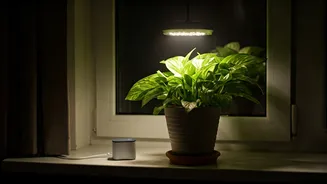
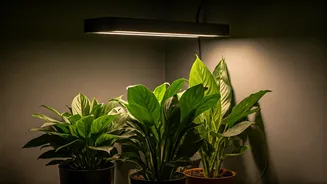
The term 'grow light' might conjure images of industrial-scale farming operations or complicated, space-consuming setups. But modern grow lights have become incredibly user-friendly and aesthetically pleasing. You no longer need a giant, purple-hued contraption to keep your snake plant happy. Today, you can find full-spectrum LED grow light bulbs that screw into any standard lamp or light fixture. 'Full-spectrum' is key here; it means the bulb mimics the natural range of sunlight, providing the necessary wavelengths for vegetative growth and flowering. These bulbs often come in a pleasant, warm white color that blends seamlessly with your home’s existing lighting, so your living room won't look like a science experiment. You can retrofit a favorite floor lamp or an elegant pendant light, turning it into a functional plant-support system that doubles as accent lighting.
Enter the Smart Plug: Your Automation Hero
Here's where the magic really happens. You could just turn your new grow lamp on and off manually, but plants, like people, thrive on routine. Forgetting to turn the light on in the morning or leaving it on for 24 hours straight can stress a plant. The solution is automation, and the easiest way to achieve it is with a smart plug. A smart plug is a small, simple device that fits between your wall outlet and your lamp's plug. After a quick setup via a smartphone app (from brands like Kasa, Wyze, or Meross), you gain complete control over anything you plug into it. You don't need a complex smart home hub; most work directly with your Wi-Fi network. This little gadget is the key to unlocking a 'set it and forget it' lighting schedule for your plants.
Creating the Perfect Automated Schedule
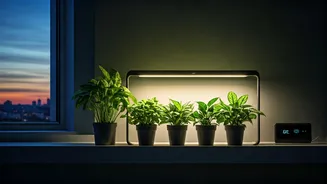
Once your grow light is plugged into your smart plug, you can use the corresponding app to create a precise daily schedule. Most houseplants benefit from 12 to 16 hours of supplemental light per day. You could set your living room grow lamp to turn on at 7 a.m. and off at 9 p.m., perfectly mimicking a long summer day. The consistency is what matters most. Your plant will get the exact amount of energy it needs, every single day, without you having to remember a thing. This consistent cycle promotes healthier, more robust growth than the erratic light of a forgetful owner ever could. As a bonus, this scheduled lighting can also function as a security measure when you're away or as a gentle 'wake-up' light in your home, adding a warm glow as the sun rises.
Putting It All Together
The setup is beautifully simple. First, identify the dark spot where you want greenery. Second, choose a stylish lamp or fixture for that spot. Third, purchase a full-spectrum LED grow bulb to fit it. Finally, connect the lamp to a smart plug. Within minutes, you can set a daily timer and essentially forget about the system. You've just created a perfect, automated micro-environment for your plant to flourish. You can now confidently place that gorgeous calathea or lush fern in a spot chosen for its aesthetic appeal, knowing its essential needs are being met automatically. It's the ultimate fusion of form and function, turning problem areas into vibrant focal points.