




The Journey Through the Clouds
In the Western Ghats mountain range, on the border of India’s states of Goa and Karnataka, there is a train that seems to defy logic. The tracks of the Vasco da Gama–Chennai Express don't just traverse the landscape; they bisect a natural wonder. During
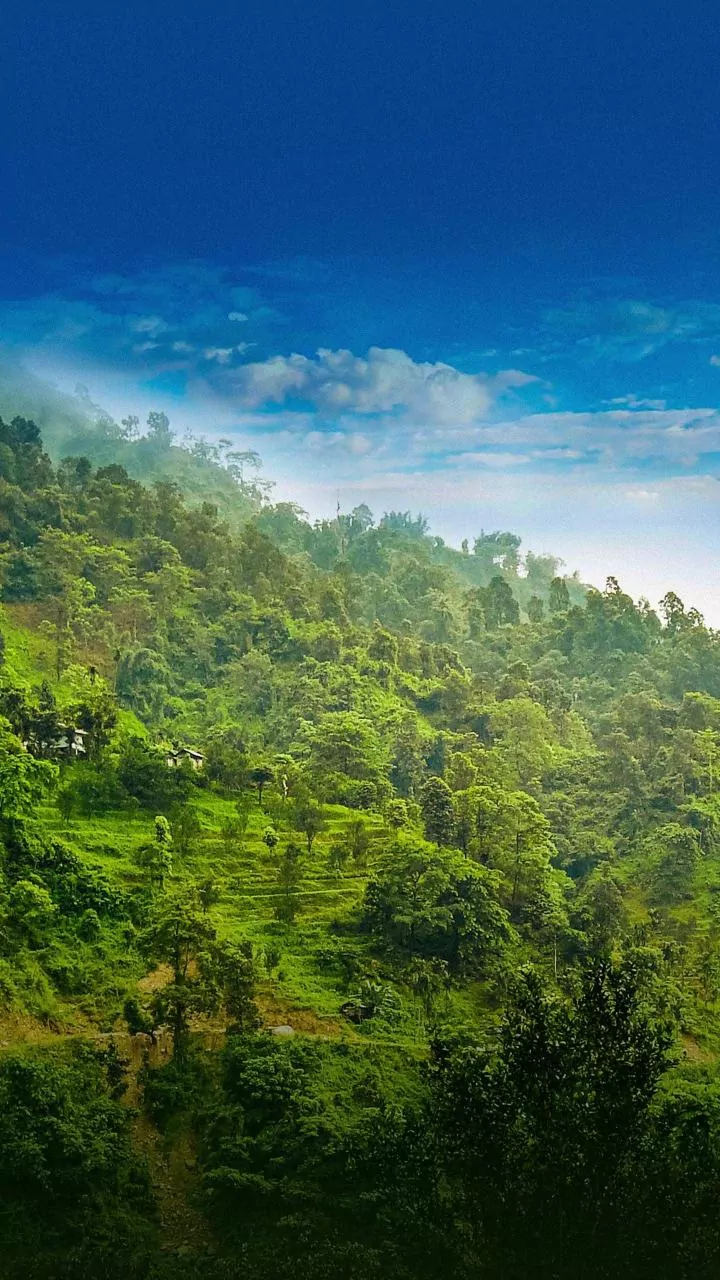
the height of the monsoon season, from June to September, the journey through the dense Bhagwan Mahaveer Sanctuary and Mollem National Park becomes an experience in itself. Passengers press their faces to rain-streaked windows, watching as the lush, saturated jungle gives way to thick curtains of mist. The air grows cool and heavy with moisture, and the rhythmic clatter of the wheels is slowly drowned out by a deeper, more elemental sound—a low, constant thunder that seems to come from the earth itself. This isn’t just transportation; it’s an atmospheric pilgrimage to the foot of a giant.
A 'Sea of Milk' Appears
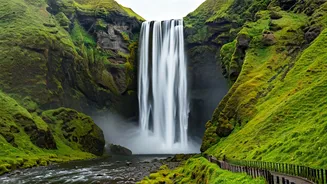
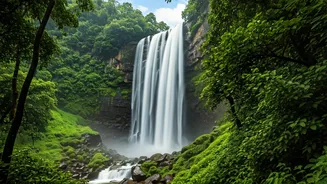
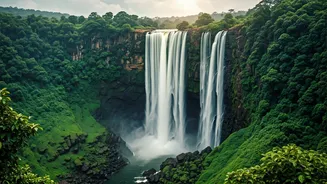
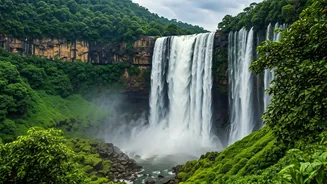
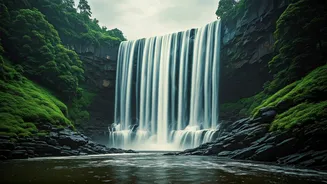
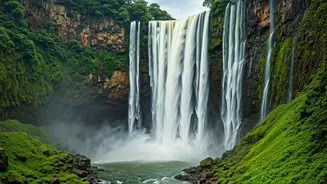
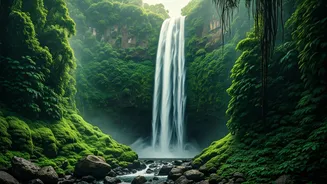
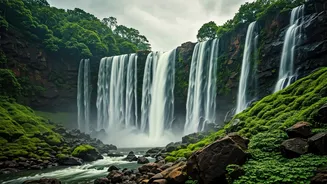
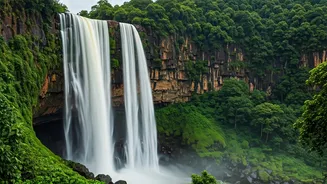
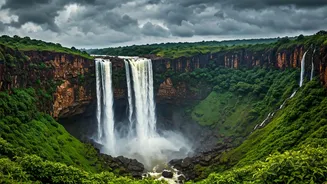
Suddenly, the train slows, curving across a stone viaduct. And there it is: Dudhsagar Falls. The name literally translates to “Sea of Milk,” and in the monsoon, the name is no exaggeration. This isn't a delicate cascade, but a four-tiered behemoth of raw power. Swollen by the relentless rains, the Mandovi River hurls itself over a 1,017-foot drop. The water doesn't just fall; it explodes, crashing down in a furious, churning torrent of white foam. The force is so immense that it atomizes into a permanent cloud of spray that engulfs the bridge, the train, and everything in a 100-foot radius. From the train, you don't just see the waterfall; you are inside it. The sound is deafening, a physical presence that vibrates through the carriage. For a few breathtaking minutes, the world consists of nothing but roaring water and swirling mist.
The Monsoon's Transformative Power
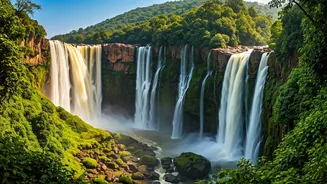
For American travelers accustomed to thinking of rain as an inconvenience, the Indian monsoon is a concept that needs recalibration. It’s not just a wet season; it's a life-giving, landscape-altering force. And nowhere is its power more visually manifest than at Dudhsagar. In the dry season, the falls are a more subdued, multi-stream trickle, beautiful in their own right but a shadow of their monsoon-season self. The monsoon transforms them completely. The river, fed by countless engorged tributaries, swells to dozens of times its normal volume. What was a collection of streams becomes a single, unified, terrifyingly beautiful wall of water. It's a powerful reminder that nature operates on a scale far grander than our own, turning a familiar landmark into an annual, ephemeral spectacle of might and majesty.
More Than Just a Viewpoint
While the train provides the most iconic view, Dudhsagar is the crown jewel of a rich, protected ecosystem. The falls are located deep within a 93-square-mile national park, a biodiversity hotspot teeming with wildlife, from bison and deer to a dazzling array of bird species. For the more adventurous, trekking to the base of the falls (when conditions permit and with a registered guide) offers a completely different perspective. From below, looking up at the colossal drop, the scale is even more humbling. You feel the spray on your face, the ground trembling under your feet. It’s a full-body sensory experience that connects you directly to the untamed energy of the Indian subcontinent during its most dramatic season. Whether glimpsed from a train carriage or felt from its base, the falls are an anchor point for a region that truly comes alive in the rain.