




The Engine of the Monsoon
First, let's understand the main event: the Indian summer monsoon. Think of it as a giant, seasonal sea breeze. During the hot summer months, the vast landmass of the Indian subcontinent heats up much faster than the surrounding Indian Ocean. This creates
a massive low-pressure area over the land. Meanwhile, the cooler, denser air over the ocean forms a high-pressure zone. Nature abhors a vacuum, so this pressure difference causes moisture-laden winds to sweep in from the ocean, traveling from southwest to northeast, to fill the void. When these wet winds hit the land and are forced to rise, they cool, condense, and release torrential rain. This seasonal deluge is the lifeblood of India's agriculture and economy, defining the rhythm of life for hundreds of millions.
A Mountain Range Wall
Now, enter the main character in our desert story: the Aravalli Range. This ancient mountain range runs for about 500 miles, cutting diagonally across the state of Rajasthan in a southwest-to-northeast direction. Crucially, its path is almost perfectly parallel to the Arabian Sea branch of the monsoon winds. Instead of acting as a barrier to block the clouds and force them upward—which would cause rain—the Aravallis essentially guide the winds along their flank. The moist air streams past the Thar Desert, almost as if the mountains are forming a corridor that funnels the rain clouds away from the region, pushing them further north and east towards the Gangetic plains and the Himalayas.
The Rain Shadow Effect
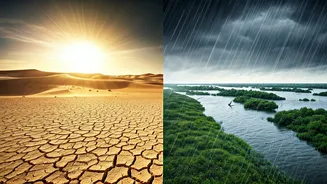
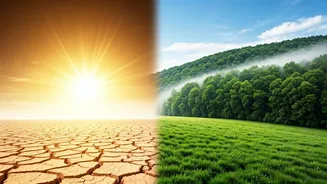
While the Arabian Sea branch of the monsoon zips past the Thar, another branch comes from the Bay of Bengal, sweeping in from the east. By the time these winds have traveled over a thousand miles across Bangladesh and northern India, they have already shed most of their moisture. When they finally reach the eastern side of the Aravalli Range, they are forced to rise. This causes them to dump whatever remaining rain they have on the eastern, windward slopes of the mountains, which are relatively green and fertile. The Thar Desert, sitting on the western side of the range, is left in what's known as a "rain shadow." The air that descends on the desert side is now dry and warm, creating the arid conditions that define the region. The mountains effectively act as a gate, letting rain fall on one side while keeping the other dry.
A Desert Fighting Back
The geography of the mountains isn't the only factor. The desert itself contributes to its own dryness. The intense heat of the Thar Desert creates a strong thermal low-pressure system. This might seem like it should attract moisture, but the air is so hot and unstable that it prevents the moisture that does arrive from condensing into rain clouds. Furthermore, the upper-air circulation patterns, including a powerful subtropical jet stream, effectively put a "lid" on the atmosphere, suppressing cloud formation. This combination of surface heat and high-altitude winds creates a powerful self-reinforcing cycle of aridity. The desert is not just a passive victim of geography; its own climate actively works to keep the rain away.
Life in the Great Indian Desert
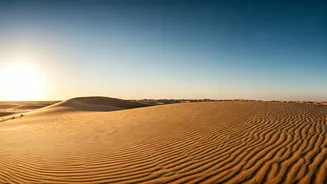
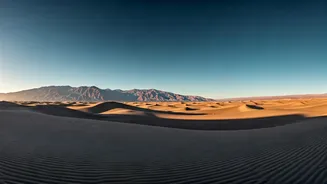
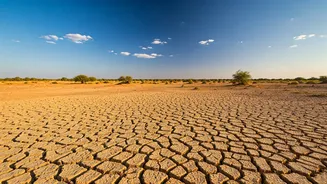
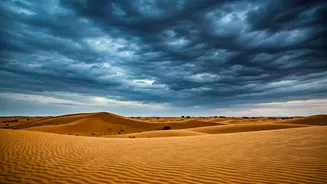
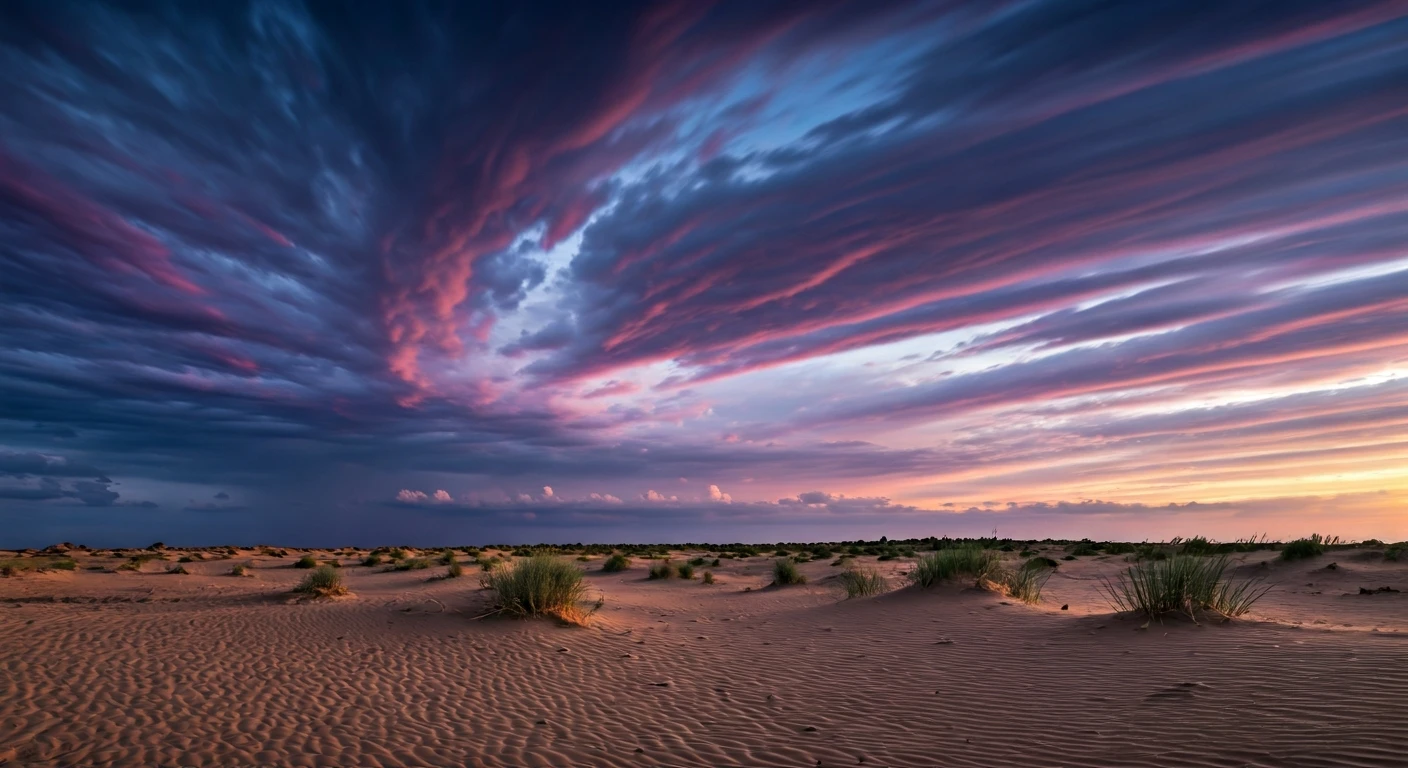
Despite receiving less than 10 inches of rain a year, the Thar Desert is surprisingly full of life. It's the most densely populated desert in the world, with resilient communities that have adapted over centuries to the harsh conditions. Traditional practices like rainwater harvesting in underground tanks (taankas) and stepwells (baoris) are ingenious solutions to water scarcity. The flora and fauna are equally adapted. Thorny shrubs like Khejri, which can survive with minimal water, dot the landscape, and animals like the chinkara (Indian gazelle) and the desert fox have evolved to thrive in this extreme environment. Life here is a testament to adaptation, shaped entirely by the powerful forces that allow rain to fall everywhere but here.