






More Than Just a Big Picture
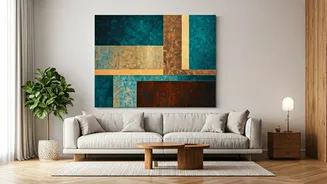
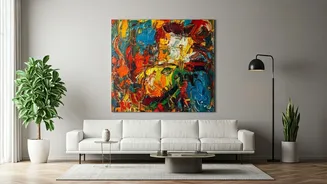
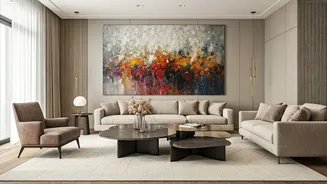
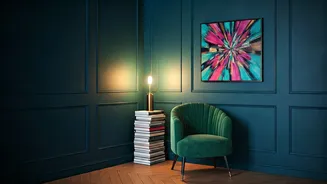
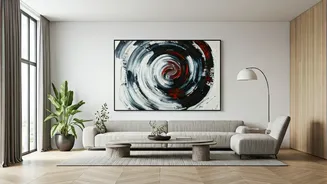
Why does large-scale art work so well? It’s about command and focus. In a room filled with smaller objects—books, lamps, pillows, furniture—a single, massive piece of art acts as an anchor. It immediately draws the eye, creating a clear focal point and telling
people where to look. This simple act of directing attention brings a sense of calm and order to a space, paradoxically making it feel less cluttered. Furthermore, it’s a design trick that plays with perception. Many people assume a large painting will overwhelm a small room, but the opposite is often true. A substantial piece of art can make a space feel larger and more expansive. By occupying a significant portion of a wall, it creates an illusion of depth and grandeur. Instead of your eye stopping at a dozen small frames, it takes in one unified, impactful statement, which reads as confidence, not clutter.
How to Choose Your Statement Piece
Choosing art is deeply personal, and that’s the point. Don’t worry about what’s “in”; focus on what you love. Whether it's a moody abstract, a serene landscape photograph, or a vibrant graphic print, the piece should evoke an emotion you want to feel in that room. Start by considering your existing color palette. You can either choose art that pulls from those colors for a cohesive, monochromatic look, or you can select a piece with a bold, contrasting color to act as a dramatic accent. Think about the mood. In a living room where you entertain, you might want something energetic and conversation-starting. For a bedroom, a calming, tranquil piece is often a better fit. Above all, trust your gut. Scour online galleries, visit local art fairs, or browse sites like Etsy and Society6. The right piece will stop you in your tracks. When you find it, don't second-guess its size—the rule of thumb for oversized art is that it should be at least two-thirds the width of the furniture it’s hanging over, like a sofa or a headboard.
Placement Is Everything
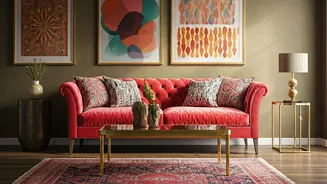
Where you hang your art is just as important as the art itself. The most classic placement is centered over the largest piece of furniture in the room, typically the sofa in the living room or the bed in the bedroom. This creates a balanced, intentional look. When hanging, aim for the center of the artwork to be at average eye level, which is about 57 to 60 inches from the floor. Also, leave about 6 to 8 inches of space between the bottom of the frame and the top of your furniture to ensure the two elements feel connected, not disconnected. Don’t limit yourself to the living room. A tall, vertical piece can work wonders in an entryway, making the ceiling feel higher. A wide, panoramic piece at the end of a long hallway provides a stunning destination point, drawing you through the space. And for a more casual, studio-like vibe, don’t hang it at all. Simply leaning a massive framed canvas against a wall is an effortlessly chic look that feels modern and relaxed.
Go Big Without Going Broke
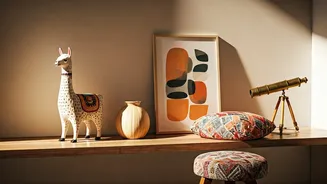
The words “oversized art” can sound expensive, but they don’t have to be. Your walls can have a high-end look without the high-end price tag. One of the most affordable routes is purchasing a digital download from an artist on a platform like Etsy. For just a few dollars, you get a high-resolution file that you can have printed locally in a large format, often for under $100. Look for engineering prints or large-format photo printing services. Get creative with materials. A beautiful textile or a vintage tapestry can serve the same function as a painting, adding texture and warmth. You can hang it from a simple curtain rod or dowel. Another option is DIY art. Buy the largest blank canvas you can find and create your own minimalist abstract piece with just two or three complementary colors. The goal isn't a masterpiece; it's a custom piece that fills the space with color and intention. You might be surprised at how empowering—and effective—it can be.