




Why Pruning is Your Plant's Best Defense
While it might seem counterintuitive to cut back a thriving plant, strategic pruning is one of the most effective ways to prepare your garden for intense weather. In the American Southwest, this means getting ready for the summer monsoon. For the rest
of the country, it’s about preparing for hurricane-season downpours or severe thunderstorms. Overgrown, dense canopies act like sails in high winds, catching gusts that can snap branches or even uproot entire plants. Furthermore, crossing or rubbing branches create wounds that become entry points for fungal and bacterial diseases, which thrive in the damp, humid conditions that follow a storm. By selectively thinning your plants, you not only reduce wind resistance but also improve air circulation, allowing foliage to dry faster and lowering the risk of disease.
The Anatomy of a 'Clean Cut'
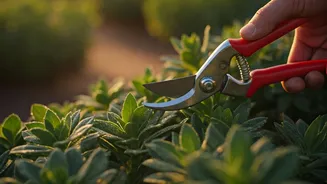
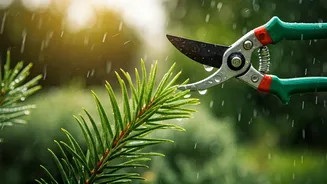
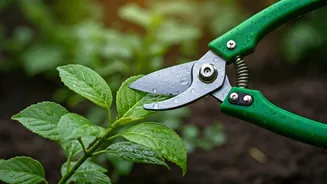
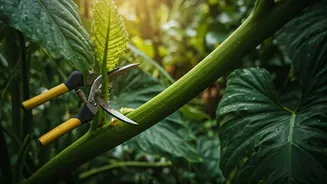
The phrase “clean cut” is the key to success. A ragged, torn cut made with dull tools crushes a plant’s vascular system, slowing its ability to heal and leaving it vulnerable to pests and rot. A clean cut, by contrast, is a surgical incision for your plant. It’s made with sharp, sterilized bypass pruners, loppers, or a saw. The ideal cut is made at a 45-degree angle about a quarter-inch above a bud, node, or intersecting branch. This angle prevents water from pooling on the cut surface, which would otherwise encourage rot. For larger branches, using the three-cut method (an undercut first, then a top cut further out, and a final cut close to the collar) prevents the bark from tearing and ensures a clean wound that the plant can seal quickly and efficiently.
What to Target: The Three D's
Knowing what to prune is just as important as how. Your primary targets should be the “Three D’s”: any wood that is dead, damaged, or diseased. These branches are weak, unproductive, and liabilities in a storm. They are the first to break and can cause significant damage to healthy parts of the plant when they fall. After addressing the Three D’s, look for branches that are crossing, rubbing against each other, or growing inward toward the center of the plant. Removing these will open up the canopy. Finally, selectively thin out some of the densest areas to allow wind to pass through rather than push against the plant. Avoid the temptation to give the plant a severe haircut; the goal is strategic removal, not a total overhaul. Never remove more than one-third of a plant’s mass at one time.
Timing, Tools, and Sterilization
Timing your pre-storm pruning is crucial. The best window is in late spring or early summer, just before the storm season typically kicks into high gear. This gives the plant enough time to heal the cuts before being exposed to prolonged wet weather. Avoid major pruning during the peak of the heat or once the rainy season has already begun, as this can stress the plant. Your toolkit doesn't need to be extensive, but it must be sharp and clean. A good pair of bypass pruners handles small stems, loppers are for branches up to an inch and a half thick, and a pruning saw is for anything larger. Before you start and between each plant, wipe your blades with a solution of 70% isopropyl alcohol or a 10% bleach solution. This simple step prevents the transfer of disease from one plant to another, ensuring your well-intentioned cuts don't cause a new problem.