




The Appeal of a Slower Current
For generations, the American summer vacation has been synonymous with the ocean—crashing waves, bustling boardwalks, and a horizon stretching into infinity. But as travelers increasingly seek refuge from the noise of modern life, many are turning inland.
They’re trading the epic scale of the sea for the intimate, grounding presence of a river.
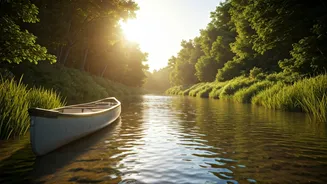
The appeal lies in the pace. While the ocean’s energy is one of constant, powerful motion, a river offers a steady, predictable flow. It’s a natural metronome that encourages you to unplug and recalibrate. The sound of water meandering over rocks is inherently therapeutic, a form of natural white noise that can drown out anxious thoughts. This isn’t about conquering nature; it’s about coexisting with it, finding a rhythm that feels restorative rather than demanding.
More Than Just Water
A riverside holiday is a full sensory experience. It’s the cool mist on your skin during a morning kayak trip, the earthy smell of the riverbank after a brief shower, and the sight of a bald eagle soaring over a tree line. These vacations are deeply rooted in the American landscape, connecting travelers to the arteries that have shaped the nation’s history and geography.
Unlike many coastal destinations that can feel homogenized by tourism, river communities often retain a distinct, authentic character. These are the historic mill towns of New England, the charming main streets of the Midwest, and the laid-back Hill Country outposts in Texas. The vacation becomes less about the destination as a backdrop for Instagram and more about the place itself—its history, its people, and its unique culture.
From Lazy Afternoons to Active Adventures
The “calm” of a riverside holiday shouldn’t be mistaken for boredom. The beauty of this trend is its flexibility. A day can be as passive or as active as you wish. For many, the peak experience is simply sitting in an Adirondack chair with a book, watching the water drift by. Others might spend hours peacefully fishing from a dock or a small boat.
But for those seeking more activity, the options are plentiful. Kayaking and canoeing offer a way to explore quiet coves and wildlife habitats at your own pace. Stand-up paddleboarding provides a gentle core workout with a fantastic view. In warmer climates, grabbing an inner tube and floating for a few miles with friends is a quintessential summer ritual. Many river areas are also flanked by trails for hiking and biking, offering a “surf and turf” approach to outdoor recreation.
Finding Your Perfect River Escape
The diversity of America’s rivers means there’s a perfect spot for every type of traveler. You don’t need a specific recommendation list, but rather an idea of the vibe you're after. History buffs can explore the grand towns along the Hudson River in New York or the Mississippi River in the South, where historic mansions and maritime museums abound.
Those looking for dramatic scenery might be drawn to the towering cliffs of the Columbia River Gorge in the Pacific Northwest. Families seeking easy, accessible fun might look to the smaller, warmer rivers of the Ozarks or Texas Hill Country, known for their clear water and excellent tubing outfitters. And for pure, quiet immersion in nature, the rivers of Vermont, Maine, and Northern California offer a sense of profound escape, where the main attractions are the trees, the water, and the quiet.