



From Infinity Pools to Intricate Ecosystems
For decades, the ultimate travel humblebrag was a photo album of predictable luxuries: the overwater bungalow in the Maldives, the champagne flute against a Parisian backdrop, the five-star hotel lobby that could be anywhere and everywhere. The goal was to signal
access to a world of curated, expensive comfort. But a quiet revolution is underway, driven by a generation more concerned with planetary health and authentic experiences than with thread counts and tasting menus. The new travel flex isn't about what was built for you, but what you were lucky enough to witness. It’s less about consumption and more about connection. Instead of conquering a destination, the goal is to understand it, participate in it, and maybe even leave it a little better than you found it. This shift is turning previously overlooked natural wonders into the world’s most coveted backdrops.
The Art of Growing a Bridge
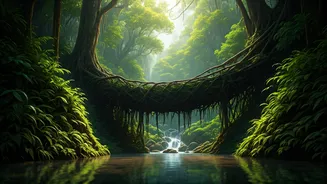
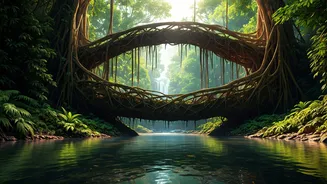
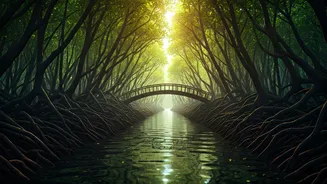
Nowhere is this new ethos more beautifully embodied than in the living root bridges of Meghalaya, India. These are not constructed marvels of steel and concrete; they are living, breathing structures patiently guided into existence over decades, sometimes centuries. The Khasi and Jaintia peoples weave and train the aerial roots of rubber fig trees across rivers and ravines, creating intricate, sturdy bridges that grow stronger with time. Visiting one is not a simple tourist transaction. It often requires a multi-hour trek through dense, humid jungle, a physical commitment that filters out the casual observer. The reward is a profound sense of awe—not just at the bridge itself, but at the symbiotic relationship between humans and nature it represents. Posting a photo from a root bridge says something different than a photo from a resort. It says, 'I hiked for this. I respected this. I witnessed something that took 100 years to create.' It’s a flex of patience, endurance, and cultural appreciation.
Wading into the Mangrove Movement
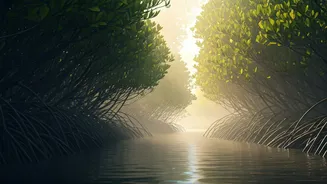
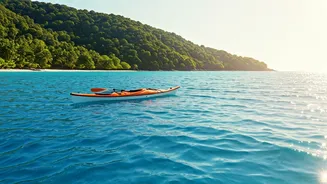
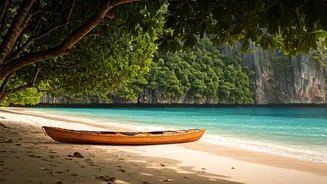
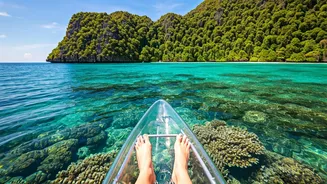
Similarly, the world’s mangrove forests—once dismissed as swampy, impenetrable coastlines—are becoming bucket-list destinations. These tangled, brackish ecosystems are planetary superheroes. They are nurseries for marine life, critical carbon sinks that sequester four times more carbon than rainforests, and natural barriers that protect coastal communities from storm surges. For travelers, they offer a unique sense of discovery. Kayaking through the silent, cathedral-like channels of a mangrove forest, watching for monkeys in the canopy and juvenile sharks in the shallow roots, is an immersive, almost primal experience. Destinations in Florida, Thailand, and the Sundarbans of Bangladesh are seeing a rise in tours that are part conservation, part adventure. Some programs even invite travelers to participate in mangrove restoration by planting saplings. The flex here is about ecological intelligence. It’s about choosing a vacation that contributes to, rather than just extracts from, the local environment.
The Rise of Regenerative Bragging Rights
At its heart, this trend is about a redefinition of value. The old flex was a display of financial capital. The new flex is a display of cultural and ecological capital. It’s proof that you’re in the know—that you understand the fragility of our planet and are seeking out experiences that honor it. It reflects a growing desire for what travel industry experts call 'regenerative travel,' a step beyond simple sustainability. The goal is no longer just to 'leave no trace,' but to actively participate in the healing and preservation of a place. In a world saturated with identical digital-nomad-in-a-cafe photos, the rarity and meaning of a root bridge or a healthy mangrove stand out. They are, in their own quiet way, the ultimate status symbols because they cannot be easily bought, replicated, or faked. They require effort, intention, and a genuine curiosity about the world.