





The Mountain We Make of Scraps
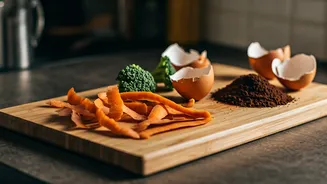
First, let's talk scale. The average American family throws away a significant amount of food, and not all of it is spoiled leftovers. A huge portion is made up of inedible or unused parts: stems, peels, rinds, and bones. According to the Environmental
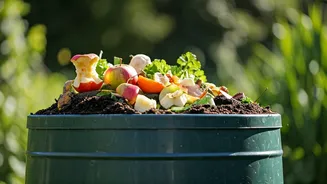
Protection Agency (EPA), food is the single largest category of material placed in municipal landfills, where it rots and releases methane, a potent greenhouse gas. For decades, the primary solution was the garbage disposal or the trash can, a one-way ticket to a landfill. Composting offered a better alternative for those with the space and inclination, but it remained a niche activity for many. Now, that's changing, driven by a combination of municipal policy, corporate innovation, and a growing consumer desire to live more sustainably. The sheer volume of this organic 'waste' has made it an unignorable problem—and a tantalizing opportunity.
Beyond the Backyard Compost Pile
While home composting is a fantastic step, the real sea change is happening at a community and industrial level. Cities from San Francisco, California, to Cambridge, Massachusetts, have rolled out mandatory curbside composting programs. Residents toss their food scraps into a separate green bin, just like recycling. But instead of just becoming garden soil, this collected organic matter is being put to more ambitious uses. One of the most powerful technologies is anaerobic digestion. At large-scale facilities, food scraps are broken down by microorganisms in an oxygen-free environment. This process doesn't just create a nutrient-rich soil amendment; it also captures biogas, which can be refined into renewable natural gas to power city buses or heat homes. It’s a closed-loop system that turns a city’s collective leftovers into a source of clean energy, fundamentally altering the equation of urban waste.
From Food Waste to High-Tech Materials
The most surprising 'second lives' for kitchen scraps are emerging from science labs and startups. Innovators are treating food waste as a raw material for entirely new products. Imagine a durable, compostable plastic alternative made from potato peels, or a supple, leather-like textile crafted from discarded apple cores and skins. These aren't science fiction. Companies are already transforming used coffee grounds into printing filaments, oils, and even shoe soles. Others are extracting proteins and fibers from brewery grain and other agricultural byproducts to create everything from food additives to fabrics. This movement, often called 'upcycling,' views every peel and pit not as something to be managed, but as a bundle of valuable molecules—cellulose, pectin, proteins, and sugars—waiting to be repurposed. It’s a core principle of the circular economy, where the concept of 'waste' is designed out of the system.
The Countertop Revolution at Home
This new perspective on waste is also empowering people in their own kitchens. Beyond simply composting, home cooks are finding clever ways to give their scraps an immediate second life. The butt-ends of scallions, lettuce heads, and celery stalks can be placed in a shallow dish of water on a windowsill to regrow, providing a small but satisfying harvest. Vegetable peels, onion skins (which add a deep, golden color), and herb stems that might otherwise be binned can be simmered in water to create a flavorful, free vegetable broth. Used coffee grounds make for an excellent nitrogen-rich fertilizer for acid-loving plants like roses and blueberries, or can be used as a gentle scrubbing abrasive. Citrus peels can be infused in vinegar for a powerful, fragrant, all-purpose cleaner. These small acts don't just reduce waste; they cultivate a mindset of resourcefulness and a deeper connection to the food we eat.