



The 5,000-Planet Milestone
In early 2022, NASA officially confirmed the discovery of the 5,000th exoplanet—a planet orbiting a star outside our solar system. That number has been climbing steadily ever since. To put that in perspective, the first exoplanets were only definitively
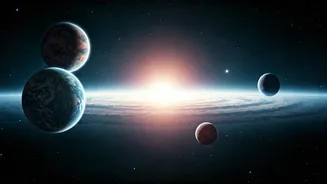
confirmed in the early 1990s. For millennia, the existence of other worlds was pure speculation. In just one generation, we’ve gone from knowing of zero to confirming thousands. This isn't just about hitting a big, round number. This milestone represents a fundamental shift in our understanding of the cosmos. It suggests that planets aren't a rare fluke of our own sun but a common, almost inevitable byproduct of star formation. The data indicates there are likely more planets than stars in the Milky Way. Think about that: for every point of light you see in the night sky, there’s a good chance at least one world is circling it, and likely more.
How Do You Find a World Light-Years Away?
You can’t just point a telescope and see an exoplanet. They are incredibly small and faint, completely washed out by the glare of their parent stars. So scientists have become ingenious cosmic detectives, using indirect methods to find them.
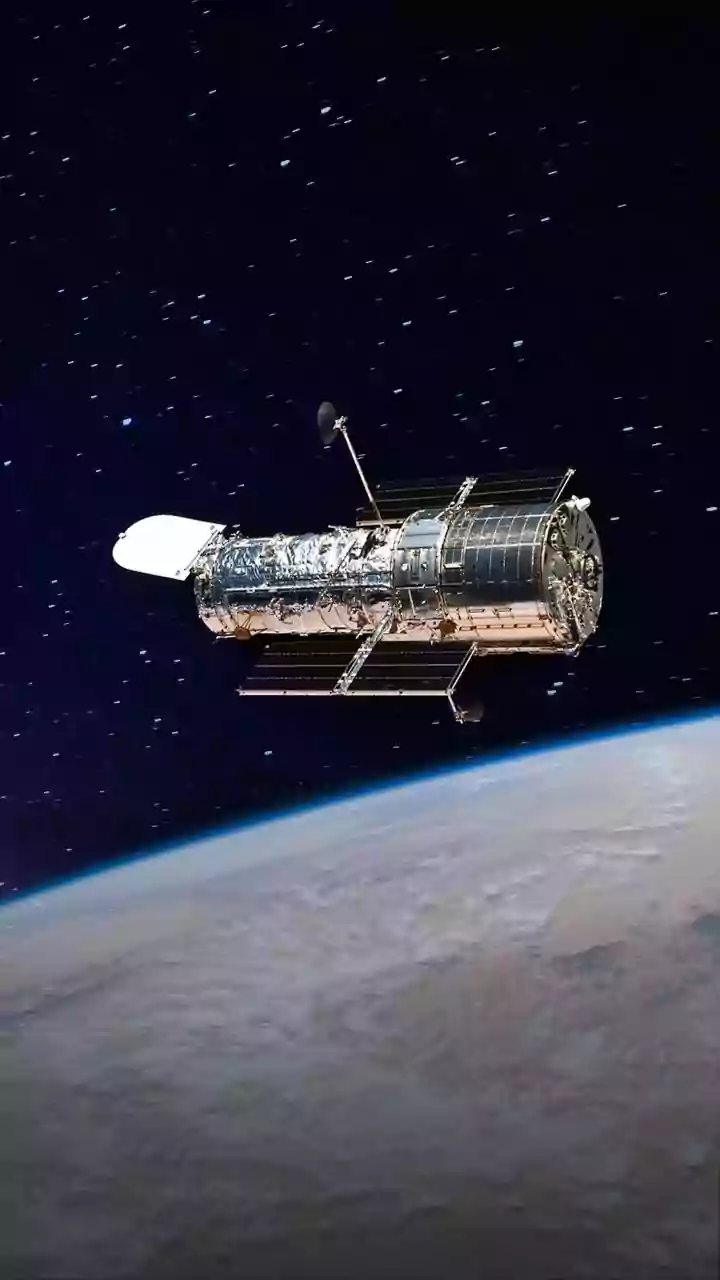
The most successful technique is the “transit method,” used by missions like the Kepler Space Telescope. It works by staring at a patch of stars and waiting for a tiny, periodic dip in a star's brightness. This dip is caused by a planet passing in front of it, like a moth flying in front of a distant searchlight. By measuring how much the light dims and how often it happens, astronomers can calculate the planet’s size and how long its year is.
Another key technique is the “radial velocity” or “wobble” method. As a planet orbits a star, its gravity tugs on the star, causing it to wobble ever so slightly. Scientists can detect this wobble by observing shifts in the star’s light spectrum. It’s an incredibly subtle effect, but it can reveal a planet's presence and even give an estimate of its mass.
A Galactic Zoo of Strange Worlds
While we all hope to find an “Earth 2.0,” the thousands of planets discovered so far have revealed a stunning and bizarre diversity that defies easy categorization. Our solar system, it turns out, might not be the norm.
Among the discoveries are “Hot Jupiters,” gas giants larger than Jupiter that orbit their stars in a matter of days, roasting at thousands of degrees. There are “Super-Earths,” rocky worlds larger than our own, and “Mini-Neptunes,” which are smaller than our ice giants but still much larger than Earth. Some planets orbit two stars at once, creating the real-life equivalent of Tatooine from *Star Wars*. Others are “rogue planets” that drift through the darkness of space, untethered to any star at all.
This cosmic zoo shows that nature’s imagination for building planets is far wilder than our own. About 30% of the known planets are gas giants, 35% are Neptune-like, and about 31% are Super-Earths. Only around 4% are terrestrial, or rocky planets roughly the size of Earth or Mars.
So, What's the Next Frontier?
Finding these worlds is just the first step. The next, much harder step is figuring out what they’re like. Are they barren rocks, swirling gas balls, or something else entirely? Could any of them harbor life?
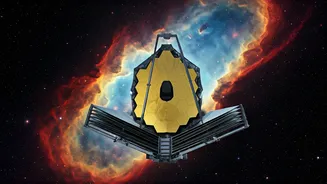
This is where the next generation of observatories, particularly the James Webb Space Telescope (JWST), comes in. When a planet transits its star, a tiny fraction of the starlight passes through the planet’s atmosphere (if it has one). The JWST is powerful enough to capture that light and analyze its chemical makeup. By looking for the spectral fingerprints of gases like water, methane, and oxygen, scientists can hunt for “biosignatures”—signs that might indicate the presence of life.
This new phase of exploration moves beyond just counting planets to characterizing them. We haven’t found alien life, or even a truly Earth-like planet yet. But with thousands of worlds to choose from and powerful new tools to study them, we’ve officially entered a new era of discovery. The hunt is no longer just for other planets; it’s for other possibilities.