







The Old Guard: Intensity as King
For years, urban Indian fitness culture, heavily influenced by Bollywood's chiseled physiques and Western bodybuilding ideals, orbited a single star: intensity. The goal was often aesthetic and absolute—bigger muscles, lower body fat, heavier lifts. Gyms
were temples of iron, where 'no pain, no gain' wasn't just a slogan but a guiding principle. This approach, mirrored in high-intensity interval training (HIIT) and CrossFit-style workouts, promised rapid transformation and catered to a younger demographic seeking visible results. This culture wasn't born in a vacuum. It was a modern evolution of the traditional 'akhada' (wrestling school) ethos, which prized raw strength and physical dominance. The new gyms simply swapped the mud pits for air-conditioned rooms and selectorized machines. The underlying philosophy, however, remained similar: push your body to its absolute limit. Success was measured in kilograms on the bar and inches on the biceps. While effective for building peak strength and muscle mass, this singular focus often came with a hidden cost: burnout, injury, and a training style that was difficult to sustain past a certain age.
The New Wave: Movement for Life
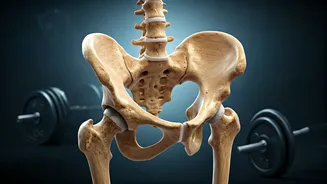
Enter functional longevity fitness. It’s a less flashy, more thoughtful approach that asks a different question: not 'how much can you lift today?' but 'how well can you move in 30 years?' This paradigm shift redefines 'fitness' as the ability to live a full, active, and pain-free life for as long as possible. The focus is on foundational pillars that the intensity-only model often overlooks: mobility (the range of motion of your joints), stability (the ability to control that movement), balance, and foundational strength. In practice, this looks very different from a classic bodybuilding split. A session might start with 15 minutes of dedicated mobility work for hips and shoulders. Instead of just bench presses, you might see exercises that challenge balance and coordination, like single-leg Romanian deadlifts or Turkish get-ups. The goal isn't just to build a muscle, but to improve a movement pattern—like the ability to get up off the floor without assistance, carry groceries without back pain, or play with grandchildren without fear of injury. It’s a proactive investment in your future self.
What's Driving the Shift?
This isn't just a random change in taste; several powerful forces are driving this evolution in India. The COVID-19 pandemic was a major catalyst, forcing a collective reckoning with health that went beyond aesthetics. Suddenly, respiratory health, immune function, and overall resilience became paramount. People who had been stuck at home realized the importance of basic, pain-free movement. Furthermore, the first generation of Indian gym-goers from the '90s and 2000s is now entering their 40s and 50s. They are contending with the consequences of years of high-impact, intensity-first training: chronic joint pain, nagging injuries, and decreased mobility. They are now seeking fitness solutions that heal and sustain rather than break down. This has created a burgeoning market for physical therapists, mobility coaches, and yoga instructors who can integrate their principles into modern strength training. The wellness information boom, accessible via the internet, has also empowered a new generation of fitness enthusiasts to look beyond brute force and seek out more intelligent, science-backed training methods.
A Familiar Story for U.S. Observers
For anyone following fitness trends in the United States, this story sounds remarkably familiar. Here, too, there is a growing movement away from the 'beast mode' culture that dominated the 2010s. Influential figures like Dr. Peter Attia have brought the concept of 'longevity' into the mainstream, popularizing the 'Centenarian Decathlon'—a list of physical tasks one should be able to perform in old age. The explosive growth of mobility apps, the focus on Zone 2 cardio for mitochondrial health, and the idea of a 'movement practice' are all reflections of the same shift. What's happening in India is not an isolated phenomenon but a local chapter in a global story. It shows how interconnected the world of wellness has become. As societies everywhere grapple with aging populations and the desire for a higher quality of life, the definition of 'fitness' is undergoing a necessary and welcome expansion. The focus is broadening from a short-term pursuit of an ideal body to a long-term strategy for a resilient, capable, and vibrant life.