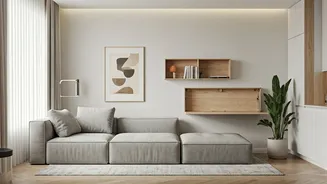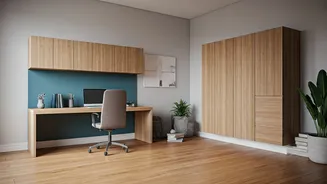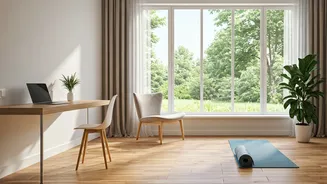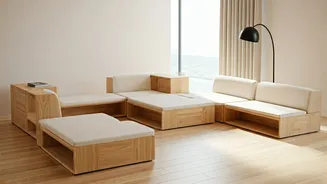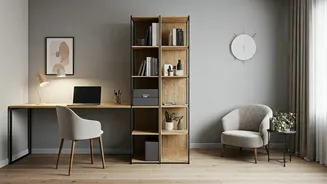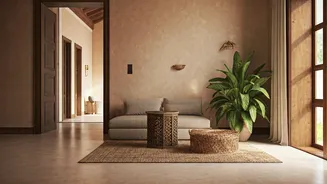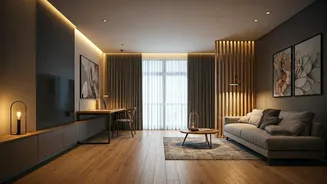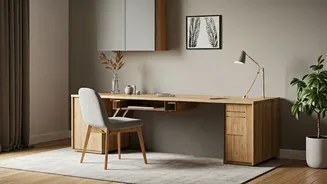


1. Master the Art of Zoning
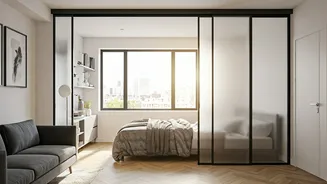
Before you buy a single piece of furniture, grab a notepad. The first step is to mentally (or physically) map out your space. Zoning isn't about building walls; it's about creating distinct visual and functional areas. Decide where your "office" will
live, even if it's just a three-foot-wide nook. Designate the corner with the best morning light as your workout spot. The key is to assign a primary purpose to each square foot. This act of definition prevents the dreaded 'one-room-chaos' where your yoga mat becomes a tripping hazard on your way to the fridge. Think of your floor plan as a puzzle. Your task is to arrange the pieces—work, relaxation, and fitness—so they fit together harmoniously without overlapping and causing stress.
2. Invest in Multi-Functional Furniture
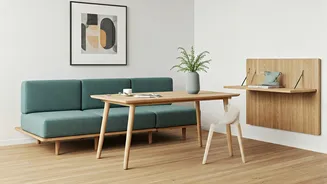
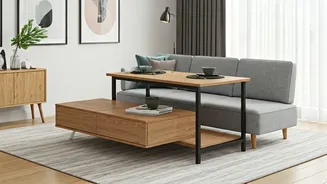
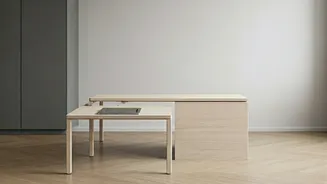
In a small home, every piece of furniture must earn its keep. Look for items that can serve two or three purposes. A sleek lift-top coffee table can transform from a lounge centerpiece into an ergonomic work desk in seconds. An ottoman with hidden storage can hold your free weights and resistance bands, then serve as extra seating when guests arrive. Consider a stylish daybed that functions as a sofa for lounging and a guest bed when needed. Wall-mounted, fold-down desks are a game-changer, providing a sturdy work surface that disappears when the workday is over. This approach isn't about having less; it's about having smarter things that adapt to your needs throughout the day, effectively giving you three rooms in one.
3. Use Rugs and Paint to Create Boundaries
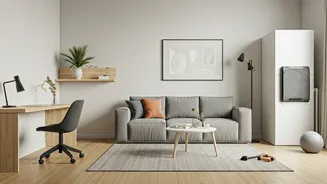
You don't need walls to divide a room. Visual cues are incredibly powerful for creating psychological separation between your different zones. The simplest way to do this is with area rugs. Place a distinct rug under your desk and chair to define the 'office.' Use another, plusher rug to anchor your lounge area with the sofa and coffee table. This visually separates the spaces, signaling a shift in function. Another pro trick is using paint. Create an accent wall behind your desk or in your workout corner. This block of color acts as a visual backdrop that sets the area apart from the rest of the room. Even a tall, open-backed bookshelf can act as a permeable divider, separating your lounge from your workspace without blocking light.
4. Think Vertically
When floor space is at a premium, the only way to go is up. Vertical space is the most underutilized asset in most small homes. Instead of a wide, short bookcase, opt for a tall, narrow one. Install floating shelves above your desk for office supplies, freeing up your work surface. Wall-mounted storage is your best friend. In the workout zone, use wall hooks for yoga mats, resistance bands, and jump ropes. This gets clutter off the floor, making the space feel larger and more organized. A wall-mounted television in the lounge area frees up the need for a bulky media console, giving you more floor space and a cleaner aesthetic.
5. Embrace Portable and Stowable Solutions
Not every zone needs to be permanent. Your workout area, in particular, can be a pop-up. A quality yoga mat, a set of adjustable dumbbells, and a subscription to a fitness app can constitute a world-class gym that can be neatly packed away into a closet or under a bed after your session. The same goes for your office. A 'work-in-a-box' approach, where your laptop, notebook, and pens live in a decorative box, can help you transition from work to relaxation. At 5 p.m., simply pack up the box and reclaim your dining table. Folding screens are another brilliant, low-cost tool. They can be used to hide your workout equipment or conceal your desk, providing a powerful psychological cue to switch off and relax.