




The Squeeze of Urban India
In sprawling metropolises like Mumbai, Delhi, and Bengaluru, the dream of a spacious home is colliding with the reality of staggering population density and skyrocketing real estate prices. A typical new apartment in Mumbai might measure between 400 and 800
square feet—a size that would be considered a small one-bedroom in many American cities, but here must often accommodate a multi-generational family. For the country's burgeoning middle class, the choice isn't between a large home and a small one, but between a small, smartly designed home and an unlivable one. This intense pressure has become a powerful catalyst for architectural innovation, forcing designers to completely rethink the static nature of walls and rooms.
The Rise of the Transformer Apartment
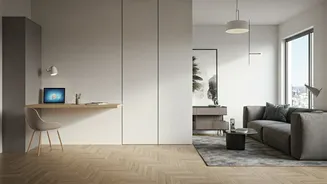
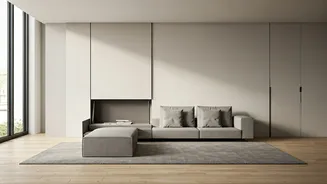
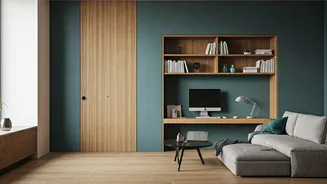
Enter the concept of the “flexible” or “transformable” home. This goes far beyond a simple Murphy bed or a fold-out table. We're talking about entire walls that slide, pivot, or retract to completely redefine a floor plan on demand. Architects are using lightweight but sturdy partition systems, often integrated with storage, to create spaces that serve multiple purposes throughout the day. A single, open area can function as a living room for entertaining guests in the evening, a play area for children in the afternoon, and two separate, private bedrooms at night. Furniture is no longer just furniture; it's part of a dynamic system. A TV console might contain a fold-down desk, while a platform bed might conceal a dining table and benches that roll out when needed. These homes are programmed for life, not just built for shelter.
A Modern Solution for a Timeless Culture
What makes this trend so compelling is how it fuses cutting-edge design with deep-seated cultural values. Indian culture places a high premium on hospitality and community. The ability to host guests, even for extended stays, is incredibly important. In a traditional, larger home, this was simple. In a 600-square-foot apartment, it’s a logistical nightmare. Flexible design provides an elegant solution. A family can live comfortably in their two-bedroom configuration, but when relatives visit, a sliding wall can instantly create a third, private guest room. It also caters to the evolving nature of the Indian family itself. While nuclear families are more common in cities, the need to care for aging parents remains. A flexible layout allows a home to adapt, creating a downstairs bedroom for an elderly parent or a quiet study nook for a child preparing for exams, all without the need to move.
What We Can Learn From Smart, Small Living
While born of necessity in India, this design philosophy offers powerful lessons for anyone living in a small space, whether it’s a studio in New York or a downsized home in the suburbs. The core principle is to think about space not in terms of square feet, but in terms of cubic feet and time. It challenges the idea that every activity needs its own dedicated, walled-off room. By prioritizing multi-functionality, we can make our homes work harder for us. The lesson is to design for the life you actually live. Do you work from home three days a week but only use your dining room twice a year? Maybe that space could be doing double duty. The Indian flexible home teaches us that true luxury isn't about having more space, but about having smarter space that adapts to our needs.