






The Post-Pandemic Travel Gauntlet
Remember when you could book a spontaneous weekend getaway with little more than a credit card and a whim? Those days feel like a distant memory. We’re now living in the era of “revenge travel,” a period defined by pent-up demand, soaring prices, and logistical
friction at every turn. Airlines are stretched thin, popular destinations are overrun, and that charming little boutique hotel you saw on Instagram was likely booked six months ago. In this new landscape, a lack of planning isn’t just inconvenient; it's a recipe for disaster. A partner who can’t or won’t engage with the details—who assumes things will just “work out”—is inadvertently signing you both up for stress, disappointment, and budget-breaking emergencies. The ability to navigate this gauntlet, to foresee choke points and book strategically, has shifted from a nice-to-have skill to a fundamental act of partnership care. It’s a demonstration of foresight and a shared commitment to protecting your precious time and money.
More Than Just Booking Flights
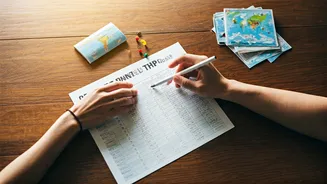
Let’s be clear: “itinerary skills” are no longer just about finding a flight and a place to stay. The modern travel planner is a multi-hyphenate role. They are a researcher, a budget analyst, a vibe curator, and a risk manager all in one. It starts with the budget. Can your partner build a realistic financial plan for a trip, accounting not just for hotels but for meals, activities, and transportation? This is a microcosm of how you’ll handle larger financial decisions as a couple. Then there’s the research. In an age of infinite information, a good planner knows how to sift through TikTok recommendations, travel blogs, and thousands of conflicting reviews to find what’s actually worth it. They read the fine print on cancellation policies and understand the trade-offs between cost and convenience. This isn’t tedious administrative work; it’s the intellectual and emotional labor of designing a shared experience. A partner who masters this shows they value the quality of your time together.
The Curator of Shared Experience
A great trip is more than a series of logistical successes; it’s a story you tell together. The person planning the itinerary is, in essence, the lead author of that story. Their choices reflect their understanding of you, them, and the “us” you form as a couple. Do they plan a trip that only caters to their interests, or do they build an itinerary that balances both of your desires? Do they leave room for spontaneity, or do they schedule every minute with military precision? This is where planning becomes an act of emotional intelligence. A partner who knows you need a slow morning with coffee, or that you’d prefer one amazing museum visit over three mediocre ones, is a partner who is paying attention. They aren’t just booking activities; they are trying to craft joy and minimize friction. In a world saturated with options, the ability to curate a trip that feels uniquely *yours* is a profound expression of love. It shows they see you and want to build a life—not just a vacation—that makes you both happy.
The Unofficial Crisis Manager
No plan is foolproof. Flights get canceled, bags get lost, and that “highly-rated” restaurant turns out to be a tourist trap. This is where a planner’s true character is revealed. A good itinerary isn’t just a plan A; it has a hint of a plan B built in. More importantly, the person who made the plan often becomes the default crisis manager. How do they react when things go wrong? Do they panic and assign blame, or do they calmly pivot to the next-best option? A partner who has already downloaded the airline’s app, saved confirmation numbers offline, and knows the basics of their travel insurance isn’t being neurotic; they’re being resilient. Watching a partner handle travel-related adversity is a powerful preview of how they’ll handle life’s bigger, more serious curveballs. Their ability to stay calm, find a solution, and keep the team’s morale up is perhaps the most valuable skill of all.