





Not Your Average Yoga Flow
If your mental image of yoga involves a fast-paced, sweat-inducing sequence of poses, prepare to meet its polar opposite. Yin yoga is a slow, quiet, and meditative practice that is less about building muscle and more about releasing tension. Unlike dynamic
'yang' styles like Vinyasa or Ashtanga, which focus on muscular effort and rhythmic movement, Yin targets the body's deeper connective tissues—the ligaments, joints, and fascia. The core of the practice is simple: practitioners settle into a passive stretch and hold it for an extended period, typically three to five minutes, or even longer. There are no 'flows' or rapid transitions. Instead of pushing your body to its limit, the goal is to find your 'edge'—that first point of resistance—and then soften into it, allowing gravity and time to do the work. It’s an exercise in stillness and surrender, a far cry from the high-energy fitness classes that dominate the wellness world.
The Deep Science of the Stretch
Why hold a pose for so long? The answer lies in the tissues Yin yoga aims to influence. Fascia, a web-like network of connective tissue that wraps around every muscle, bone, and organ, is notoriously stubborn. Quick, active stretches are great for warming up muscles, but they don’t provide the sustained, gentle pressure needed to hydrate and remodel this deeper matrix. Over time, stress, inactivity, or repetitive motion can cause fascia to become tight, dry, and restricted, leading to stiffness and aches. By holding poses for several minutes, Yin yoga applies a gentle, consistent stress to these deep tissues. This process is thought to stimulate the cells responsible for producing collagen and elastin, helping to restore elasticity and hydration to the fascia and improve joint mobility. Think of it like patiently untangling a delicate knot rather than yanking on it. This deliberate slowness is not a sign of an 'easy' workout; it's a strategic approach to unlocking a different kind of physical freedom.
A Reset for Mind and Nervous System
The 'calm fitness reset' promised by the practice is more than just physical. The long, silent holds create a unique opportunity for mental and emotional release. In our fast-paced lives, we spend most of our time in a 'fight-or-flight' state, governed by the sympathetic nervous system. Yin yoga flips that switch. The emphasis on slow breathing and stillness helps activate the parasympathetic nervous system, responsible for 'rest and digest' functions. This shift can lead to a measurable decrease in heart rate, lower blood pressure, and a profound sense of calm. The physical discomfort that can arise during a long hold also becomes a tool for mindfulness. Practitioners learn to observe sensations without reacting, to sit with discomfort, and to breathe through challenges. It's a mental training ground for resilience, teaching you to find peace not by eliminating stress, but by changing your relationship to it.
What to Expect in Your First Class
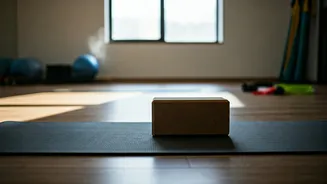
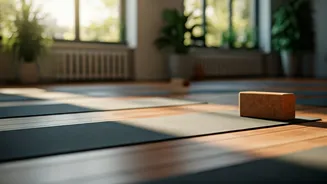
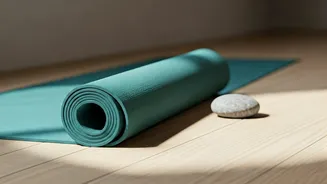
Walking into a Yin yoga class for the first time can feel like entering a cozy, quiet sanctuary. The lights are often dim, the music is minimal or nonexistent, and you’ll see a collection of props that look more like living room furniture than gym equipment. Bolsters, blankets, blocks, and straps are essential tools of the trade. They aren't for making poses harder; they’re for supporting your body so you can completely relax your muscles and sink into the stretch. Your instructor will guide you into a pose, help you find the right propping for your body, and then fall silent as the clock starts. You’ll spend most of the class on the floor in a series of seated or reclining poses. Don't be surprised if your mind wanders—that's normal. The practice is to gently guide your attention back to your breath and the physical sensations in your body. It might feel strange, boring, or intensely challenging at first, but the deep sense of release and tranquility you feel afterward is what keeps people coming back.