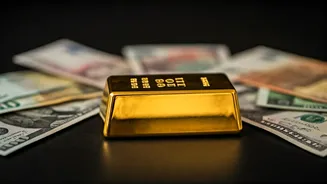




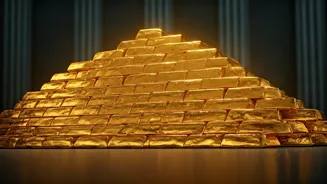


First, What Is 244 Tonnes?
Let’s get a sense of scale. A standard gold bar weighs about 12.4 kilograms. 244 metric tonnes is equivalent to roughly 19,677 of those bars. If you loaded it all onto a fleet of semi-trucks, you’d need about a dozen of them, each carrying nearly $17
billion worth of gold at current prices. It's an immense amount of physical wealth. While this specific number represents a major chunk of recent buying, it’s actually part of a much larger trend. In both 2022 and 2023, central banks around the world collectively bought over 1,000 tonnes of gold each year—a pace unseen since the 1950s. This isn’t a one-off purchase; it's a coordinated, global movement.
The New Gold Rushers
The buyers aren't who you might think. This isn't Wall Street traders or Silicon Valley billionaires hedging their portfolios. The primary customers in this historic gold rush are the central banks of nations, particularly emerging market economies. The People's Bank of China has been a voracious buyer, steadily adding to its reserves for over a year and a half straight. Other major players include the central banks of India, Turkey, Singapore, and Poland. What these countries have in common is a desire for greater economic independence and a strategic objective to diversify their national wealth away from a single point of failure. They are quietly building a foundation of wealth that can’t be devalued by another country's monetary policy or frozen by sanctions.
The Real Reason for the Buying Spree
So, why gold? And why now? The answer is a cocktail of economic anxiety and geopolitical strategy. First, there’s the hedge against uncertainty. In a world of high inflation, volatile markets, and rising geopolitical tensions from Eastern Europe to the Middle East, gold is seen as the ultimate safe-haven asset. It has no counterparty risk—its value isn't dependent on another government's promise to pay. Second, and most importantly, this is a calculated move away from the U.S. dollar. For decades, the dollar has been the world's undisputed reserve currency. But after the U.S. and its allies used the financial system to impose powerful sanctions on Russia, freezing its dollar-denominated assets, other nations took notice. The message was clear: holding your nation’s wealth in dollars gives the U.S. immense leverage over you. For countries with strategic ambitions that may not always align with Washington's, that's a risk they are no longer willing to take.
What It Signals for the Dollar
This massive accumulation of gold is often called “de-dollarization,” and it’s the core of the “signal.” Is the dollar about to collapse? No. The dollar’s dominance is deeply entrenched in the global financial system. But this trend signals the beginning of a multi-polar currency world. Instead of one dominant currency, we may be heading toward a system where the dollar, the euro, the yuan, and a store of value like gold all coexist. Central banks aren't dumping their dollars overnight. Instead, they’re rebalancing. They’re reducing their reliance on one currency and one country, preparing for a future that looks less certain and more fragmented than the past. The gold buying is a vote of no-confidence not in the dollar itself, but in a world order where the dollar is the only game in town.