






What Exactly Is a Panchang?
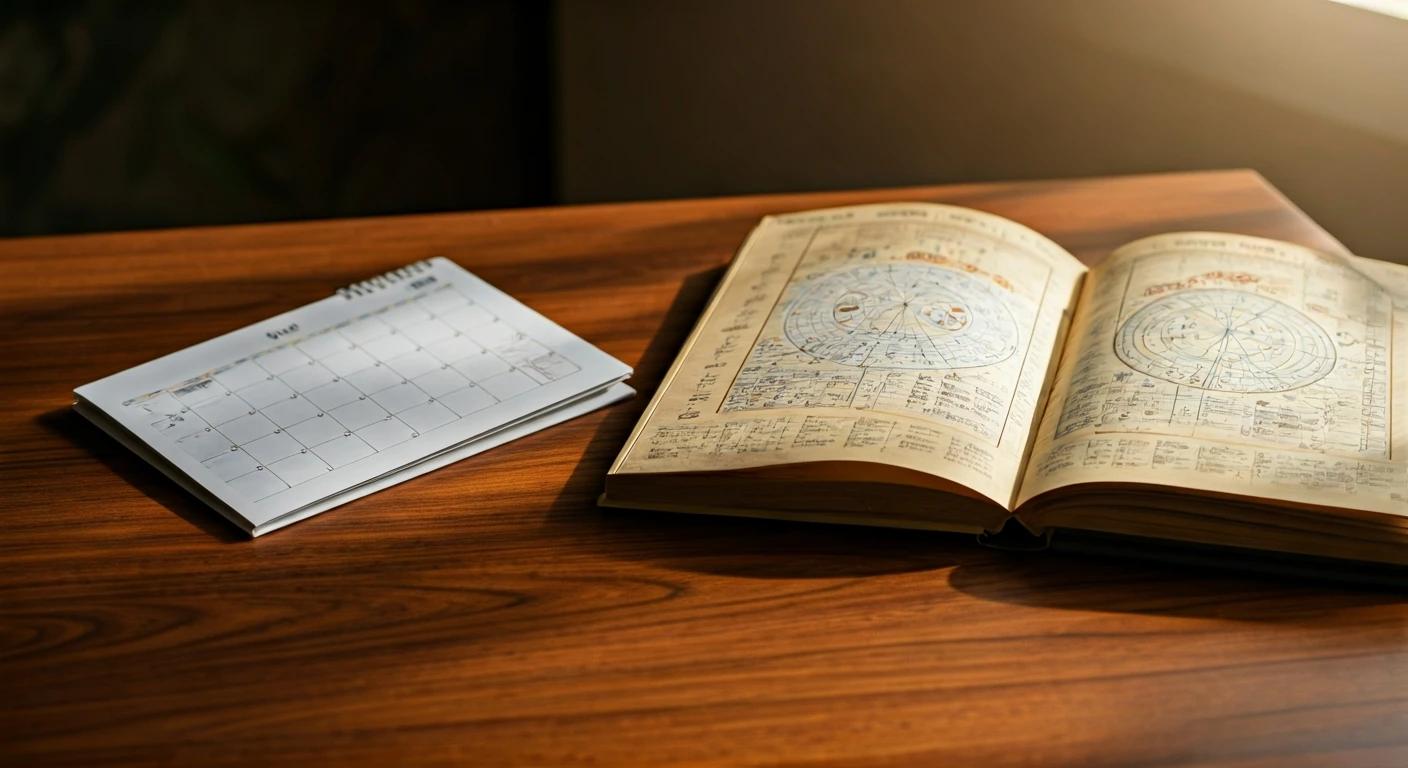
Before you can use it, it helps to know what it is. A Panchang is the traditional Hindu almanac, but think of it less as a simple calendar and more as a daily astrological guide. The word itself comes from Sanskrit: ‘pancha’ means five and ‘anga’ means limb.
So, the Panchang is a 'five-limbed' system that tracks the positions and movements of celestial bodies. Unlike the Gregorian calendar, which is purely solar, the Panchang is lunisolar, meaning it tracks the cycles of both the sun and the moon. For thousands of years, it has been used to determine favorable timings for major life events like weddings, starting a business, or beginning a journey. Today, many use it as a tool for mindfulness and intentional living.
The Five Limbs of Time
The Panchang’s power lies in its five core elements, which work together to describe the specific energy of any given day. While the details are complex, the basic concepts are quite intuitive:
1. Vaar (The Day): This is the simplest part—the day of the week (Sunday, Monday, etc.). Each day is associated with a specific planet and carries its own energy.
2. Tithi (The Lunar Day): This is the heart of the lunar calendar. A Tithi is one of the 30 divisions of the lunar month. It represents the time it takes for the angle between the sun and the moon to increase by 12 degrees. It’s why some days feel expansive (like a full moon, or Purnima) and others feel more introspective (like a new moon, or Amavasya).
3. Nakshatra (The Lunar Mansion): Imagine the moon’s path through the sky is divided into 27 sections, or ‘lunar mansions.’ The Nakshatra is the section the moon is occupying on a given day. Each has its own ruling deity and characteristics, influencing the day’s mood.
4. Yoga (The Alignment): Not to be confused with the physical practice, this Yoga refers to a specific angular relationship between the sun and moon. There are 27 different Yogas, each suggesting a certain quality for the day’s energy, from auspicious to challenging.
5. Karana (Half a Lunar Day): Each Tithi is divided into two Karanas. This provides a more granular, subtle layer of information about the energy of the first and second half of the lunar day.
From Ancient Wisdom to Modern Planning
So, how does this ancient system apply to a 21st-century American life filled with deadlines and Zoom calls? The key is to see the Panchang not as a rigid set of rules, but as a guide for aligning your actions with the prevailing cosmic energy. You don't need to cancel a meeting because the Karana is unfavorable. Instead, you can use the information to bring more awareness to your tasks. If a day is traditionally considered good for learning, perhaps that’s the day you tackle that online course. If it's a day for rest, you can be more intentional about scheduling downtime instead of feeling guilty for not being productive.
Finding Auspicious Moments (Muhurta)
A core concept in using the Panchang is finding a ‘Muhurta,’ or an auspicious moment, to begin an activity. The idea is that starting something in a favorable energetic window gives it a better chance of success. This doesn't guarantee a specific outcome, but it can create a powerful psychological boost. You can use a Panchang (many apps and websites are available) to find traditionally good times for activities like:
- Starting a new project or business: Look for days with strong, growth-oriented Nakshatras and Yogas.
- Having an important conversation: Choose a time with a gentle, communicative energy.
- Signing contracts: Avoid traditionally obstructive or challenging planetary combinations.
- Rest and reflection: The new moon (Amavasya) is often seen as a powerful time to go inward, release what’s not working, and set intentions for the cycle ahead.
A Gentle Start for This July
Diving into the full Panchang can feel overwhelming. For July, try this simple approach focused on the moon. Get a calendar and mark two key dates: the New Moon (Amavasya) and the Full Moon (Purnima). You can find these dates with a quick online search.
- On the New Moon: Treat this as your personal reset. Use the day to reflect on the past few weeks. What do you want to release? What new seeds do you want to plant for the coming two weeks? It’s a great day for journaling and setting intentions.
- On the Full Moon: This is a time of culmination and illumination. Energy is high. It’s a great time to celebrate your progress, complete a project you started, or acknowledge what has come to fruition in your life. Use this bright energy for social gatherings or creative expression.