



The Humidity vs. Your Makeup
For most of the U.S., peak summer brings a familiar battle. You spend time carefully applying your foundation, concealer, and blush, only to step outside into a wall of humidity that feels like a hot, wet blanket. Within an hour, your makeup begins to look
shiny, then starts to slide, crease, and separate. It’s a frustrating and common experience, whether you’re in the notoriously muggy South, the surprisingly damp Midwest, or caught in a coastal city’s soupy August air. The conventional wisdom has always been to fight back with firepower: ultra-mattifying primers, heavy-duty powders, and alcohol-heavy setting sprays that lock everything down with an iron grip. While effective, this approach can leave skin feeling tight, dry, and looking flat or cakey—sacrificing a healthy glow for the sake of longevity.
Enter Hyaluronic Acid: The Moisture Magnet
This is where the science of skincare offers a smarter, more elegant solution. Enter hyaluronic acid (HA), a hero ingredient you’ve likely seen in serums and moisturizers. Hyaluronic acid is a humectant, which means it has the incredible ability to attract and hold onto water molecules—up to 1,000 times its weight in water, in fact. Here’s the crucial part: where it draws that moisture *from* depends on the environment. In a dry climate, if you apply HA to dry skin, it can potentially pull moisture from the deeper layers of your skin, which can be counterproductive. But in a high-humidity environment—like a “monsoon” or a typical American summer day—hyaluronic acid becomes a superstar. It pulls abundant moisture directly from the air around you. Instead of fighting the humidity, it harnesses it, turning the very thing that threatens your makeup into a source of continuous, lightweight hydration for your skin's surface.
Why It Works in a Setting Spray
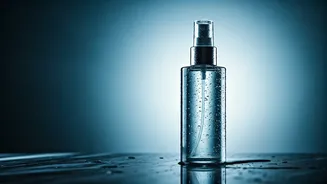
Incorporating hyaluronic acid into a setting spray is a stroke of genius. A traditional setting spray works by creating a thin, flexible film over your makeup (thanks to ingredients called polymers) that acts as a shield against sweat, oil, and friction. When you add HA to this formula, you get a powerful dual benefit. First, the spray still provides that essential locking power, keeping your makeup from melting. Second, the hyaluronic acid works throughout the day to grab moisture from the humid air, bathing your skin in a micro-fine layer of hydration. This prevents your skin from getting dehydrated under the film-formers, which can trigger it to produce more oil and break down your makeup faster. The result is a look that’s not just locked-in, but also plump, dewy, and fresh. Your makeup stays put without the chalky, matte finish, and your skin feels comfortable and balanced.
How to Use It for Best Results
Making a hyaluronic setting spray work for you is simple. Apply your makeup as you normally would. Once you’re finished, hold the bottle about 8-10 inches from your face, close your eyes, and mist it evenly in an “X” and “T” formation to cover all your bases. Let it dry completely without touching your face. The key is to use it as the absolute final step to seal everything in. These sprays are also fantastic for a midday refresh. Instead of adding more powder to a cakey, oily face, a light spritz of a hyaluronic spray can rehydrate your skin, revive your makeup, and give you back your glow without disturbing what’s underneath. When shopping, look for formulas that are alcohol-free to avoid any drying effects and feature HA high on the ingredient list. By choosing the right tool for the conditions, you can stop fighting the summer humidity and start making it work for you.