




What Exactly Is a Conjunction?
In simple terms, a conjunction is an astronomical event where two or more celestial objects appear to be very close together in the sky, as seen from Earth. It's essentially a line-of-sight illusion. Venus and Jupiter aren't actually cozying up next to each
other—at the time of a typical conjunction, they remain hundreds of millions of miles apart in their respective orbits around the sun. But from our vantage point, their paths across our sky seem to cross, creating a temporary and often dazzling planetary pairing. Think of it like seeing two distant ships on the ocean appearing to merge for a moment as one passes behind the other. The sky is vast, and these alignments offer a beautiful glimpse into the clockwork motion of our solar system.
Why This Planetary Pair Is a Big Deal
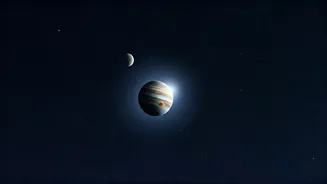
Not all conjunctions are created equal. A Venus and Jupiter meetup is the astronomical equivalent of an all-star game. Jupiter is the largest planet in our solar system, and Venus is often called the "Evening Star" or "Morning Star" because its brightness is second only to the Moon in the night sky. When these two powerhouses get together, the result is unmissable. You don't need to be an expert to appreciate it; their combined brilliance is bright enough to cut through the light pollution of most cities. Their apparent closeness—sometimes appearing less than a full moon's width apart—is a rare visual treat that captures the imagination, reminding us of the immense scale and silent dance of the cosmos.
Your Step-by-Step Viewing Guide
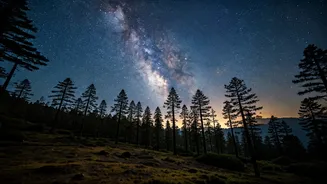
Seeing this phenomenon is incredibly simple, which is part of its magic. Here’s how to guarantee a great view: 1. **Timing is Everything:** Start looking about 45 to 60 minutes after your local sunset. This is the sweet spot when the sky is dark enough for the planets to pop, but they haven't yet dipped below the horizon. 2. **Look West:** The planetary action will happen in the western sky, in the same general direction the sun just set. Venus and Jupiter will be the brightest objects in that part of the sky, so you can’t miss them. If you see two intensely bright, steady lights, you’ve found them. 3. **Find an Unobstructed View:** Your biggest enemy isn't complex science, but trees and buildings. Find a spot with a clear view of the western horizon, like a park, an open field, or even a west-facing window on an upper floor. The lower the planets get, the more a clear horizon matters.
Do I Need a Telescope?
Absolutely not! This is one of the best naked-eye astronomical events there is. The sheer beauty of the two planets hanging together in the twilight sky is best appreciated without any equipment at all. It allows you to take in the full scene and context. However, if you have a pair of binoculars, you'll get an even better show. With a steady hand or a tripod, binoculars will not only make the planets sharper but might also reveal Jupiter’s four largest moons—Io, Europa, Ganymede, and Callisto. They will look like tiny pinpricks of light in a neat line on either side of Jupiter. A small telescope will enhance this view even further, possibly revealing Jupiter’s cloud bands. But don't let a lack of equipment stop you; your eyes are more than enough to witness the main event.
A Connection to Sky-Watchers Past
When you stand outside watching Venus and Jupiter converge, you're participating in an act of sky-gazing that humans have practiced for millennia. Ancient civilizations, from the Babylonians to the Mayans, tracked these wandering stars and assigned them great mythological and cultural importance. These bright planetary alignments were seen as omens, navigational aids, and cosmic markers. They didn't have apps or websites to tell them what they were seeing; they had patience and a deep, generational knowledge of the sky. By taking a few minutes to step outside and look up, you're connecting with that long history of human curiosity and our enduring fascination with the heavens.