








The Seductive Promise of 'Healthy Frying'
Let’s be honest: the appeal of an air fryer is baked right into its name. It evokes images of french fries, chicken wings, and onion rings, all magically stripped of their greasy consequences. Marketing has positioned it as the ultimate kitchen hack—a
device that delivers the craveable texture of fried food with a fraction of the oil. For anyone trying to eat a little better without giving up their favorite comfort foods, the proposition is nearly irresistible. This perception has turned the air fryer from a niche gadget into a countertop staple, promising faster, cleaner, and, most importantly, 'healthier' versions of meals that were once considered indulgences.
The Real Mechanism: A Tiny, Powerful Oven
Before we get to the health claims, it helps to understand what an air fryer actually is. Despite the name, it doesn't 'fry' anything in the traditional sense. A deep fryer submerges food in hot oil. An air fryer, on the other hand, is essentially a small, high-powered convection oven. It works by circulating extremely hot air at high speed around your food. A heating element generates the heat, and a powerful fan creates the convection effect, blasting the surface of the food. This rapid circulation of air is what creates a crispy, browned exterior, mimicking the results of deep-frying but without the submersion in fat. You might use a light spritz or a teaspoon of oil to aid browning, but that’s it. So, think of it less as a magical fryer and more as a super-efficient countertop roaster.
The Good News: It Can Genuinely Be Healthier
Here’s where the 'healthier' claim holds up. Compared to deep-frying, air-frying is a clear winner. By eliminating the vat of oil, you can slash the fat and calorie content of a dish by a staggering amount—often by 70-80%. For someone who regularly eats deep-fried foods, swapping them for air-fried versions can lead to significant calorie savings. Furthermore, studies suggest that air frying can reduce the formation of harmful compounds like acrylamide, a substance that can form in starchy foods during high-heat cooking methods like frying. Because air frying uses less oil and often a slightly shorter cooking time, it tends to produce less acrylamide than deep-frying, adding another point to its 'healthier' column.
The Reality Check: What You Cook Still Matters
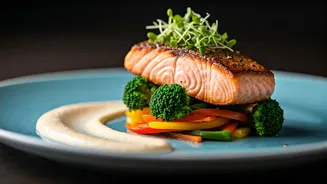
This is the most important part: an air fryer is a tool, not a magic wand. It doesn't automatically make unhealthy food healthy. If you're exclusively using your air fryer to heat up frozen tater tots, breaded chicken nuggets, and mozzarella sticks, your diet isn’t getting a nutritional makeover. These are still highly processed foods, often high in sodium, preservatives, and refined carbohydrates. The air fryer simply cooks them in a slightly less unhealthy way than a deep fryer would. The true health benefit comes from using it to cook whole foods. Think crispy Brussels sprouts, perfectly roasted salmon, tender chicken breasts, or crunchy chickpeas. Using an air fryer on vegetables can make them far more appealing than steaming them, encouraging you to eat more. The device is only as healthy as the ingredients you put into it.
Avoiding the 'Health Halo' Trap
One of the biggest behavioral risks of the air fryer is the 'health halo' effect. This is the psychological phenomenon where we perceive a food as healthier than it is, which can lead to overconsumption. Because those french fries were air-fried, you might feel justified in eating a much larger portion or adding extra high-calorie dipping sauces, effectively canceling out any benefits. The feeling that a meal is 'healthier' can trick our brains into letting our guard down on portion control. The speed and convenience also make it easy to whip up snacks more often. The key is to treat air-fried food with the same mindfulness as any other meal. Use the appliance to make nutritious foods delicious, but don't let it become an excuse to overindulge in processed snacks.