






So, What Is a Sound Bath?
At its core, sound healing—often experienced as a “sound bath”—is a meditative practice where participants are “bathed” in sound waves produced by various instruments. Think less of a concert and more of a sensory immersion. You don't listen to a melody;
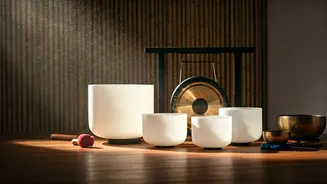
you feel the vibrations. Practitioners use instruments known for their rich, resonant tones, such as Himalayan singing bowls, crystal bowls, gongs, chimes, and tuning forks. The setup is simple: you lie down on a mat, often with a blanket and eye mask, and simply listen as the sounds wash over you. The goal is to guide you into a state of deep relaxation, quieting the conscious mind and allowing the body to enter a restorative state, similar to deep meditation or the moments just before you fall asleep.
The Rise of Recovery Culture
Why is this ancient practice gaining traction now? The answer lies in the evolution of wellness into “recovery.” A decade ago, wellness was about pushing harder: more intense workouts, stricter diets, more productivity. Today, there’s a growing recognition that restoration is just as important as effort. We’re a culture obsessed with recovering—from high-intensity interval training, from chronic stress, from digital burnout. Sound healing fits perfectly into this new paradigm. It’s a passive form of self-care. You don’t have to *do* anything except show up and lie down. In a world that constantly demands our active participation, the permission to be still and simply receive is a powerful draw. It's the antidote to the hustle, a ritual designed not to optimize output, but to facilitate genuine rest.
Unplugging the Overstimulated Brain
Beyond workout recovery, sound baths offer a potent solution to a distinctly modern problem: sensory overload. Our brains are constantly processing information from screens, notifications, and the ambient noise of daily life. This state of hyper-arousal contributes to anxiety and mental fatigue. A sound bath acts as a forced digital detox and a reset for the nervous system. By focusing on a single, non-linguistic sensory input—the sound waves—the mind is given a break from its usual frantic activity. Many attendees report that the immersive soundscape makes it easier to quiet their internal chatter than a silent meditation session, where the mind can easily wander. It’s a shortcut to a meditative state, an accessible on-ramp for those who find traditional mindfulness challenging.
What the Science Says (and Doesn't)
While proponents sometimes make lofty claims about “re-tuning cellular frequencies,” the scientifically supported benefits are more grounded, yet still significant. Research on sound therapy is emerging, but studies have shown that certain sound frequencies can influence brainwaves, encouraging the alpha waves associated with calm, creative states and the theta waves linked to deep meditation and sleep. A 2017 study found that participants in a sound meditation session using Tibetan singing bowls reported significantly less tension, anger, fatigue, and depressed mood. The vibrations can also trigger the parasympathetic nervous system, which is responsible for the body’s “rest and digest” functions, helping to lower heart rate and blood pressure. So, while it may not be “curing” disease, sound healing provides a measurable physiological pathway to stress reduction and relaxation.
Your First Sound Bath: A Field Guide
Curious about trying it? The experience is designed to be low-pressure and welcoming. Wear comfortable, loose-fitting clothes you can lie down in. Most studios and practitioners provide everything you need—mats, blankets, bolsters, and eye pillows—but you can always bring your own for extra comfort. There’s no right or wrong way to feel. Some people experience emotional release, others see vivid colors, and many simply fall into a light, restful sleep. The key is to go in with an open mind and no expectations. Afterward, you’ll likely feel a sense of profound calm and clarity. It’s recommended to drink plenty of water and take it easy for a few hours to let the restorative effects settle in.