



The Hero of Paris
July 12, 1998. The Stade de France is electric. Host nation France is in its first-ever World Cup final, facing the seemingly invincible defending champions, Brazil, led by the phenomenal Ronaldo. The hopes of a nation rest on the shoulders of one man:
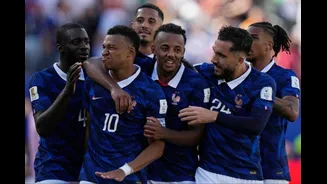
Zinedine Zidane. Born in Marseille to Algerian immigrants, 'Zizou' was the quiet, elegant playmaker at the heart of a multicultural team that reflected a new, modern France. He wasn't a prolific goalscorer, but a master of control, vision, and impossible grace—a ballet dancer in cleats. But on this night, he became a finisher. In the 27th minute, he rose majestically to meet a corner kick, heading the ball powerfully into the net. The stadium erupted. Just before halftime, he did it again—another corner, another perfectly timed header. He had slain the giants with two moments of decisive force, a display of will that complemented his usual artistry. France won 3-0, and Zidane was immortalized. His face was projected onto the Arc de Triomphe, a symbol of a unified nation celebrating its new hero.
The Unraveling in Berlin
Fast forward eight years to Berlin, 2006. Zidane, now 34, had come out of international retirement to lead a flagging French team on one last, improbable run to another World Cup final. This match against Italy was announced as the final game of his legendary career. And for 109 minutes, it was a storybook ending. He had been the best player on the field, exuding a calm authority and scoring the opening goal with an audacious chipped penalty known as a 'Panenka'—a demonstration of pure, unflappable confidence. The score was tied 1-1, deep into extra time, the game inching toward a penalty shootout. Then, in an instant, the narrative shattered. Away from the ball, Zidane was walking upfield near Italian defender Marco Materazzi. After a brief verbal exchange, Zidane stopped, turned, and drove his head violently into Materazzi’s chest. The Italian crumpled to the ground. The referee, after consulting with his assistants, brandished a red card. The world watched in stunned silence as the greatest player of his generation walked past the World Cup trophy and down the tunnel for the last time. France went on to lose the shootout, and a career ended not with a victory lap, but in infamy.
The Echoes of an Insult
What could possibly provoke such a legendary player to commit an act of career suicide on the world's biggest stage? In the immediate aftermath, speculation ran wild. For years, the exact words were a mystery, with many assuming it was a racist slur. Zidane himself would only say that it was a “very grave” insult concerning his mother and sister. The mystery shrouded the act in a layer of ambiguity. Was it pure madness, or was it a response to an unforgivable provocation? The truth, when it finally emerged, was more mundane but no less potent. Years later, Materazzi admitted what he said. After Zidane sarcastically offered the defender his jersey since he’d been grabbing it all game, Materazzi retorted, “I would prefer your sister.” It wasn’t a racial epithet, but a crude, personal jab aimed at Zidane’s family—a known trigger for the famously private star. The context doesn't excuse the assault, but it does explain it. It wasn't a moment of random insanity, but a raw, human reaction from a man pushed past his breaking point.
Genius, Madness, or Both?
So, what is Zidane's World Cup legacy? It’s impossible to choose one moment over the other. He is the hero of '98 and the anti-hero of '06. His career is a paradox, a perfect illustration that sublime genius and visceral, flawed humanity can reside in the same person. The headbutt does not erase the two goals in Paris, nor does his crowning achievement negate the shock of his final act. Instead, they are intertwined, creating one of the most compelling and complicated character arcs in sports history. His legacy is not a simple story of triumph. It is a Greek tragedy played out in two acts, eight years apart. He showed us a level of artistry on the ball that few have ever reached, a kind of physical intelligence that looked like magic. And in his final moments, he reminded us that beneath the icon was a man of fierce pride and raw emotion. He is remembered for both, and perhaps that is the point. The madness is part of the genius.