

Why Your Phone's Weather App Fails
For most of us, the weather app on our phone is good enough. It tells you if you need a jacket or an umbrella with a simple icon and a percentage. But in monsoon-prone destinations like Southeast Asia, India, or even the American Southwest in late summer,
that forecast is almost useless. Monsoon weather isn't a steady, day-long drizzle; it’s a series of intense, fast-moving, and highly localized storm cells. A 40% chance of rain means nothing when one side of the island is getting drenched by a torrential downpour while the other side is basking in sunshine. This unpredictability can scuttle plans in an instant, canceling a ferry, flooding a road, or turning a pleasant hike into a dangerous ordeal. Standard forecasts simply can’t capture the hour-by-hour, neighborhood-by-neighborhood nuance required to navigate these environments effectively.
The New Digital Toolkit
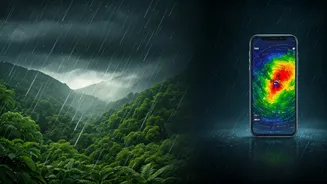
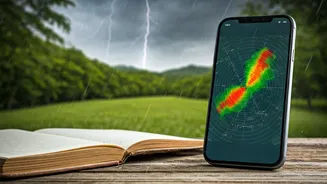
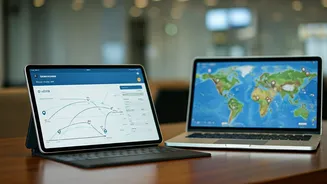
Enter the amateur meteorologist. These travelers are moving beyond default apps and tapping into a suite of powerful tools once reserved for pilots, sailors, and storm chasers. The most popular choice is Windy.com, a ridiculously detailed app that visualizes everything from wind patterns and cloud cover to wave height and atmospheric pressure. Others swear by MyRadar or RadarScope, which provide high-resolution, real-time Doppler radar imagery. These apps don't just give you a prediction; they give you the raw data. Instead of a cartoon sun, you see the actual satellite feed. Instead of a percentage, you see the storm cell forming over the next mountain range. This shift is about moving from being told the weather to seeing it for yourself. It’s the difference between being a passenger and grabbing the wheel.
Reading the Digital Tea Leaves
So, what are these travelers looking for? They’re learning to spot patterns. By watching the radar loop, they can see the direction and speed of incoming rain, allowing them to time a market run or a temple visit between downpours. A quick look at a wind-pattern map on Windy can tell them if the storm offshore is likely to make landfall or blow past. They’re checking barometric pressure to anticipate changes in weather intensity. It's a skill that turns a forecast from a passive piece of information into an active strategy. They’re not just asking, “Will it rain today?” They’re asking, “Given the wind at 10,000 feet and the location of this low-pressure system, will the storm hit the north or south side of the bay between 2 p.m. and 4 p.m.?” It’s a level of engagement that fundamentally changes the travel experience.
Combining Tech with Local Wisdom
The smartest of these amateur meteorologists know that technology is only half the battle. The real magic happens when they combine their digital data with old-fashioned, on-the-ground knowledge. They show their radar map to a local boat captain, who can then add his own lifetime of experience reading the color of the sky and the behavior of the birds. They talk to guesthouse owners who know that when the wind shifts a certain way, the road to the waterfall will be impassable in an hour. This fusion of high-tech data and hyper-local wisdom is the ultimate power move. The app can show you the storm, but the local fisherman can tell you how that specific kind of storm behaves in his specific valley. This approach fosters a deeper connection to the place, turning a transactional tourist relationship into a collaborative one.
The Ultimate Modern Travel Skill
Mastering these tools is more than just a neat party trick; it's a profound act of empowerment. It provides safety, helping travelers avoid flash floods or rough seas. It provides freedom, allowing them to confidently seize windows of good weather instead of cowering in their hotel room waiting for an all-clear. And most importantly, it saves the trip. A vacation that could have been ruined by seemingly relentless rain becomes a dynamic puzzle to be solved. Finding that two-hour sunny gap for a perfect beach swim or a dry trek to a viewpoint becomes a victory. In an age of climate uncertainty and increasingly volatile weather, the ability to read the atmosphere may soon become as essential a travel skill as packing light or knowing a few words of the local language.