




An Island Apart
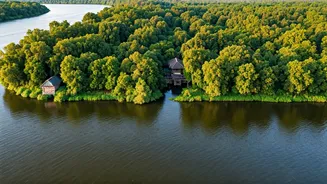
Majuli isn't just an island; it's a world unto itself. Often cited as the world's largest river island, it's a fragile, shifting landmass in the northeastern Indian state of Assam, shaped and threatened by the very river that created it. Life here moves
at a different pace, dictated by seasons, floods, and ancient rhythms. The island is a lush mosaic of rice paddies, water meadows, and bamboo groves, primarily inhabited by the Mising, Deori, and Sonowal Kachari communities. Their stilt houses, designed to withstand the annual monsoon floods, are a testament to a life lived in harmony with a powerful, unpredictable environment. But Majuli’s true distinction lies not just in its geography, but in its role as the cradle of Assamese Neo-Vaishnavite culture for over 500 years.
The Soul of the Satras
The cultural and spiritual heart of Majuli beats within its Satras. These are not monasteries in the typical sense, but unique monastic institutions established in the 15th century by the saint-reformer Srimanta Sankardeva. Part spiritual center, part performance academy, the Satras became repositories for Assamese art, music, dance, and theater. Young monks, or bhakats, dedicate their lives to study and devotion, but also to mastering traditional arts. Stepping into a Satra like Auniati or Kamalabari feels like entering a living museum. The air is thick with the scent of incense and the faint sounds of chanting or the rhythmic beat of a drum. These institutions are the lifeblood of the island, ensuring that sacred traditions are not just preserved but practiced daily, passed from one generation to the next.
Faces of the Divine
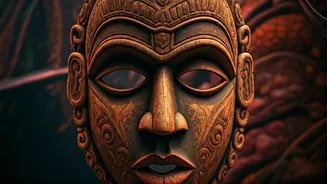
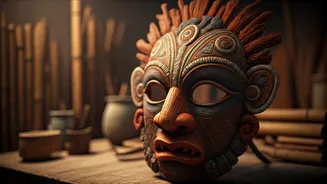
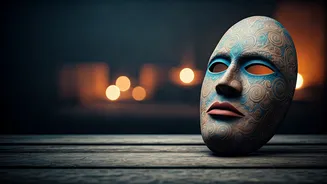
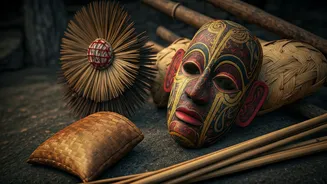
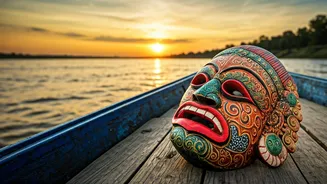
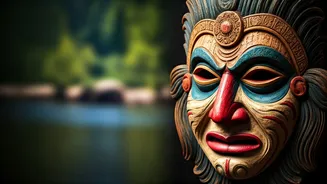
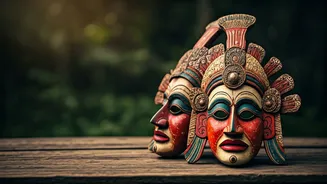
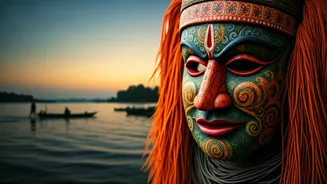
Perhaps Majuli’s most visually stunning tradition is its intricate mask-making, or mukha bhabona. These are not mere decorations; they are essential characters in the Bhaona, a form of religious drama that brings Hindu epics to life. In workshops filled with the earthy smell of clay and bamboo, artisans create astonishingly expressive masks. The process is a marvel of organic engineering. A frame of split bamboo is woven, covered with cloth dipped in a mixture of clay and cow dung, and then painstakingly painted. The results range from small, face-fitting masks to colossal, full-body creations representing demons and deities. Artisans like the celebrated Dr. Hem Chandra Goswami have become global ambassadors for this craft, working to keep the tradition vibrant against the odds, ensuring the gods, heroes, and villains of the Ramayana and Mahabharata continue to dance across the island's stages.
Clay, Fire, and Tradition
Away from the sacred dramas of the Satras, another ancient art form shapes daily life on Majuli: pottery. In villages like Salmora, you’ll find a tradition untouched by modern technology. Here, the island’s women practice a unique form of pottery entirely by hand, without a potter's wheel. Using only their fingers, a few simple tools, and an innate sense of form, they slap and shape lumps of rich riverbank clay into pots, bowls, and urns. The finished pieces are left to dry in the sun before being fired in vast, makeshift kilns of straw and driftwood. This eco-friendly, sustainable craft is more than just a livelihood; it’s a direct connection to the land, using the very earth of the island to create objects of utility and simple beauty.