

First, What Is a 'Hyper-Flexible' Room?
Forget the trusty futon or the coffee table that doubles as storage. We're talking about a fundamental redesign of space itself. A hyper-flexible room is a single area that can mechanically or architecturally transform to serve two, three, or even four
distinct purposes. Think less 'multi-purpose' and more 'transformer.' This is achieved through robotic furniture, sliding walls, and integrated systems that allow a room to radically change its layout and function at the push of a button or the pull of a handle. It's a concept born from the pressures of urban density, where square footage is precious, but the desire for a home office, a guest room, *and* a living room remains.
The Bedroom That Appears from Nowhere
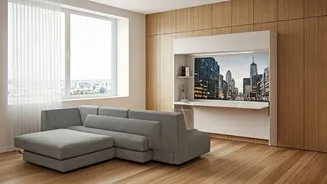
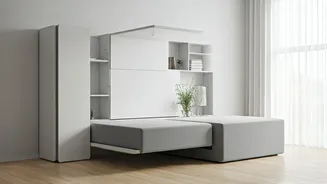
The most dramatic example of this trend is the disappearing bedroom. For decades, the Murphy bed was the go-to solution, folding a mattress into a cabinet. Today’s evolution is far more seamless. Companies like Ori Living, a spinoff from the MIT Media Lab, have created robotic systems where a full queen or king bed smoothly descends from the ceiling over your sofa, or glides out from a built-in media unit, transforming a living room into a master suite in under 30 seconds. When morning comes, the bed retracts, and your living room reappears, leaving no trace. It’s the ultimate solution for studio apartments, allowing residents to entertain guests in a space that doesn’t feel like they’re sitting at the foot of your bed.
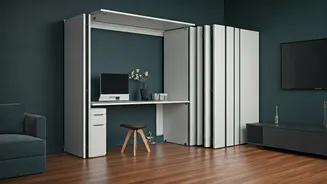
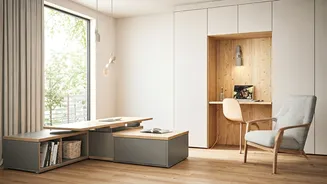
The Now-You-See-It Home Office
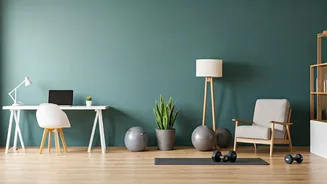
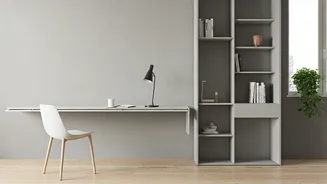
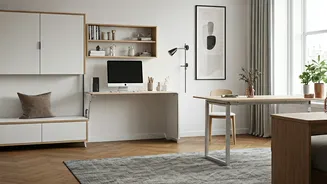
The remote work revolution forced millions to cram a desk into a bedroom corner or a kitchen nook. The hyper-flexible approach offers a more elegant solution: the vanishing office. Imagine a sleek wall unit. With a simple command, a section glides out to reveal a full desk, ergonomic shelving, and integrated power. At 5 p.m., you push it all back. The desk and its clutter are instantly concealed, allowing you to reclaim your space and create a mental boundary between work and life. This isn't just about hiding a laptop; it's about giving an entire room its evening identity back, free from the visual stress of looming deadlines and work paraphernalia.
The Living Room with Multiple Personalities
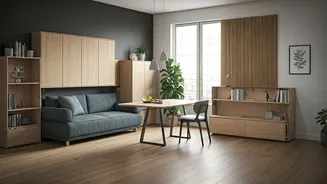
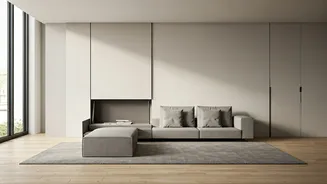
A truly flexible space adapts to your social life, too. One of the most common trade-offs in a small apartment is choosing between a large sofa for lounging and a dining table for hosting. Hyper-flexible design says you can have both. A central, movable wall unit might house a walk-in closet on one side and an entertainment center on the other. By sliding the entire unit a few feet, you can shrink the living area to create a formal dining space with a table that folds out from the wall. Need more room for a party? The unit can be pushed back to create one large, open-plan area. It’s about making the room’s footprint dynamic, not static.
Is This Only for the Rich and Techy?
While robotic systems represent the cutting edge, the core principle—making every square foot work harder—is accessible to everyone. The trend is influencing mainstream furniture design. You can find more sophisticated Murphy beds with integrated desks or sofas than ever before. Modular shelving systems allow for custom configurations. Extendable dining tables, nesting coffee tables, and clever room dividers are all part of this same family. The 'hack' isn't just about buying a robot; it's a mindset. It’s about looking at a room not as a fixed box, but as a dynamic stage for your life, and finding the tools—high-tech or not—to make it happen.