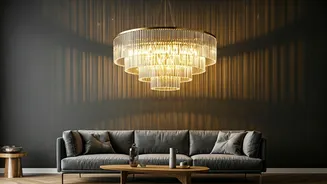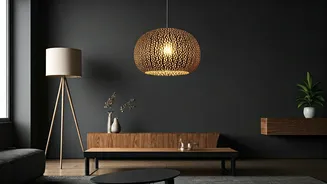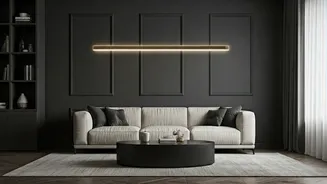


The Job of a Statement Light
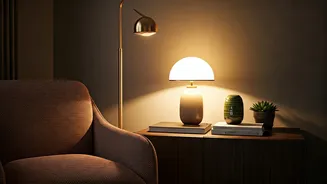
First, let's clarify what a statement light is—and isn't. It’s not the recessed can lighting that provides general brightness, nor is it the simple lamp on your end table. A statement fixture is a piece of functional art. Its primary job is to create
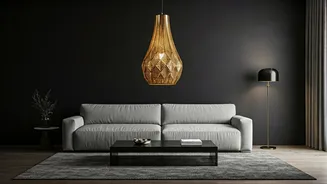
a focal point, draw the eye, and infuse a room with personality and drama. Think of it as the exclamation point of your design scheme. While it provides light (its secondary function), its main purpose is to define the character of a space, whether it's through a dramatic silhouette, an interesting material like woven rattan or sculptural brass, or an unexpected pop of color. It’s the one element that can single-handedly elevate a room from builder-grade basic to magazine-worthy.
Find the Right Fixture for the Space
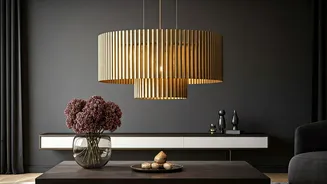
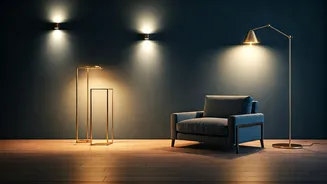
Not all statement lights are created equal, and their impact depends heavily on where you put them. The most common applications are chandeliers and large pendants. A dramatic chandelier over a dining table is a classic move, anchoring the room and defining the eating area. In an entryway or foyer with high ceilings, a large pendant or multi-light fixture creates a stunning first impression. But don't stop there. Sculptural floor lamps can add visual interest to a forgotten corner of a living room, while a pair of artistic sconces can frame a fireplace, a bed, or a piece of art, adding a layer of sophisticated symmetry. The key is to match the type of fixture to the function and feel of the room.
Why Scale and Proportion Matter Most
The single biggest mistake people make with statement lighting is choosing a fixture that’s too small. A timid, undersized chandelier over a large dining table looks apologetic and lost. When in doubt, go bigger. A good rule of thumb for a dining room is to choose a fixture that is between one-half and two-thirds the width of your table. For a living room or bedroom, you can calculate the ideal diameter by adding the room's length and width in feet, then converting that number to inches (e.g., a 12' x 15' room suggests a 27" diameter fixture). For height, the bottom of the fixture should hang about 30-36 inches above a dining table or countertop. In an open room, it should be at least 7 feet from the floor to allow for clearance.
Match the Style—Or Don't
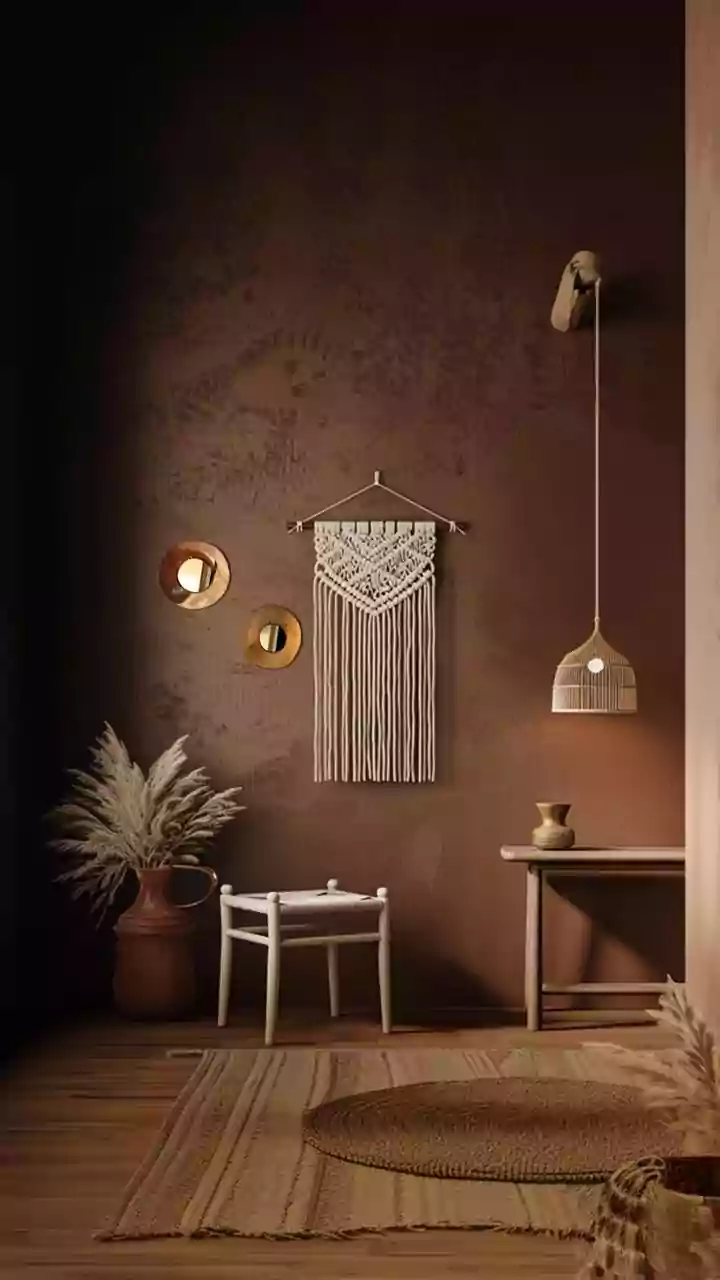
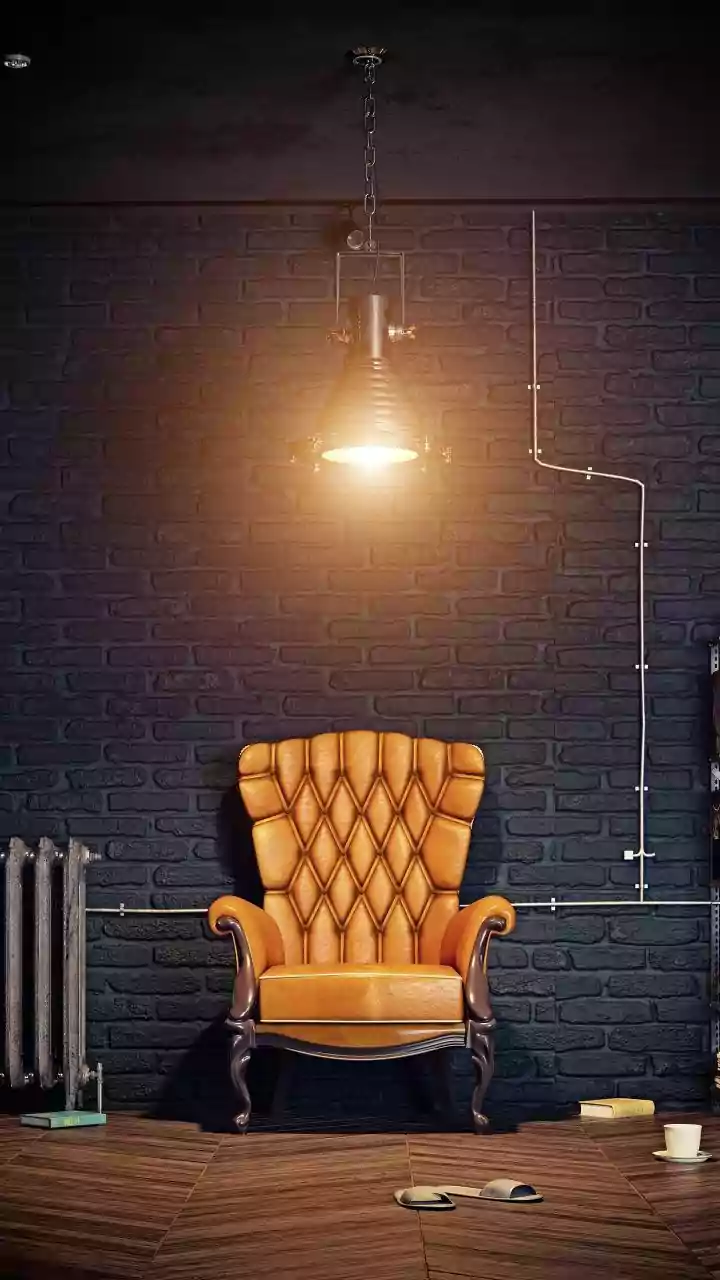
Your statement light should feel connected to your home's overall aesthetic, but that doesn't mean it has to be a perfect match. In fact, a thoughtful contrast can be even more compelling. In a traditional room with classic furniture, a sleek, modern fixture can feel fresh and unexpected. Conversely, an ornate, vintage-style crystal chandelier can bring a touch of glamour and history to a minimalist, contemporary space. Think about the feeling you want to evoke. A woven, natural-fiber pendant can bring warmth and organic texture to a sterile room. An industrial, metal-and-glass fixture adds an edgy, urban vibe. This is your chance to break the rules a little and inject your unique personality into the decor.
Think Beyond the Obvious Places
While dining rooms and entryways are the go-to spots for statement lighting, some of the most impactful placements are in unexpected locations. Imagine a small, jewel-like chandelier hanging in the center of a primary bathroom, turning a utilitarian space into a personal sanctuary. A bold, modern pendant light in a home office can inspire creativity and make work feel less like a chore. Even a walk-in closet or a laundry room can be elevated by a stylish semi-flush mount fixture instead of a standard 'boob light.' These surprising touches are what truly make a home feel custom and thoughtfully designed, proving that great lighting isn’t just for public spaces.