

The Age of Disposable Travel
We live in an era of performative travel. The trip begins not when you land, but when the first perfect photo is posted. The pressure is immense: get the shot of the iconic landmark (without the crowds), find the photogenic meal, and craft the witty caption.
We hunt for moments that will look good on a screen, often at the expense of the moment itself. This cycle turns experiences into content and destinations into backdrops. When you scroll through your camera roll weeks later, you might see a beautiful, filtered version of your trip. What you might not feel is the grit, the sensory details, or the quiet, un-photogenic moments that truly made the journey yours. It’s a beautifully curated but ultimately disposable record, as fleeting as the next post in the feed.
The Art Journal as an Anchor
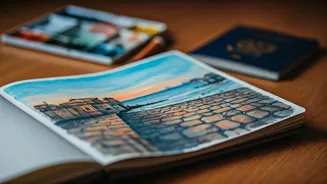
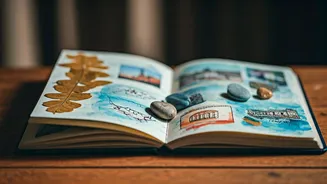
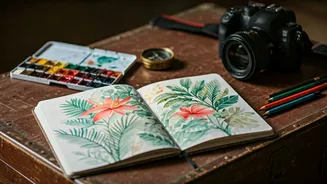
Enter the art journal. At its simplest, it’s a notebook where you combine sketches, drawings, and paintings with written notes, ticket stubs, and other ephemera from your travels. But it’s much more than a scrapbook. It’s an anchor to the present moment. The goal isn’t to create a masterpiece to be hung in a gallery; it’s to create a personal, imperfect, and deeply felt record of your experience. Unlike a camera, which captures a split-second view for a potential audience, a journal demands your full, private attention. It’s a conversation between you and your surroundings, with no likes, comments, or algorithms involved. The only person you have to impress is yourself, and even then, the pressure is off. The point isn’t the quality of the art, but the quality of the attention you pay.
Forcing a Slower, Deeper Gaze
The true magic of art journaling is how it fundamentally changes your pace and perception. You can’t sketch a bustling market square in five seconds. To draw the curve of a cathedral arch or the texture of a flaky croissant, you have to stop. You have to look—truly look. Your brain switches from passive consumption to active observation. You notice the way the light hits a cobblestone street, the specific shade of green on a window shutter, the body language of the person selling flowers on the corner. These are details a quick photo would miss entirely. This forced slowness is a form of mindfulness. You’re not just *in* a place; you are engaging with it on a profound level, embedding its details into your memory through the physical act of creation.
Creating a Truly Personal Souvenir
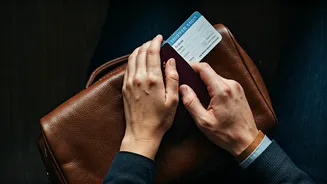
Think about the souvenirs you usually bring home. Are they mass-produced trinkets that end up gathering dust? An art journal is the ultimate souvenir, one that can never be bought. Flipping through its pages years later is a multi-sensory experience. You’ll see more than just a drawing of a coffee cup; you’ll remember the warmth in your hands, the smell of the cafe, the sound of the foreign language around you, and the smudge of paint on the page from a drop of rain. A ticket stub glued next to a quick sketch of a train station tells a story far richer than a pristine digital photo. Your journal becomes an artifact of your unique journey, complete with smudges, imperfections, and handwritten thoughts—a testament to a trip that was truly lived, not just documented.
How to Start (Without the Intimidation)
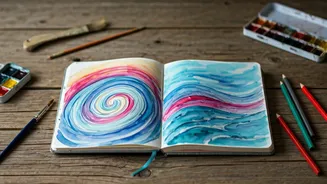
The fear of the blank page is real, but getting started is easier than you think. First, forget about being “good” at art. This is for you. Start with a small, unlined notebook and a simple pen. A small watercolor set and a water brush pen are fantastic, lightweight additions. Don't try to draw the entire Eiffel Tower. Start by sketching something small: your morning coffee, a unique doorknob, a leaf from a park. Add a few written notes about where you are and how you feel. Glue in your train ticket or a sugar packet wrapper. The goal is to break the seal and make the journal a comfortable, judgment-free space. Your first page will likely be your worst, and that’s a wonderful thing. It means you’ve begun.