


The Land Where Clouds Reside
Tucked away in the northeastern corner of India is the state of Meghalaya, a name that translates from Sanskrit to “the abode of clouds.” It’s a fitting title for a region of rolling hills and deep valleys that spend much of the year shrouded in mist.
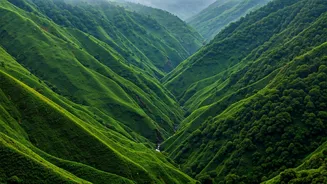
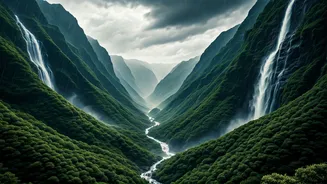
At its heart lies Cherrapunji, locally known as Sohra. For decades, this town held the world record for the most rainfall in a single year, and it remains one of the wettest places on the planet. But this isn't a story about dreary, endless rain. It’s about what that rain creates: a seasonal spectacle of raw, natural power and staggering beauty. Before the monsoon arrives, the landscape is a vibrant green, dotted with deep gorges and limestone caves. It’s beautiful, but it’s holding its breath, waiting for the deluge that will bring it to life.
When the Monsoon Arrives
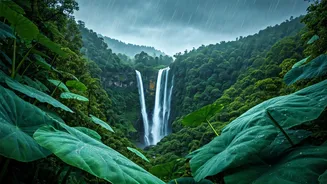
From June to September, the monsoon winds, heavy with moisture from the Bay of Bengal, are funneled directly into Meghalaya's Khasi Hills. When they hit Cherrapunji, the clouds unleash a torrent. The change is immediate and dramatic. What were once quiet streams become raging rivers. The air, thick with humidity, carries the scent of wet earth and blooming flora. The constant drumming of rain on rooftops and leaves becomes the soundtrack of daily life. The entire color palette of the region shifts, as if a saturation filter has been applied to reality. The greens become deeper and more varied, from the emerald of the rice paddies to the dark jade of the dense forests. And everywhere, water begins to move.
A Symphony of Roaring Waterfalls
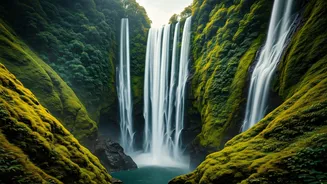
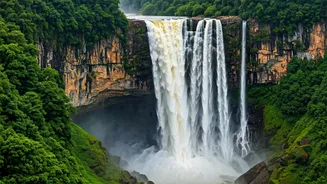
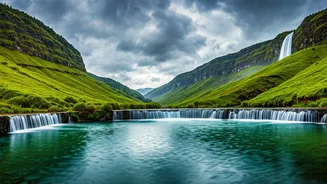
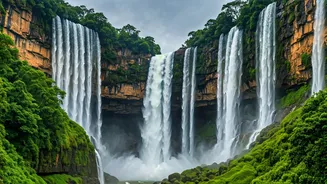
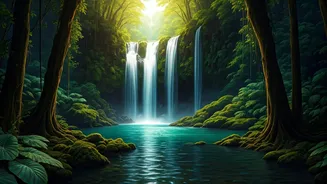
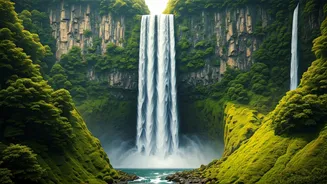
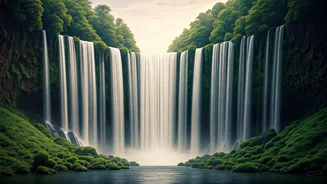
This is Cherrapunji’s main event. The monsoon fills the region's vast network of aquifers and river systems to bursting, and the water has to go somewhere: over the cliffs. Suddenly, hundreds, if not thousands, of waterfalls appear, cascading down sheer rock faces. Some are thin, silvery ribbons; others are thundering giants. The most famous is Nohkalikai Falls, India's tallest plunge waterfall. During the monsoon, it’s a terrifyingly beautiful sight, a colossal column of water crashing into a turquoise pool below, its roar echoing through the valley. Then there's the Nohsngithiang Falls, also known as the Seven Sisters Falls. Here, seven distinct streams plunge side-by-side over a wide limestone cliff, creating a panoramic curtain of water that is simply breathtaking when swollen by the rains. Exploring the area becomes a journey from one awe-inspiring cascade to the next, each with its own character and story.
Living with the Rain
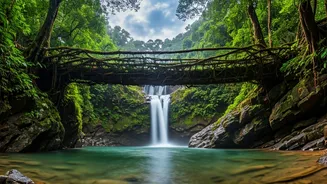
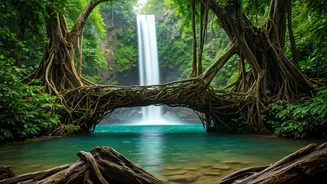
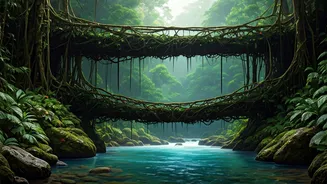
For the indigenous Khasi people, the monsoon is not an inconvenience; it’s the rhythm of life, and their ingenuity in adapting to it is as remarkable as the landscape itself. The most stunning example is the living root bridges. Over generations, the Khasi have guided the aerial roots of rubber fig trees across rivers and gorges, weaving them together until they form strong, living structures. These bridges don’t wash away in the floods like wooden or steel ones would; in fact, they grow stronger with each passing year and each heavy rain. Walking across one of these moss-covered, almost fantastical bridges, with a rain-fed river churning below, is to witness a perfect harmony between humanity and nature. It’s a powerful reminder that in this land of water, life doesn't just endure the rain—it thrives because of it.