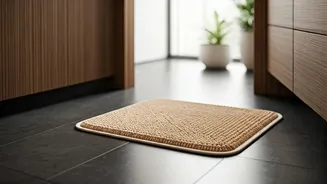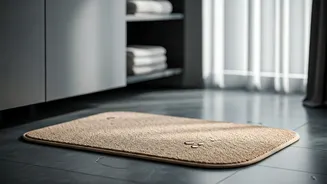







What Is This 'Stone' Mat, Anyway?
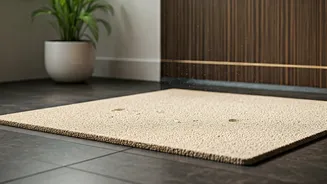
First, let's clear up a common misconception. While it looks and feels like a slab of smooth, light stone, a diatomaceous earth (DE) mat isn't carved from a quarry. It’s made from a fascinating natural material: the fossilized remains of tiny aquatic
organisms called diatoms. For millions of years, these algae-like creatures have built intricate, porous shells out of silica. When they die, their shells accumulate on the ocean floor, eventually forming a soft, chalky sedimentary rock. This rock is mined and ground into a powder, which is then compressed and fired to create the hard, mat-like slab you see online. Think of it less as a rock and more as a highly compressed, ultra-absorbent block of fossilized history.
The Science of Instant-Dry Magic
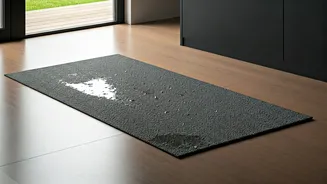
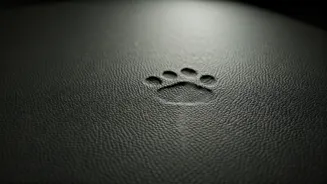
The mat's seemingly magical ability to dry instantly comes down to its unique microscopic structure. A DE mat is not a solid, non-porous surface like a piece of granite. Instead, it’s riddled with billions of minuscule pores and channels left behind by the diatoms' shells. When water hits the surface, it isn't just sitting on top; it's rapidly wicked into this vast network of pores through capillary action. This distributes the moisture over an enormous internal surface area, allowing it to evaporate far more quickly than it would on a conventional fabric or rubber mat. It’s a bit like a sponge, but on a microscopic level, and with a structure that promotes airflow and evaporation instead of just holding onto water. This is why you can step on it with wet feet and see the footprint vanish in under a minute.
The Pros: Why People Are Obsessed
The primary appeal is obvious: no more soggy bath mats or puddle-filled entryways. The quick-drying nature of DE means you’re not stepping into a damp spot left by someone else. But the benefits go further. Because the mat doesn't retain moisture for long, it's naturally resistant to the mold, mildew, and unpleasant odors that plague traditional fabric mats. This makes it a more hygienic option that requires far less maintenance. You don’t need to throw it in the laundry every week. Aesthetically, its minimalist, modern design fits seamlessly into many decor styles, offering a clean alternative to bulky, colorful rugs. It's a simple, elegant solution to a common household problem.
The Cons: What to Know Before You Buy
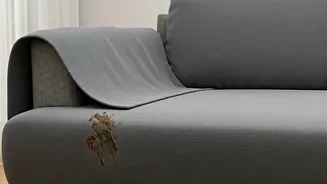
While impressive, these mats aren't perfect. Their biggest drawback is their brittleness. They are, after all, a hard, ceramic-like material. Dropping them or placing them on an uneven surface can cause them to crack or break. They also feel cold and hard underfoot, which can be a deal-breaker for anyone who loves the plush comfort of a fabric mat. While they excel at absorbing water, they are susceptible to staining from oils, soaps, and other pigmented liquids. These stains can be difficult, if not impossible, to remove completely. Finally, their absorbency isn't infinite. Over time, the pores can become clogged with minerals from water and general grime, reducing their effectiveness. This means they require occasional light maintenance.
Care and Maintenance Is Simple
Keeping your diatomaceous earth mat in top shape is straightforward. For daily cleaning, a simple rinse with water is usually all that’s needed. If you encounter a stain or notice its absorbency has decreased, it's time for a bit of resurfacing. Most mats come with a small piece of sandpaper. Gently sanding the surface in one direction will remove the top layer of clogged pores and restore its thirst for water. Afterward, wipe away the dust with a damp cloth and let it air dry completely. For best results, ensure the mat is placed on a flat, even surface and allow it to dry standing on its side periodically to ensure the bottom also airs out.