




What Are We Actually Watching?
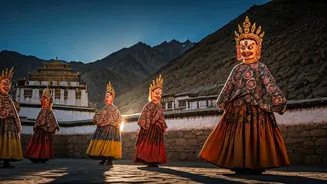
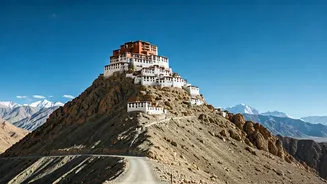
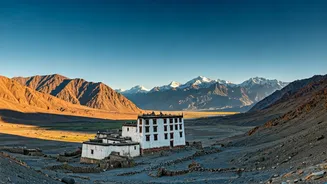
The captivating videos sweeping social media feeds originate from Ladakh, a high-altitude desert region nestled in the Indian Himalayas. What you're seeing is the Cham dance, a sacred and elaborate masked performance central to Tibetan Buddhism. These
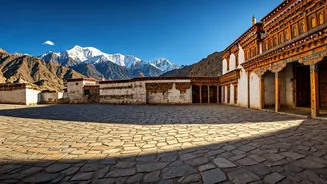
aren't just community festivals; they are profound religious ceremonies performed by monks and lamas in the courtyards of ancient monasteries like Hemis, Thiksey, and Spituk. The dance is a form of meditation and an offering to the deities, performed annually during monastic festivals that draw both devotees and, increasingly, international travelers armed with smartphones. The hypnotic music, played on traditional long horns, drums, and cymbals, adds to the otherworldly atmosphere that translates so powerfully to video.
The Dancers Are Monks, The Masks Are Gods
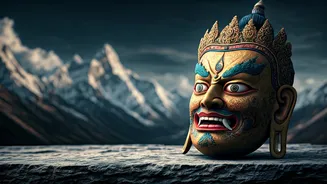
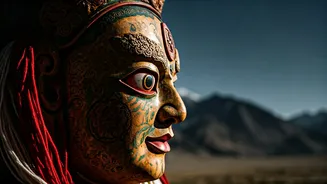
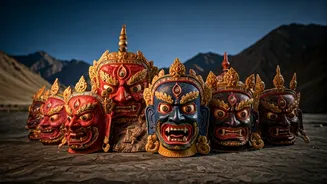
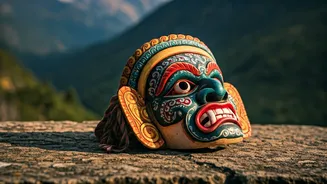
The most striking feature of the Cham dance is, without a doubt, the masks. Far from simple decorations, each one is a sacred object representing a specific Buddhist deity, demon, or historical figure. Some masks are serene and compassionate, depicting protector gods, while others are terrifying and wrathful, symbolizing the fierce deities who destroy obstacles to enlightenment. The performers are not professional dancers in the Western sense; they are monks who have undergone years of rigorous spiritual training. By donning the mask and costume, a monk is believed to embody the spirit of that deity, acting as a vessel for its divine energy. The slow, deliberate movements and intricate footwork are not improvised but are part of a centuries-old choreography passed down through generations. It’s a physical manifestation of complex theological ideas.
A Cosmic Battle of Good vs. Evil
So, what's the point of it all? At its core, the Cham dance is a powerful morality play that reinforces key Buddhist teachings. The narrative often depicts the triumph of good over evil, with protector deities subduing malevolent spirits that bring misfortune and hinder spiritual progress. For the local community watching, the dance is a cleansing ritual that purifies the land, wards off negativity for the coming year, and offers blessings to all who witness it. For the monks, it's a profound spiritual practice. The dance serves as a tool to vanquish the inner demons of hatred, ignorance, and greed that reside within the human mind. By visualizing these forces and their defeat, the performance serves as a public lesson in the path to enlightenment, making abstract concepts tangible and memorable for the audience.
From Monastery Courtyard to Your Phone Screen
Why has this ancient tradition suddenly become a viral sensation? It's a perfect storm of factors. First, Ladakh has become more accessible to tourists in recent years, meaning more people are present to capture high-quality footage. Second, the Cham dance is visually spectacular. The brilliant colors of the silk costumes, the sheer scale of the masks, and the dramatic Himalayan landscapes create content that is almost algorithmically engineered to go viral. It’s unique, beautiful, and stops people mid-scroll. Finally, there’s a deeper appeal. In a world saturated with fleeting digital trends, the raw authenticity and spiritual weight of the Cham dance offer a glimpse into something ancient, meaningful, and enduring. It's a reminder of a world where tradition, belief, and art are inextricably linked—a spectacle that feels both profoundly foreign and universally human.