




A Thirsty City Reborn
For most of the year, Udaipur exists in a state of sun-bleached grandeur. The white marble palaces shimmer under a relentless gaze, and the surrounding Aravalli Hills are painted in dusty shades of ochre and brown. It’s beautiful, but it’s a beauty that
speaks of endurance in an arid landscape. The monsoon changes everything. From July to September, heavy clouds roll in from the southeast, and the landscape holds its breath. When the rains finally arrive, they don’t just cool the air; they repaint the entire world. The lakes, often shrunken by the heat, swell and reclaim their banks. The hillsides erupt in an almost impossibly vibrant green. For a city built around its water, this seasonal replenishment is a city-wide sigh of relief and celebration.
Drama Over Lake Pichola
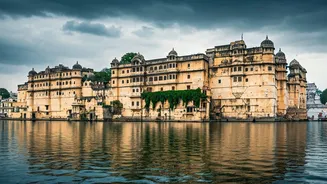
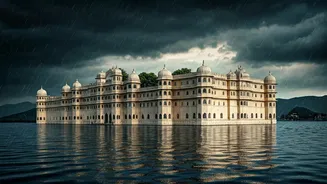
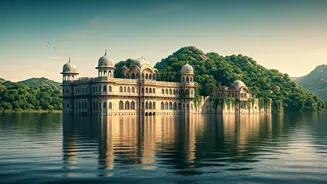
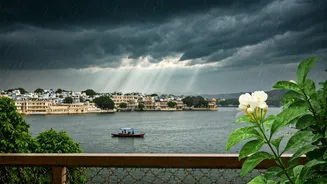
Nowhere is this transformation more apparent than at the City Palace, a sprawling complex of courtyards, pavilions, and balconies perched on the edge of Lake Pichola. The rain washes away months of dust, leaving the intricate stonework gleaming. From a latticed window in one of its high chambers, the view is pure theater. Dark, bruised-purple clouds gather speed over the water, creating a moving, textured ceiling above the city. The iconic Lake Palace, which seems to float in the center of Pichola, loses its sharp, postcard-perfect edges and becomes a soft, ethereal vision shrouded in mist. Jag Mandir, the other island palace, appears and disappears as sheets of rain sweep across the water. It’s a dynamic, moody spectacle that a clear blue sky could never match.
A Palace Built for the Clouds
High on a hill overlooking the entire city sits Sajjangarh, a palace with a singular, poetic purpose. Popularly known as the Monsoon Palace, it was conceived by Maharana Sajjan Singh in the late 19th century as an astronomical center and a retreat from which to watch the monsoon clouds gather. The drive up the winding road is an experience in itself, as the air grows cooler and the views more expansive with every turn. Standing on its terraces during a downpour feels like being on the deck of a ship sailing through the sky. Clouds don't just hang above; they envelop the palace, sometimes reducing visibility to a few feet before parting to reveal a breathtaking panorama of the rain-washed city and its brimming lakes below. It’s a place that makes you feel the sheer power and scale of the season.
The Sensory Experience
The drama isn't just visual. The monsoon engages every sense. It’s the rhythmic drumming of rain on rooftops, a constant soundtrack to daily life. It’s the earthy, intoxicating smell of petrichor—the scent of rain hitting dry soil—mixed with the fragrance of blooming jasmine. It’s the taste of hot, sweet chai and crispy pakoras (fried vegetable fritters) from a streetside vendor, a universally beloved rainy-day snack across India. The mood of the city shifts from the languor of the hot season to a more vibrant, joyful energy. Locals flock to the lakesides in the evenings, celebrating the water that is the city’s lifeblood. To visit during the monsoon is to see Udaipur not as a static museum piece, but as a living, breathing city in its most elemental and expressive state.