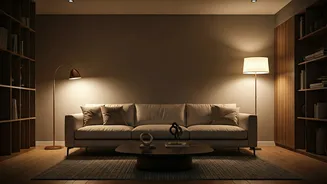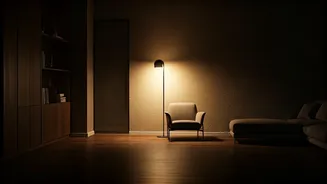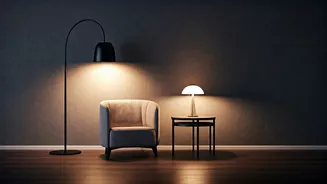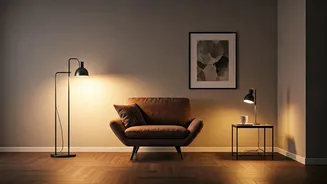





Moving Beyond the 'Big Light'
For decades, the default approach to lighting a room was simple: install a single, powerful fixture in the center of the ceiling. This “big light” illuminates everything, but it often does so poorly. It can cast harsh shadows, create a flat and uninviting
atmosphere, and offer zero flexibility. Think of a dreary office under fluorescent panels versus a cozy restaurant with warm, focused pools of light. The difference isn’t the furniture; it’s the intention behind the lighting. Treating light as the main character means seeing it not just as a tool for visibility, but as a material you can use to sculpt your space. It can make a small room feel larger, a large room feel cozier, and draw the eye toward your favorite features. It’s the secret weapon of every great interior designer, and it’s far more accessible than you think. The first step is to stop relying on one source and start thinking in layers.
Assemble Your Cast: The Three Layers
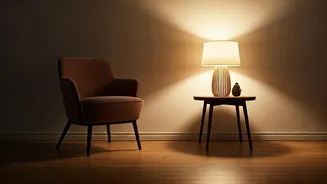
Professional designers build a room’s lighting scheme using three distinct layers. Each has a specific job, and when they work together, they create a space that is both functional and full of dimension. 1. Ambient Light: This is your foundation, the general illumination that fills the room. It’s the replacement for the old “big light,” but it’s often softer and more diffuse. Think recessed lighting on a dimmer, a stylish chandelier that casts a wide glow, or even natural light from windows. It sets the base mood. 2. Task Light: This is focused, functional light for specific activities. It’s the reading lamp by your favorite armchair, the under-cabinet lights in your kitchen that illuminate your workspace, or the pendant light over your dining table. Task lighting prevents eye strain and makes a space practical for living. 3. Accent Light: This is the drama. Accent lighting is used to highlight specific objects or architectural features—a piece of art, a textured wall, or a beautiful plant. Picture a spotlight aimed at a painting or a small uplight placed behind a fiddle-leaf fig to cast dramatic shadows on the ceiling. This layer adds depth, personality, and a high-end feel.
Casting the Lead Role
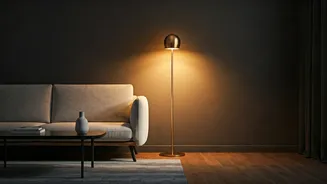
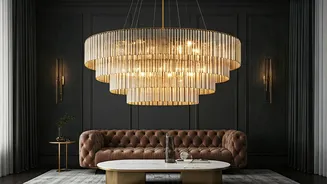
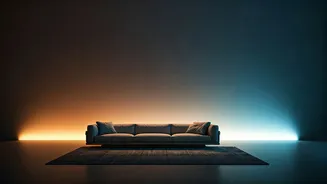
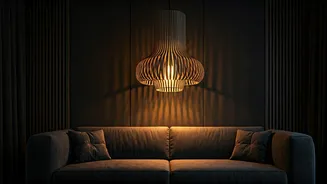
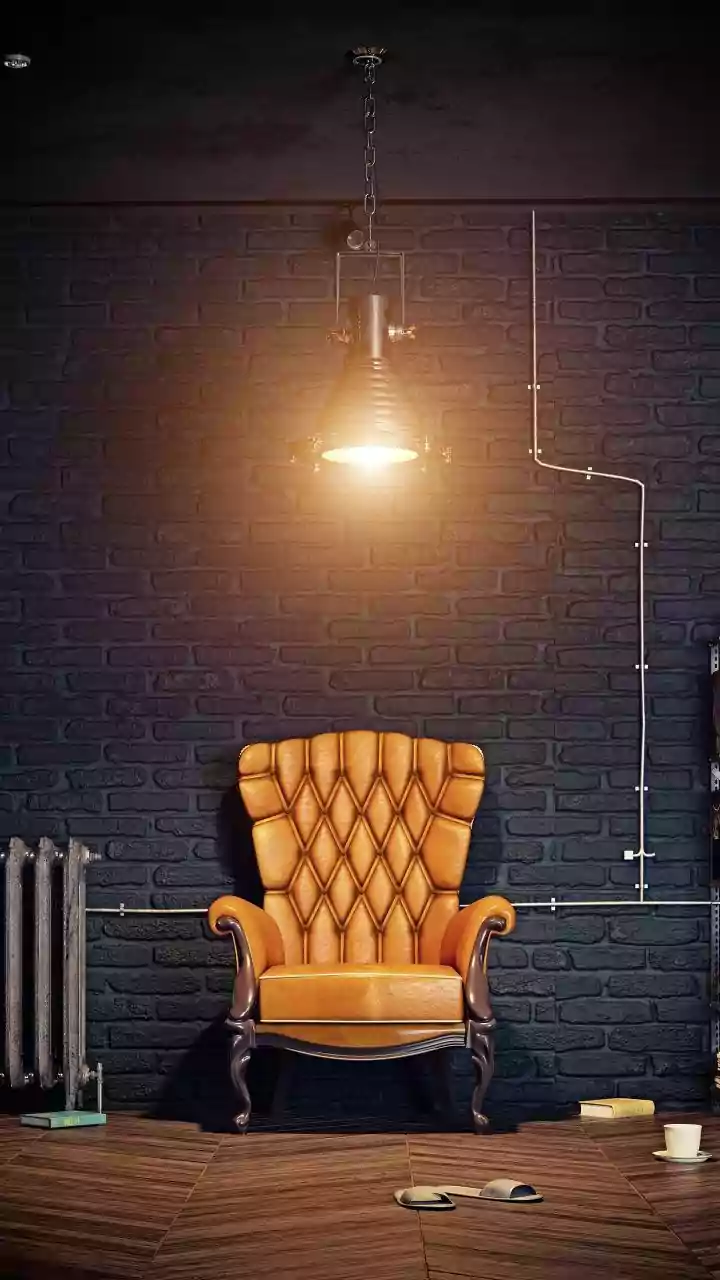
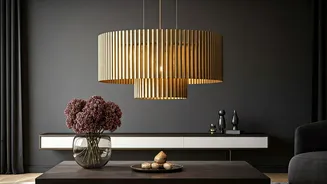
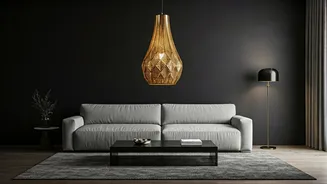
Once you understand the layers, you can choose which one gets to be the main character. This is your statement piece—the fixture or effect that commands attention and defines the room’s personality. A “main character” light doesn’t have to be the brightest, but it must be the most memorable. In a dining room, it might be a dramatic, sculptural chandelier that hangs low over the table, acting as functional art. In a living room, it could be an oversized, arcing floor lamp that makes a bold architectural statement. Sometimes, the character isn’t a fixture at all. It could be a wash of colored light against a neutral wall or a series of identical pendants hung at different heights to create a captivating rhythm. The key is to make a deliberate choice. Instead of hiding your light sources, pick one to celebrate.
The Director's Notes: Dimmers and Temperature
Even the most beautiful light fixture can be ruined by a harsh, non-adjustable bulb. Two final details will elevate your lighting from good to great: dimmers and color temperature. Dimmers are non-negotiable. They are the single most effective tool for controlling mood. The same room can feel bright and energetic for a daytime gathering or intimate and relaxed for a quiet evening, all with the slide of a switch. Installing dimmers on nearly every light source gives you ultimate control over your layered scheme. Color temperature, measured in Kelvins (K), determines whether light appears warm (yellowish) or cool (bluish). For living spaces like bedrooms and living rooms, aim for a warm, cozy glow around 2700K. For kitchens and bathrooms where you need clear, clean light, something closer to 3000K works well. Avoid the cold, blue-white light (4000K+) common in commercial settings, as it can feel sterile and unwelcoming in a home.