







The ‘Uncle’ Era of Budgeting
Remember the early days of personal finance software? It was the digital equivalent of stuffing cash into envelopes. You’d download an app, painstakingly link your bank accounts, and then spend hours manually categorizing every single transaction. The
app’s primary function was to wag a digital finger at you. A notification would pop up: “You’ve exceeded your ‘Dining Out’ budget by $37.50.” Thanks, Captain Obvious. This approach was built on a foundation of restriction and, frankly, a little bit of shame. It treated every user as if their only financial goal was to spend less, full stop. The tools were rigid, reactive, and rarely offered forward-looking advice. They could tell you where your money went last month, but they had little to say about where it *should* go next month to help you buy a house, save for a vacation, or invest for retirement. This one-size-fits-all model was well-intentioned but often felt like trying to navigate a new city with a map from 1985. It was better than nothing, but it missed the nuance of modern financial lives.
The Big Shift: From Tracking to Intelligence
So, what changed? In a word: data. The last decade saw a quiet revolution in financial technology, powered by two key developments. First, services like Plaid created secure, reliable pipelines that allow apps to connect to nearly any financial institution in the U.S. This meant tools could finally see your whole financial picture in one place—your checking account, your 401(k), your student loans, and your credit card debt—without you manually inputting every detail. The second, and more important, development was the integration of artificial intelligence and machine learning. Instead of just logging transactions, new apps began to analyze them. They learned your spending habits, recognized recurring bills, and could predict your future cash flow with surprising accuracy. This shift transformed them from simple ledgers into something closer to a financial co-pilot. They weren’t just recording the past; they were using the past to model the future and offer intelligent suggestions in the present. The focus moved from “What did you spend?” to “Based on your goals, what should you do next?”
From Judgment to Goal-Oriented Guidance
The new philosophy is about empowerment, not enforcement. Modern finance platforms like Copilot, Monarch Money, and the automated features within robo-advisors like Wealthfront operate on a different frequency. They understand that money isn't just about saving—it's a tool to build the life you want. Instead of a rigid “Dining Out” category, these tools help you set up flexible goals, like “Hawaii Trip Fund” or “Down Payment Savings.” They then show you how your daily spending impacts those long-term objectives. The feedback becomes contextual. It’s no longer, “You spent too much on coffee.” It’s, “If you continue at this spending rate, you’ll hit your Hawaii goal in October. If you want to get there by August, here are a few areas you could trim.” Some apps will even spot a forgotten free trial that’s about to convert to a paid subscription or notice you’re paying for two different music streaming services. This is proactive, personalized guidance that helps you make smarter decisions without making you feel bad about your choices. It's the difference between a scolding and a strategy session.
Your New Financial Co-Pilot
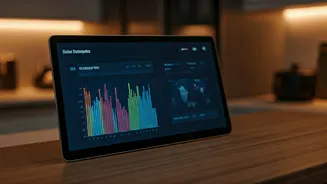
Ultimately, the best finance tools today are less like an uncle and more like a sharp, data-obsessed personal assistant who’s always on your side. They consolidate complexity into a single, clean dashboard, giving you a real-time net worth and a clear view of your financial health. They automate the boring stuff, like categorization and savings transfers, so you can focus on the big picture. By analyzing your complete financial life—income, spending, investments, and debt—they can offer holistic advice. For example, they might suggest paying down a high-interest credit card before beefing up your investment contributions, a nuanced decision a simple budget tracker could never make. This evolution reflects a broader trend in technology: a move away from static tools and toward dynamic, personalized systems that adapt to our individual needs. Your finances are unique, and for the first time, the tools designed to manage them are finally starting to act like it.