




The New Canvas for Cravings
If you've scrolled through TikTok or Instagram Reels lately, you’ve seen it. Sheets of rice paper, flash-fried until they puff into shatteringly crisp, translucent chips. Puffy, plain rice cakes slathered with chili crisp, Kewpie mayo, and a jammy egg.
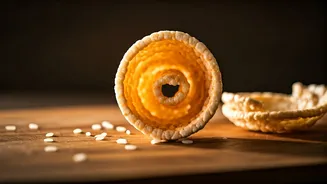
Or perhaps you’ve seen the mesmerizing process of making *nurungji*, the Korean scorched rice treat, by pressing leftover rice in a hot pan until it forms a golden, nutty cracker. This isn't one single trend; it’s a constellation of them, all orbiting a single, starchy hero: rice. Once relegated to the background as a simple side dish or a bland health food, rice in its various dried, puffed, and pressed forms has become the unlikely star of the internet’s food scene. It’s cheap, accessible, and, most importantly, a perfect vehicle for toppings, flavors, and that all-important visual and auditory appeal that defines viral content.
The Allure of the Crunch
To understand why rice snacks are thriving online, you have to listen. The primary engine of this trend isn't taste; it's sound. The sharp, amplified *crack* of a fork breaking through a sheet of fried rice paper or the resonant *crunch* of biting into a nurungji chip is pure catnip for the ASMR (Autonomous Sensory Meridian Response) community. Food creators have realized that sound is a powerful tool for engagement. A video of someone silently making a beautiful salad is nice, but a video featuring the deafening crunch of a rice-based snack stops a user mid-scroll. This sensory-first approach turns a simple snack into a performance. The food is the instrument, and the crunch is the music. It’s a low-fi, high-impact form of content that satisfies a primal desire for texture and sound, making viewers feel like they can almost taste it through the screen.
Simple, Cheap, and Creative
Beyond the sensory hook, the rice snack trend is rooted in practicality. In an era of economic uncertainty and grocery-bill anxiety, rice is a reassuringly affordable staple. A pack of rice cakes or rice paper costs a few dollars and offers a foundation for dozens of potential meals or snacks. This low barrier to entry democratizes food content creation. You don't need expensive or hard-to-find ingredients to participate; you just need a pantry staple and a bit of creativity. The trend celebrates a kind of “low-effort maximalism.” The base is simple, but the toppings can be as elaborate or as minimal as you want. It empowers home cooks to feel like artists, creating something visually stunning and deeply satisfying from next to nothing. This taps into the post-pandemic shift toward home-based comforts and the joy of making something delicious with your own hands, without the pressure of a complicated, multi-hour recipe.
Nostalgia on a Plate
Many of these viral snacks are not new at all; they're modern interpretations of traditional foods. Nurungji has been a beloved snack in Korea for generations, a frugal and delicious way to use up every last grain of rice. Crispy rice is a component of dishes across many Asian cultures. The current trend is driven by a new generation—often members of the Asian diaspora—reconnecting with and reinterpreting the foods of their heritage for a global audience. For some creators, it’s a way to share a piece of their culture in an accessible, exciting format. For viewers, it offers a taste of nostalgia, whether it’s a direct connection to their own upbringing or a newly discovered comfort food that feels timeless and deeply comforting. In this light, the rice snack isn't just food; it's a story, a link to the past served up in a way that feels perfectly suited for the present moment.