






The Crash After the 'Go Big' High
We’ve all been there. Fueled by a surge of New Year’s energy or a compelling social media post, we commit to an extreme plan: workouts six days a week, a complete dietary overhaul, and a promise to become a brand-new person in 90 days. It feels incredible
for about a week. The problem is, these high-intensity, high-commitment plans are built on a shaky foundation of fleeting inspiration rather than sustainable habit. They demand a massive upfront investment of willpower, time, and energy—resources that are finite for everyone. When you have a stressful day at work, a sick child, or just a night of poor sleep, the hour-long HIIT class feels less like self-care and more like another overwhelming chore. The first missed workout leads to guilt, which often spirals into the “all-or-nothing” trap: “Well, I’ve already failed this week, so I might as well give up entirely.”
Why 'Good Enough' Is Better Than Perfect
The new approach to fitness motivation isn’t about finding a bigger, better source of inspiration. It’s about lowering the bar for action so dramatically that it’s almost harder *not* to do it. This isn't laziness; it's smart psychology. Behavioral science shows that consistency is the true engine of change, not intensity.
A 10-minute walk every day is infinitely more powerful than the hour-long gym session you do once and then abandon for a month. Why? Because each time you complete that 10-minute walk, you’re doing two crucial things. First, you’re reinforcing a positive identity: “I am the kind of person who moves my body every day.” Second, you’re building a habit loop—a neurological pathway that makes the behavior more automatic over time. Small, consistent actions create a feedback loop of success that generates its own momentum, which is a far more reliable fuel than a temporary burst of motivation.
How to Build Your Realistic Plan
Ready to try a new way? The goal is to create a plan that feels almost too easy. Here’s how to start:
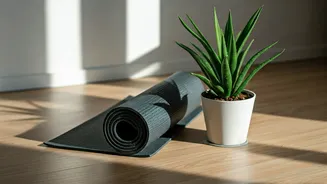
**1. The Two-Minute Rule:** Coined by author James Clear, this principle suggests starting any new habit with a version that takes less than two minutes. Want to run? Start by just putting on your running shoes and stepping outside. Want to do yoga? Start by rolling out your mat and doing one stretch. The goal is to master the art of showing up.
**2. Redefine 'Workout':** Let go of the idea that exercise only counts if it involves sweat, spandex, and a special facility. A brisk walk during your lunch break is a workout. A 15-minute dance party in your living room is a workout. Taking the stairs, gardening, or playing with your kids at the park all count. Broadening your definition removes the pressure.
**3. Plan for Imperfection:** A realistic plan has failure baked into it. You *will* miss days. Instead of letting it derail you, have a simple rule: never miss twice. If you miss Monday’s walk, make sure you get Tuesday’s in, even if it’s just for five minutes. This prevents the all-or-nothing spiral and builds resilience.
The Motivation Hack Is You
Here's the secret: the motivation you've been looking for isn't in a perfectly curated playlist, a new pair of sneakers, or a charismatic fitness influencer. It's in the quiet pride of keeping a small promise to yourself. When you consistently achieve your “too easy” goals, you’re not just building physical strength; you’re building self-trust.
This approach transforms fitness from a punishing chore you have to endure into a reliable source of accomplishment in your day. The motivation hack isn't a new piece of tech or a trendy class—it’s the profound psychological shift from seeking external validation to cultivating an internal sense of capability. By starting small, you give yourself the chance to feel successful every single day, and that feeling is the most powerful motivator there is.