





First, You’d Have to Survive the Air
Calling the Martian atmosphere 'air' is generous. It’s about 100 times thinner than Earth’s and is 95% carbon dioxide. You couldn't breathe it, and its low pressure would cause the water in your lungs, eyes, and saliva to boil at body temperature. Any
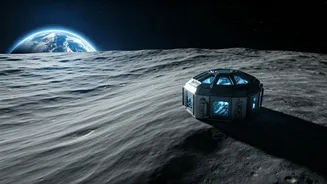
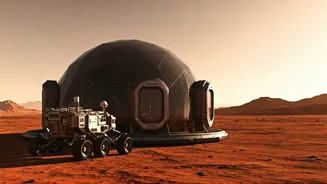
human habitat would need to be a heavily pressurized, sealed environment, more like a submarine than a house. Early colonists would live inside these habitats or in advanced spacesuits every time they stepped outside. NASA is already developing technologies like the Mars Oxygen In-Situ Resource Utilization Experiment (MOXIE), which has successfully generated small amounts of oxygen from the Martian CO2. It’s a proof of concept, but scaling it up to support a whole colony would be a massive industrial challenge.
Then There’s the Radiation
Earth is wrapped in a protective magnetic field that shields us from a constant barrage of galactic cosmic rays and solar radiation. Mars lost its global magnetic field billions of years ago, leaving its surface exposed. A round trip to Mars could expose astronauts to a lifetime’s worth of radiation limits in a single go. Living there long-term would significantly increase cancer risks and other health problems. To survive, colonists would likely need to live underground or in habitats shielded by several feet of Martian soil (regolith) or thick layers of water. Choosing a landing site in a valley or lava tube could offer some natural protection, but radiation remains one of the most stubborn and dangerous barriers to a permanent human presence.
You Can’t Pack a Lunch for a Lifetime
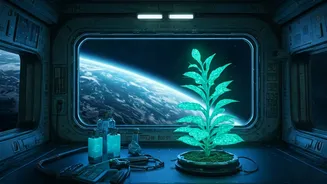
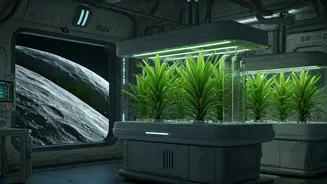
A permanent settlement can't rely on supply runs from Earth; it needs to be self-sufficient. That means finding and creating water, food, and fuel on Mars. The good news is that we know there’s a lot of water ice frozen in the polar caps and buried underground. The challenge is mining it and melting it down without using too much energy. For food, colonists would need to grow crops in closed-system greenhouses, using hydroponics or aeroponics. But Martian soil is toxic, full of perchlorates that would need to be removed before it could be used for agriculture. Every calorie and every drop of water would be part of a meticulously managed, closed-loop system where almost nothing goes to waste.
Your Body Isn’t Built for Mars
Mars has only about 38% of Earth's gravity. While that might sound fun for a while—you could jump nearly three times higher—the long-term health effects are a serious concern. We know from astronauts on the International Space Station that living in low gravity causes bone density loss, muscle atrophy, and changes to vision and cardiovascular health. Would living in a 0.38g environment for years cause irreversible damage? We don’t know. Astronauts would need to follow intense, daily exercise regimens just to mitigate the effects, but it’s an open question whether that would be enough to maintain long-term health or allow for a safe return to Earth's much stronger pull.
The Sheer Isolation
Finally, there’s the psychological toll. Mars is, on average, 140 million miles away. A message sent from Mars to Earth would take anywhere from 5 to 20 minutes to arrive, making real-time conversation impossible. Colonists would be profoundly isolated, living in a small, confined space with the same few people for years, knowing that help is months or even years away. The pressure, monotony, and confinement could lead to serious mental health challenges. Selecting a crew with immense psychological resilience and providing them with robust support systems would be just as critical as engineering the rockets and life-support systems.