


The Anatomy of Tourist Chaos
To an American ear, a 'Mall Road' might sound like a suburban shopping strip. In India's hill stations, it’s something else entirely. Picture the boardwalk at peak season, Times Square on a Saturday night, and a bustling street market all rolled into
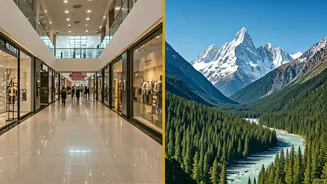
one and perched on a mountainside. This is the de facto center of towns like Shimla and Manali. It’s a pedestrian-only thoroughfare choked with a slow-moving river of people. Families buying soft-serve ice cream, honeymooners taking selfies, and groups of friends laughing loudly create a constant, churning energy. The air is thick with the scent of buttered corn on the cob, sizzling noodles, and cheap perfume. Shops line every inch of space, their entrances spilling onto the pavement, offering pashmina shawls of dubious origin, wooden trinkets, and 'I Love The Mountains' T-shirts. It’s a spectacle of human activity—vibrant, loud, and utterly overwhelming.
A World Away in the Valley
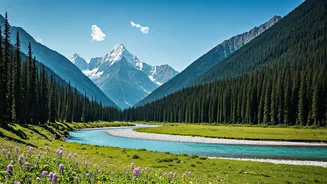
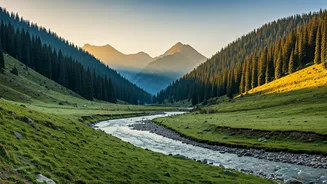
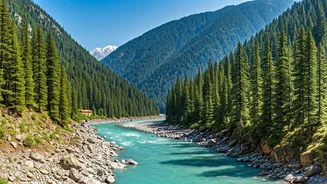
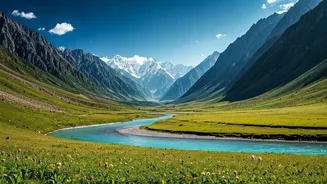
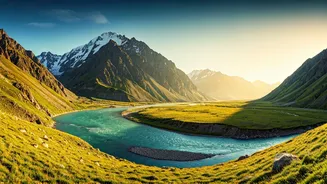
Just a few hours’ drive from the clamor of these popular hubs lies Tirthan Valley. It isn't a single town but a collection of small hamlets nestled along the Tirthan River, a rushing, turquoise artery fed by glacial melt. The valley serves as the gateway to the Great Himalayan National Park, a UNESCO World Heritage Site. Here, the soundtrack changes dramatically. The roar of the crowd is replaced by the roar of the river. The cacophony of horns and vendors gives way to the rustle of pine needles and the distant call of a bird. There is no central 'strip.' Instead, winding roads connect villages where traditional wooden homes, many operating as quaint homestays, are built into the terraced hillsides. The air is crisp, carrying the scent of cedar and damp earth, not exhaust fumes. It’s a place defined by what it lacks: no big hotels, no chain restaurants, and certainly no mall.
A Tale of Two Walks
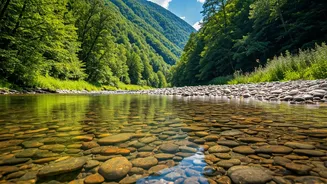
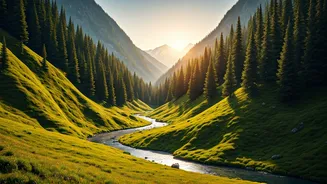
An evening stroll is a study in contrasts. On the Mall Road, a walk is a strategic mission. You’re navigating a dense crowd, sidestepping slow-moving groups, and politely declining offers from persistent vendors. Your gaze is constantly shifting, scanning for a free bench or an open spot at a food stall. It’s an experience in shared public space, but it offers little room for personal reflection. The mountains, the very reason for being there, are often just a backdrop to the human drama. A walk along a Tirthan trail is an entirely different form of movement. You might follow the riverbank, hopping over smooth, grey stones, or climb a path through a dense deodar forest. For long stretches, your only companions might be the sound of your own footsteps and the sunlight filtering through the canopy. You're not navigating people; you're navigating the landscape. Your attention is drawn outward to the snow-capped peaks visible above the treeline or inward to the simple rhythm of your breathing. It’s not about getting somewhere fast; it's about being precisely where you are.
The Soul of the Souvenir
Ultimately, the difference lies in what you take home with you. From the Mall Road, you might bring back a colorful shawl, a few extra pounds from the delicious street food, and a camera roll filled with bustling scenes. It’s a trip centered on consumption and passive entertainment—seeing the sights, buying the things. From Tirthan, the souvenirs are less tangible but more lasting. You take home the memory of waking up to the sound of the river, the taste of a simple meal cooked by your homestay host, and the feeling of awe from standing in a silent forest. It’s a trip rooted in participation and connection—with nature, with a quieter way of life, and with yourself. One is a vacation. The other is a reset.