
Beyond the Open Floor Plan
When we hear “flexible interiors,” our minds often jump to the American-style open-concept living room and kitchen. But in the context of modern India, the trend is far more nuanced and purposeful. It’s not just about removing walls; it’s about making
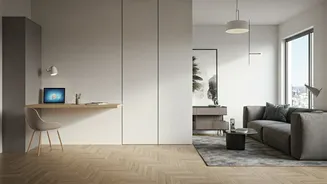
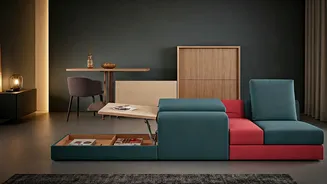
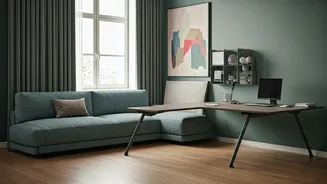
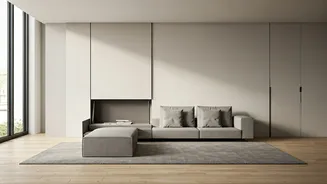
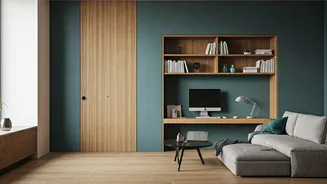
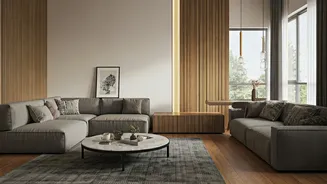
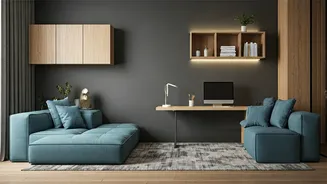
them move. Architects and designers are increasingly using sliding partitions, retractable screens, and even large, pivoting doors to create spaces that can transform in minutes. A sprawling living area for a weekend family get-together can be divided on Monday morning into a private home office and a quiet space for an elderly parent to read. This is about architectural agility. Furniture, too, plays a starring role. Think dining tables that seamlessly convert into work-from-home desks, modular sofas that can be reconfigured for different social settings, and beds that fold into walls to create daytime play areas for children.
Designing for the New Routine
So, what’s driving this demand for shapeshifting homes? The answer lies in the profound social and economic shifts reshaping Indian society. While the tradition of multi-generational living remains culturally significant, urbanization has led to smaller apartment footprints. A single home must now serve multiple generations with very different needs. A retired grandparent, a work-from-home professional, and a student attending online classes might all be under one roof. The pandemic accelerated this, cementing the home’s role as an office, school, and gym. This functional density requires spaces to perform double or triple duty. A room is no longer just a “bedroom” or a “living room”; it is a fluid zone that must cater to work, rest, socializing, and solitude, often within the same 24-hour cycle.
A Space for Everything, and Everyone
The beauty of these flexible interiors is how they accommodate the unique tapestry of Indian daily life. Consider the importance of hospitality. A home needs to feel cozy for a nuclear family on a Tuesday but expansive enough to comfortably host a dozen relatives for a festival dinner on Saturday. Movable walls make this possible. The balcony, a staple of Indian apartments, is another example. It's no longer just a spot for a potted plant; it’s a yoga deck in the morning, a coffee spot in the afternoon, and an overflow area for parties in the evening. Even religious traditions are being integrated with modern flexibility. Instead of a dedicated puja (prayer) room, which can be a luxury in a small flat, designers are creating elegant, concealed puja units within cabinetry that can be opened for daily rituals and closed when not in use, maintaining both spiritual practice and a clean, modern aesthetic.
Tradition Meets Transformation
This trend isn’t about discarding tradition in favor of Western-style minimalism. It’s a sophisticated fusion. Many designs still incorporate principles of Vastu Shastra, a traditional Hindu system of architecture that dictates spatial arrangement and layout, akin to Feng Shui. However, architects are finding innovative ways to honor Vastu principles within these flexible frameworks. The entrance might still face a specific direction for prosperity, and the kitchen might be placed in the “correct” corner, but the walls within that framework are now free to adapt. This approach reflects a broader cultural mindset in modern India: a deep respect for heritage combined with a pragmatic, forward-looking embrace of new possibilities. The home becomes a physical manifestation of this identity—rooted in tradition but built for the future.