


Welcome to the Abode of Clouds
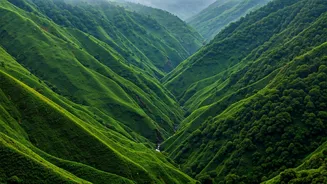
Imagine a place so defined by water that its name, Meghalaya, means “abode of the clouds” in Sanskrit. This small Indian state, nestled in the Khasi Hills, is a world of emerald-green plateaus, plunging gorges, and a culture shaped by near-constant moisture.
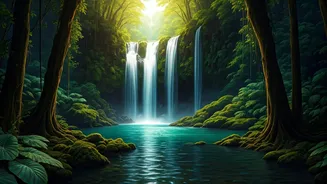
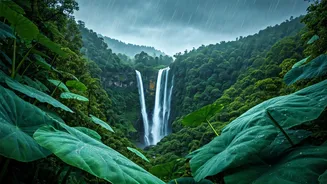
For most of the year, it’s a lush, misty wonderland. But when the monsoon winds sweep in from the Bay of Bengal from June to September, the region undergoes a dramatic transformation. The clouds descend, the rivers swell, and the landscape awakens in a thundering display of liquid force. This isn't just a rainy season; it's an annual rebirth, where hundreds of dormant waterfalls spring to life, carving new paths down ancient cliffs.
A Rivalry Written in Rain
The heart of this spectacle lies in two villages that have long vied for a unique, if damp, world record: Mawsynram and Cherrapunji (now officially known by its local name, Sohra). Sitting just a few miles apart, they are locked in a friendly battle for the title of “wettest place on Earth.” Mawsynram currently holds the Guinness World Record, receiving an average of 467 inches of rain per year. For perspective, that’s more than seven times the annual rainfall of Miami, one of America’s rainiest cities. Cherrapunji isn't far behind, with an average of about 463 inches. This incredible precipitation is the result of a perfect geographic storm. The moisture-laden monsoon clouds are funneled up from the plains of Bangladesh and hit the steep slopes of the Khasi Hills, forcing them to rise and dump their contents in a concentrated deluge.
The Cascade Spectacle
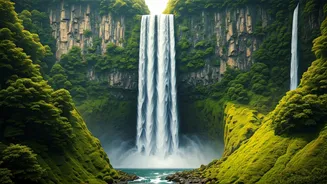
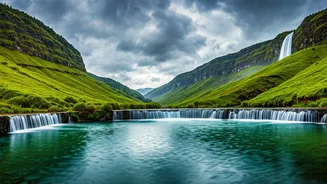
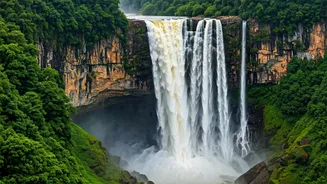
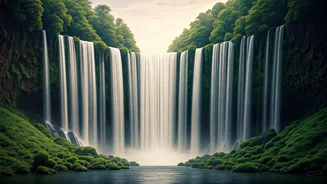
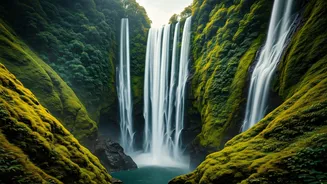
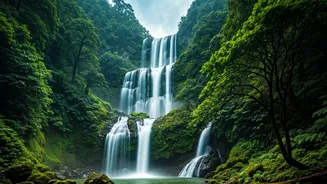
This biblical amount of rain is the engine for the region's main attraction: its waterfalls. During peak season, the limestone cliffs seem to weep from every pore. The most famous is Nohkalikai Falls, the tallest plunge waterfall in India. Its single, powerful stream drops over 1,100 feet into a turquoise pool below, its roar echoing through the valley. The name carries a tragic local legend, but its raw power is a sight of pure, untamed nature. Nearby, the Seven Sisters Falls (Nohsngithiang Falls) presents a different kind of beauty. Here, a series of seven distinct streams cascades side-by-side down a wide cliff face, creating a majestic curtain of water that glows in the afternoon sun—when it manages to break through the clouds. These are just the headliners; countless other falls, named and unnamed, appear during the monsoon, making any drive through the region a journey through a living water-world.
Life in a World of Water
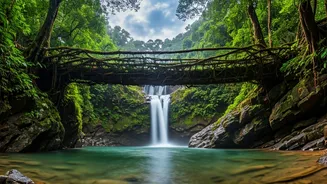
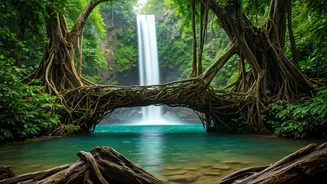
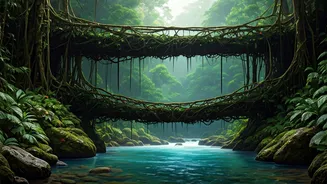
Living in such an extreme environment has fostered incredible ingenuity. While the waterfalls draw tourists, the most enduring symbol of Meghalaya’s culture is arguably its living root bridges. For centuries, the indigenous Khasi and Jaintia people have guided the thick, pliable roots of rubber fig trees across rivers and gorges, patiently weaving them into strong, living structures. These bridges, which grow stronger over time and can last for centuries, are a perfect fusion of human creativity and natural adaptation. They are a quiet testament to a way of life that doesn’t fight the water, but works with it. The local people prepare for the monsoon with 'knups,' full-body umbrellas made of bamboo and leaves, a practical and beautiful piece of local craftsmanship designed for a world where the sky can open up at any moment.