





Welcome to the Abode of Clouds
Tucked away in the northeastern corner of India, the state of Meghalaya—which translates to “the abode of clouds”—is a world away from the desert palaces and bustling megacities that often define the country for Western travelers. Its capital, Shillong,
is a cool, pine-scented hill station with a colonial past and a rock-and-roll heart. While most tourists might avoid rain, here it’s the main attraction. From roughly June to September, the monsoon season breathes an otherworldly life into the landscape, turning rolling hills into a carpet of impossible green and feeding the region's two main draws: its waterfalls and its caves.
Chasing Thundering Waterfalls
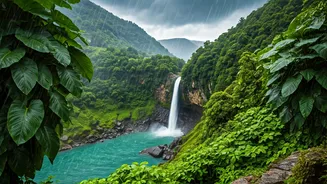
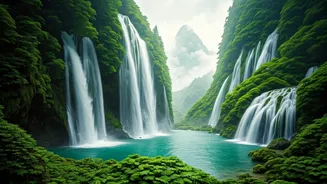
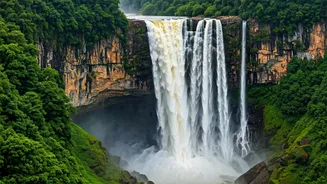
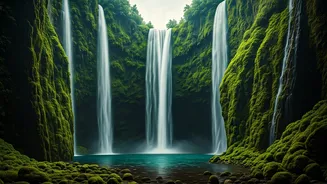
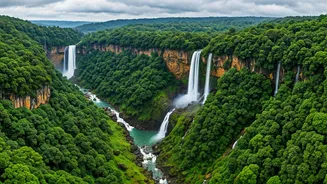
During the monsoon, Meghalaya’s waterfalls aren’t just trickles; they are roaring, spectacular displays of nature’s power. Near Shillong, Elephant Falls is a popular three-tiered cascade that’s easily accessible. But for the full dramatic effect, you must venture toward Cherrapunji (also known as Sohra), once the wettest place on Earth. Here you’ll find Nohkalikai Falls, India’s tallest plunge waterfall. It drops over 1,100 feet from a verdant cliff into a turquoise pool below, its story steeped in local legend. The Seven Sisters Falls, another nearby wonder, is a collection of cascades that flow side-by-side down a limestone cliff, a sight best appreciated when the clouds part for a moment to reveal the full panorama.
Into the Earth's Ancient Depths
Meghalaya is home to one of Asia's most extensive cave networks, and the rain makes the experience even more mystical. Mawsmai Cave is the perfect introduction for beginners. It’s a well-lit cavern system where you can walk through narrow passages and vast chambers, marveling at the stalactites and stalagmites glistening with moisture. For the slightly more adventurous, Arwah Cave offers a different thrill. A darker, more rugged trek leads you to a chamber filled with crustacean fossils embedded in the limestone walls, visible reminders of a time when these mountains were under the sea. Exploring these subterranean worlds while the rain drums on the forest canopy above is an unforgettable part of the monsoon journey.
The Living Root Bridges
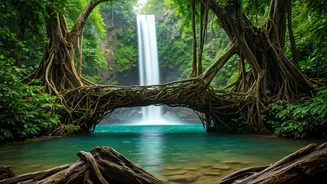
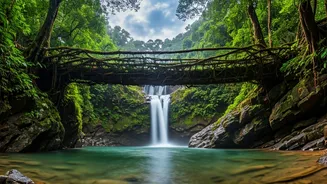
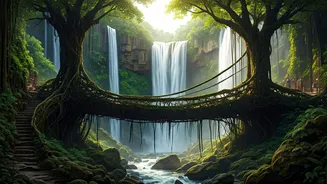
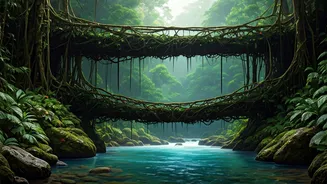
While not explicitly caves or waterfalls, no trip to this region is complete without seeing the living root bridges. For centuries, the indigenous Khasi and Jaintia peoples have trained the aerial roots of rubber fig trees to grow across rivers, forming sturdy, living structures that only get stronger with time and rainfall. The most famous is the double-decker bridge in Nongriat village, which requires a significant hike but rewards you with a sight straight out of a fantasy novel. These bridges are a testament to a harmonious relationship between humanity and nature, and they are at their most vibrant when surrounded by the lush, rain-fed jungle.
The Vibe of Shillong
Back in Shillong, the rain offers a perfect excuse to explore the city’s cozy cafes and vibrant culture. Known as India’s rock music capital, the city has a youthful, creative energy. You can spend an afternoon browsing the bustling markets of Police Bazar, sampling local Khasi dishes like 'jadoh' (a savory rice and meat dish) and pork with bamboo shoots, or simply find a cafe with a view and watch the mist roll over the hills. The weather encourages a slower pace, turning your trip into less of a checklist and more of an atmospheric immersion.