






The Era of Simple (and Flawed) Rules
Remember the low-fat craze of the ‘80s and ‘90s? Supermarket aisles suddenly flooded with fat-free cookies, cheeses, and salad dressings. The logic seemed simple: fat makes you fat, so remove it. The problem? Manufacturers replaced that fat with sugar
and refined carbohydrates to make the products palatable, inadvertently contributing to new health issues. This was the hallmark of “lazy” diet advice: it fixated on a single villain. First it was fat, then it was carbs, then gluten. The advice was easy to market but biologically clumsy. It was built on the oversimplified mantra of “calories in, calories out” (CICO), treating the human body like a simple furnace. This model ignored a crucial fact: not all calories are created equal. The way your body processes 100 calories from an avocado is vastly different from how it processes 100 calories from a soda. This lazy approach led to decades of confusion, yo-yo dieting, and a public that felt perpetually at war with food.
What Changed? Science, Tech, and You
The shift away from lazy advice wasn't a single event but a slow-burn revolution fueled by better science and accessible technology. Researchers began to unravel the immense complexity of our gut microbiome, the universe of bacteria in our digestive system that profoundly influences everything from our metabolism to our mood. They discovered that what we eat feeds these microbes, and a healthy gut is critical for overall health. Simultaneously, our understanding of hormones like insulin became more nuanced. We learned that highly processed foods and sugar can cause dramatic blood sugar spikes and crashes, leading to inflammation, cravings, and fat storage. This knowledge was supercharged by technology. Continuous glucose monitors (CGMs), once reserved for diabetics, are becoming mainstream wellness tools, giving people real-time data on how a specific meal affects their blood sugar. At-home genetic and microbiome tests, while still evolving, offer another layer of personalization. The focus was no longer just on what you eat, but on how *your* specific body responds to it.
Welcome to the Age of Nuance
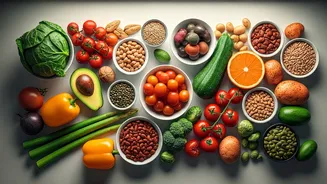
So what does “less lazy” advice look like in practice? It’s less about rigid restriction and more about mindful optimization. Instead of demonizing an entire food group, the new focus is on food quality. The primary enemy isn't fat or carbs, but ultra-processed foods—industrial formulations packed with additives, sugars, and unhealthy fats that are engineered to be hyper-palatable. The new guidance encourages eating whole, recognizable foods. It prioritizes metabolic health, which means managing blood sugar levels by pairing carbohydrates with protein, fat, and fiber to slow digestion and prevent energy crashes. It’s also deeply personal. The perfect diet for your friend might not be right for you. This new paradigm encourages self-experimentation: pay attention to how you feel after eating certain foods. Do you feel energized and focused, or sluggish and foggy? This shift empowers individuals to become active participants in their health, moving beyond generic rules to build a sustainable way of eating that works for their unique biology.
From 'Diet' to 'Dietary Pattern'
Perhaps the biggest change is in the language we use. Nutrition experts are increasingly moving away from the word “diet,” with its baggage of short-term deprivation and failure. Instead, they talk about “dietary patterns.” This isn't just semantics; it reflects a fundamental change in philosophy. A dietary pattern is a long-term approach to eating, not a 30-day blitz to lose weight. Think of the Mediterranean diet—it’s not a list of forbidden foods but a flexible framework emphasizing fruits, vegetables, olive oil, and fish. The same goes for the DASH (Dietary Approaches to Stop Hypertension) eating plan. These patterns focus on what to *add* to your plate—more fiber, more nutrients, more healthy fats—rather than just what to take away. This approach is more sustainable, less stressful, and ultimately more effective for long-term health and well-being. It’s a sign that we’re finally moving from a culture of dieting to a culture of nourishment.