






When the Day Stands Still
Imagine a city of 20 million people holding its breath. This is Delhi in May and June. By midday, the temperature climbs past 110°F, and the air is thick with a shimmering heat that turns streets into ghost towns. The relentless sun beats down on the pavement,
forcing residents indoors to the hum of air conditioners and the whir of ceiling fans. Going outside for anything non-essential feels like a herculean task. The vibrant, chaotic energy that defines India's capital seems to evaporate, leaving behind a city in a state of suspended animation. For tourists, it’s a challenge; for locals, it's a recurring test of endurance. This oppressive stillness is the problem that needs a solution, a way to reclaim life from the climate's grip.
An Ascent into the Night
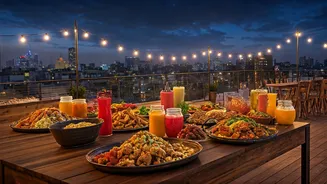
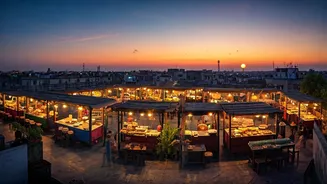
But as the sun finally dips below the horizon, a transformation begins. The punishing heat softens into a balmy warmth, and a collective exhale sweeps across the metropolis. This is when Delhi truly comes alive, not on the still-radiating streets, but on its rooftops. All over the city, from dense residential neighborhoods to commercial hubs, a new landscape emerges. Temporary kitchens are set up, string lights are draped across railings, and plastic tables and chairs appear on terraces that were deserted just hours before. This vertical migration is a clever act of urban adaptation. Lacking the sprawling public squares of European cities, Delhiites utilize the one space that offers a breeze and a respite from the ground-level heat: the open sky.
A Symphony of Sizzle and Spice
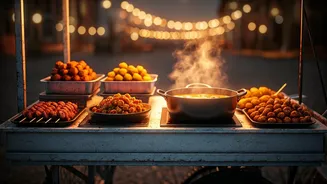
The heart of these rooftop gatherings is, without question, the food. The air, now cooler, fills with the irresistible aromas of street food classics being cooked fresh. You can hear the sizzle of paneer tikka and succulent chicken kebabs hitting a hot griddle. Vendors skillfully prepare plates of chaat, a category of savory snacks that explodes with a mix of sweet, sour, spicy, and tangy flavors. There are crispy golgappas filled with spiced water, rich and creamy dahi bhalla, and aloo tikki—spiced potato patties fried to golden perfection. To combat the residual warmth, coolers are filled with chilled nimbu pani (fresh lime soda) and stalls offer kulfi, a dense, traditional Indian ice cream often flavored with pistachio, mango, or cardamom. It’s a feast for the senses, offering comfort and delight after a day of deprivation.
More Than Just a Meal
While the food is the main attraction, these markets are about far more than just eating. They are vital social ecosystems. They are where families come to unwind, where friends catch up after a long day cooped up at work or home, and where couples can enjoy a low-key date night under the stars, with the city's twinkling lights as a backdrop. In a megacity that can often feel anonymous and overwhelming, these rooftop spaces foster a powerful sense of community. Neighbors who might rush past each other during the day now share tables and conversation. The atmosphere is relaxed, informal, and deeply communal. It's a testament to the human need for connection, a way of collectively pushing back against the isolating effects of extreme weather and finding joy in shared experience.