






The Festival of Chariots
Each year in the coastal city of Puri in Odisha, India, an event of almost incomprehensible scale takes place. Rath Yatra, which translates to the “Chariot Journey,” is a Hindu festival that sees three deities leave the confines of their temple to travel
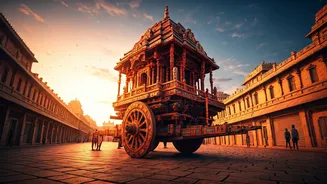
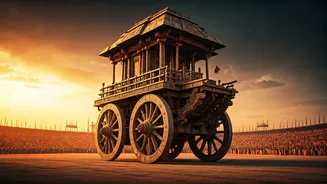
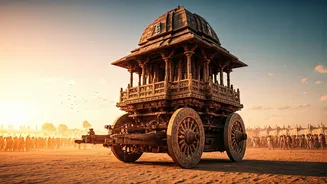
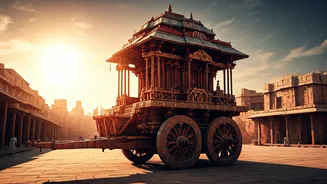
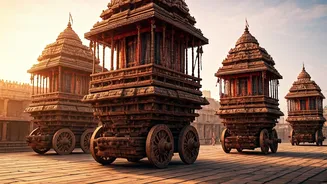
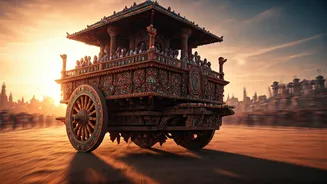
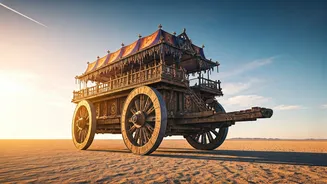
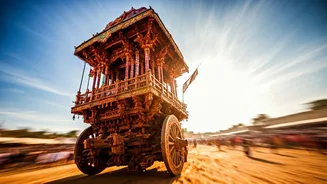
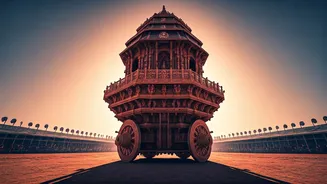
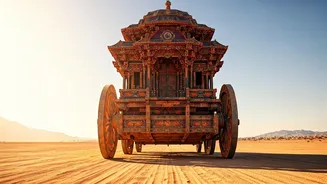
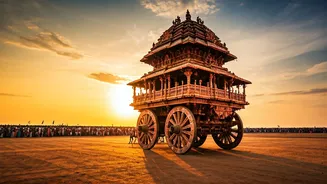
amidst the public. The main attractions are the chariots themselves: three colossal, brightly decorated wooden structures, each built anew every year. These are not parade floats; they are mobile temples, standing over 45 feet tall, with massive wooden wheels and intricate carvings. For the millions who attend, the festival is the one time a year when the gods come out to them, closing the distance between the divine and the devotee.
Meet the Divine Siblings
At the heart of the festival are three beloved deities from the Jagannath Temple, one of Hinduism's most sacred sites. The trio consists of Lord Jagannath, considered a form of Vishnu; his elder brother, Lord Balabhadra; and their sister, Subhadra. Their idols, carved from wood and featuring large, circular eyes, are distinct in Hindu iconography. During Rath Yatra, these deities are ceremoniously brought out of the temple and placed on their respective chariots. Jagannath’s chariot, Nandighosha, is marked by its yellow and red fabrics. Balabhadra’s, Taladhwaja, is draped in green and red, while Subhadra’s smaller chariot, Darpadalana, is adorned with red and black. Seeing them emerge is the emotional peak for many pilgrims, who travel for days to get a single glimpse.
A Journey of Renewal and Unity
The procession follows a two-mile route known as the Bada Danda, or Grand Avenue, from the main Jagannath Temple to the Gundicha Temple, said to be the deities’ garden house or birthplace. This journey isn't just a physical procession; it’s rich with symbolism. It represents a journey of renewal and an act of profound inclusivity. In a traditional temple system where access can be restricted, Rath Yatra breaks down all barriers. People of all castes and backgrounds are invited to participate, most notably by pulling the thick coconut-fiber ropes that move the immense chariots. The belief is that touching the ropes and helping pull the divine chariots earns spiritual merit and cleanses one of sins. It is a powerful, unifying experience, where the collective effort of thousands moves something sacred.
A Spectacle of Human Devotion
The logistics of Rath Yatra are as staggering as its spiritual significance. The construction of the three chariots is a months-long ritual in itself, undertaken by a specific family of carpenters who have passed down the craft for generations. They use no modern blueprints or power tools, relying entirely on traditional techniques. On the day of the festival, the air is thick with the sounds of gongs, conch shells, and chants of “Jai Jagannath!” (Victory to Jagannath). The sight of the massive chariots lumbering through the sea of humanity is an unforgettable spectacle. The crush of people is immense, yet the atmosphere is one of collective purpose and joyous celebration. It’s an overwhelming sensory experience that demonstrates the profound power of communal faith and tradition.