





Why the Moon, and Why Now?
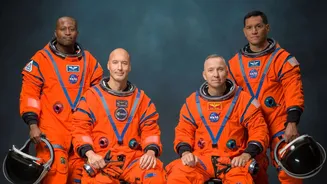
The renewed push for a lunar presence isn't just about planting a flag and coming home. This time, it's about staying. The driving force is NASA's Artemis program, an ambitious plan to establish the first long-term human presence on another world. But
unlike the Cold War-fueled space race, this effort is a public-private hybrid. Companies like SpaceX, with its powerful Starship rocket, and Blue Origin are critical partners, driving down costs and accelerating timelines. There’s also a geopolitical angle. With China and other nations rapidly advancing their own space capabilities, the U.S. sees establishing a foothold on the Moon as a way to lead in a new era of space exploration and set the norms for off-world activity.
The Blueprint: Gateway and a Base Camp
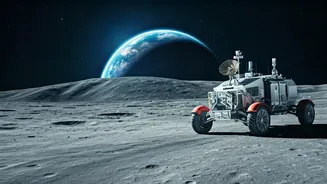
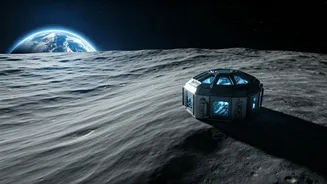
So what does “living on the Moon” actually look like? The plan isn’t for sprawling cities, but for something more akin to a research station in Antarctica. The first piece of the puzzle is the Gateway, a small space station that will orbit the Moon, serving as a command and logistics hub for missions to and from the surface. From there, astronauts will descend to a designated “Artemis Base Camp” near the Moon's South Pole. This initial outpost would be small—likely a habitat for four astronauts, a rover for exploration, and a mobile home. The goal is sustainability: learning to live off the land, use local resources, and build a permanent outpost that can be gradually expanded over decades, eventually serving as a crucial stepping stone for an even more ambitious goal: sending humans to Mars.
The Game-Changer: Water Ice
The single most important discovery driving this new lunar ambition is water. Decades ago, the Moon was thought to be bone-dry. We now know that permanently shadowed craters at the lunar poles hold vast quantities of water ice. This is a complete game-changer. Water isn't just for drinking. Its components, hydrogen and oxygen, can be separated to create breathable air for habitats and, crucially, rocket propellant. The ability to “refuel” on the Moon would fundamentally alter the economics of space travel. Instead of hauling everything from Earth at enormous expense, future missions could top up their tanks at a lunar gas station, making the whole solar system more accessible.
An Incredibly Hostile Environment
For all the excitement, the Moon remains one of the most hostile environments imaginable. Earth’s atmosphere and magnetic field protect us from cosmic radiation, but the Moon has neither. A long-term stay would expose astronauts to dangerous levels of radiation, significantly increasing cancer risk. Then there are the temperature extremes, swinging from a scorching 260°F (127°C) in sunlight to a frigid -280°F (-173°C) in shadow. But perhaps the biggest challenge is the dust. Lunar regolith is not like sand on a beach; it’s a fine, abrasive powder of sharp, glassy particles that clings to everything, tears up spacesuits, clogs machinery, and is toxic if inhaled. Engineers will need to develop entirely new ways to build, work, and live to overcome these life-threatening hazards.
So, When Are We Moving In?
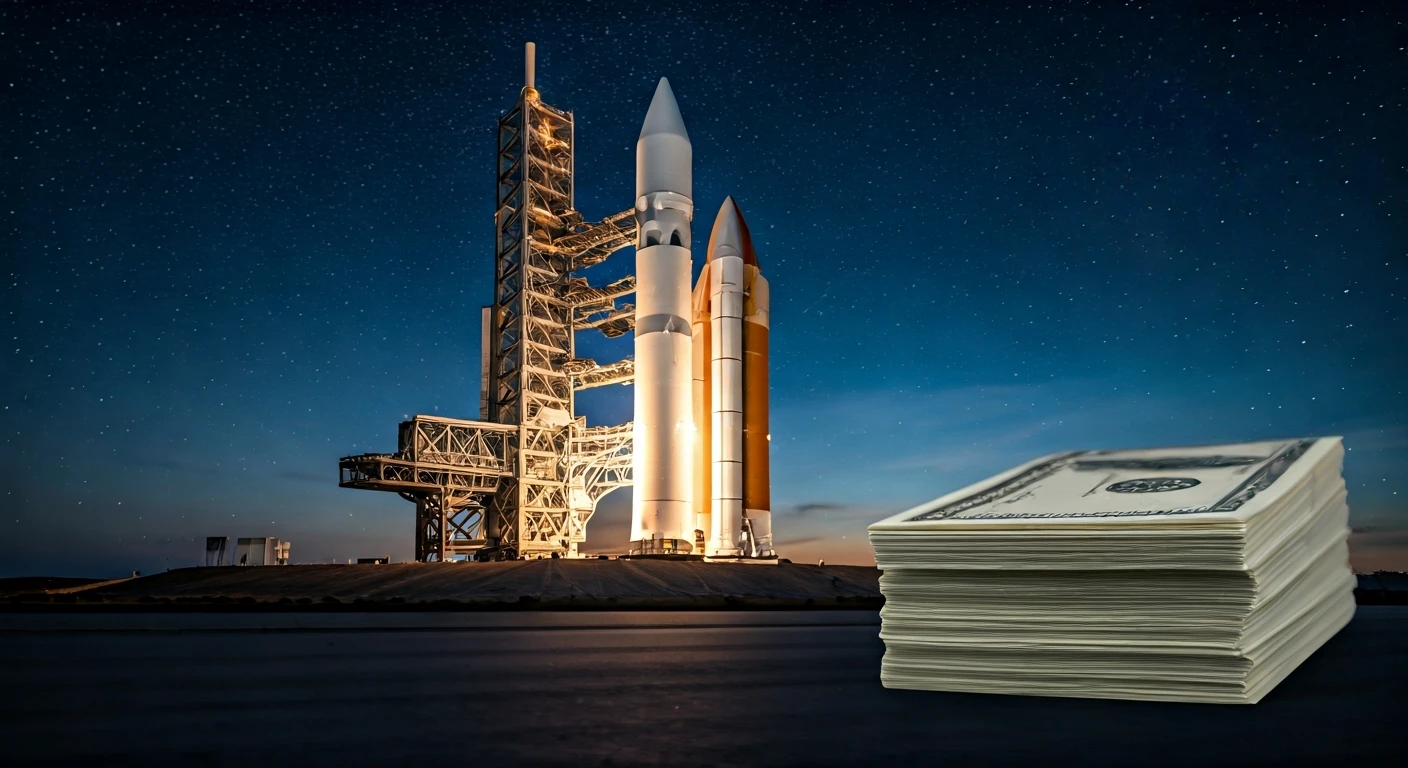
Don’t start packing your bags for a lunar condo just yet. The first Artemis crewed landing is slated for the mid-2020s, but building a sustainable base will take many more missions and many more years. The initial presence will be tiny, occupied by a rotating crew of highly trained specialists. We’re talking about a scientific outpost, not a civilian settlement. The path forward is fraught with technical, financial, and political hurdles. A single budget cut, technical failure, or shift in political will could delay the timeline significantly. The vision of a true “lunar address” for ordinary people remains firmly in the realm of science fiction for the foreseeable future. But the journey of a thousand miles—or in this case, 239,000—begins with a single step.