






Gear Up Before You Go Out
The most fundamental aspect of a safe and enjoyable rainy trip happens before you even step out the door: your gear. The difference between a miserable, shivering day and a memorable adventure often comes down to fabric. Start with a reliable waterproof
outer layer—not just water-resistant. A good rain jacket with a hood will protect your core and keep your head dry, which is crucial for maintaining body temperature. Equally important is your footwear. Smooth-soled sneakers or fashion boots become treacherous on slick surfaces. Opt for shoes with deep lugs and excellent grip. Waterproof hiking shoes or boots are ideal, even in urban environments, as they prevent slips on wet cobblestones, metal grates, and slick tile floors. Finally, think about your electronics. A dry bag or even a simple Ziploc bag can save your phone or camera from a fatal dousing. Trying to juggle an umbrella, a phone, and your balance on a slippery sidewalk is a recipe for a cracked screen or worse.
Recalibrate Your Driving Habits
If your trip involves a car, remember that rain is one of the most dangerous driving conditions. According to the U.S. Department of Transportation, nearly half of all weather-related crashes happen during rainfall. The first rule is simple: slow down. Your tires have far less traction on a wet road, and your braking distance can increase significantly. Leave several car lengths of space between you and the vehicle ahead. Be especially wary of the risk of hydroplaning, where your tires lose contact with the road surface and skim across a layer of water. If you feel the steering become light or the back of the car start to fishtail, do not slam on the brakes. Instead, ease your foot off the accelerator and steer gently in the direction you want to go until your tires regain traction. Also, use your headlights—it’s the law in many states during rain, as it makes you more visible to other drivers, even in broad daylight.
Navigate on Foot with Awareness
Once you’ve parked, the hazards shift from the road to the ground beneath your feet. Urban environments are filled with slick spots: painted crosswalk lines, manhole covers, and marble entryways become dangerously slippery when wet. When hiking, the danger is amplified. Wet leaves, mud, and slick rocks can easily lead to a fall, turning a pleasant walk into a painful ordeal. Use handrails where available and always test your footing before putting your full weight down. Be aware of your surroundings in a way that goes beyond looking for a good photo. A stream that was a gentle trickle yesterday can become a raging torrent after heavy rain. Never attempt to cross fast-moving water. Flash floods are a serious risk, especially in canyons, valleys, and low-lying areas. Heed all warnings from local authorities and park rangers; they understand the local topography and risks better than any visitor.
The Perfect Shot Can Wait
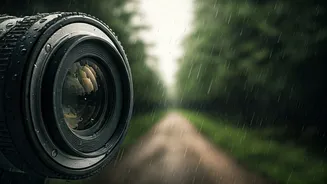
This brings us back to the camera. The desire to capture a unique moment is powerful. We see the reflection in the puddle, the dramatic clouds over the landscape, or the charming alleyway glistening in the rain, and our first instinct is to capture it. But this is precisely when we are most vulnerable. Lost in the viewfinder, we lose situational awareness. We might step backward into traffic, get too close to the edge of an unstable cliff, or fail to notice an approaching hazard. The key is to practice a simple, two-step process: safety first, photo second. Before you raise your camera, stop. Plant your feet firmly on stable ground. Look around you—check for cars, cyclists, other pedestrians, and potential environmental dangers. Once you are certain you are in a safe, secure position, then frame your shot. That stunning photo isn’t worth an injury that could ruin your trip or have far more serious consequences.