






The Problem with Dark Spaces
In the world of real estate, natural light isn’t just a perk; it’s a non-negotiable for many. It makes spaces feel larger, cleaner, and more welcoming. Its absence can have the opposite effect, creating “dead zones” that feel perpetually dreary and underused.
This isn’t just an aesthetic issue. A lack of natural light can disrupt our circadian rhythms—the body's internal 24-hour clock—which can affect sleep quality, energy levels, and even mood. For city dwellers in cramped apartments or anyone living in a region with long, dark winters, the daily light deficit is a tangible drain on well-being. While a standard floor lamp can illuminate a room, it can’t replicate the dynamic, full-spectrum quality of real sunlight that our bodies are wired to expect.
Not Just Another Lamp
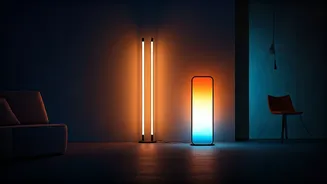
Enter the artificial skylight. These aren’t the harsh, buzzing fluorescent fixtures of a dreary office. We’re talking about sophisticated LED panels designed to convincingly replicate the look and feel of a sun-drenched skylight. At the high end of the market, pioneering companies have developed systems that use advanced nanotechnology to mimic “Rayleigh scattering”—the same atmospheric phenomenon that makes the sky appear blue. The effect is uncanny, creating a panel that doesn’t just glow, but appears to have genuine depth, complete with a warm “sun” and a soft blue “sky.” More accessible versions focus on delivering full-spectrum light that changes in color temperature throughout the day, shifting from a cool, energizing blue-white in the morning to a warm, relaxing amber tone in the evening. This automatic adjustment helps sync your internal clock, providing the right kind of light at the right time.
The Science of 'Fake' Sunlight
The magic behind these panels lies in their ability to go beyond simple brightness. A standard light bulb emits a narrow spectrum of light. In contrast, “full-spectrum” LED systems are engineered to produce wavelengths across the entire visible spectrum, much like the sun. This richer, more complete light is what helps render colors more accurately and provides the biological signals our bodies need. Many of these systems are programmable, allowing them to simulate a full 24-hour solar cycle. They brighten gradually in the morning, peak with a high-intensity, cool-toned light at midday to promote alertness, and then slowly dim and warm up as evening approaches, signaling to your brain that it’s time to wind down. This is a significant leap beyond a simple dimmer switch; it’s a form of passive wellness technology, using light to gently guide your body’s natural rhythms.
Benefits Beyond Brightness
Installing an artificial sun source is about more than just aesthetics. For individuals prone to the “winter blues” or more serious Seasonal Affective Disorder (SAD), exposure to bright, full-spectrum light can be a game-changer for mood and energy. It can turn a formerly gloomy home office into a hub of productivity or make a windowless kitchen a place you actually want to spend time in. The benefits extend beyond humans, too. Houseplants that once struggled in low-light conditions can thrive under these panels. By transforming a dark, forgotten corner into a bright, usable part of your home, these devices effectively increase your livable square footage. It’s an investment in your environment that pays dividends in your daily quality of life.
What to Know Before You Buy
Before you start renovating, it’s important to understand the landscape. The market for these products is broad. High-end systems that create a hyper-realistic sky effect can cost thousands of dollars and often require professional installation, as they are typically recessed into a ceiling. However, the technology is becoming more mainstream and affordable. A growing number of consumer-friendly options are available, from large, flat-panel lights that mimic a simple skylight to smaller, tunable desk lamps designed to combat eye strain and boost focus. When shopping, look for terms like “full-spectrum,” “tunable white,” and a high Color Rendering Index (CRI) of 90+, which indicates the light will show colors naturally. Consider the installation—is it a simple plug-in device or something that needs an electrician? Finally, check the energy consumption, though modern LEDs are remarkably efficient.