


Fighting the Damp and the Dark
Whether you live in a region with a true monsoon season, a coastal area plagued by fog, or a city known for its drizzly weather, high humidity and low light can take a toll on your home and your mood. Dark corners seem darker, the air feels heavy, and materials
like paper or untreated wood can warp, buckle, or even mildew. It’s a common design challenge: how do you create a warm, inviting atmosphere when the world outside is gray and soggy? The solution often lies in choosing decor that works with, not against, the environment. While a powerful dehumidifier handles the air, your design choices can tackle the ambiance, transforming a dreary space into a cozy refuge.
The Natural Resilience of Bamboo
This is where bamboo shines, both literally and figuratively. As a material, bamboo is naturally suited for humid climates. It’s a type of grass that grows rapidly in tropical and subtropical zones, meaning it’s inherently equipped to handle moisture better than many traditional hardwoods. Its dense, fibrous structure is less prone to swelling and contracting with changes in humidity. However, the term “moisture-resistant” is key. For a bamboo lamp to truly withstand a damp environment, it needs to be properly treated. This usually involves being kiln-dried to reduce its internal moisture content and then sealed with a protective finish, like a clear lacquer or polyurethane. This sealant acts as a barrier, preventing ambient moisture from penetrating the fibers, which is crucial for preventing mold and ensuring long-term durability. So, while bamboo is a great starting point, a well-finished product is the real hero.
How Woven Shades Banish Gloom
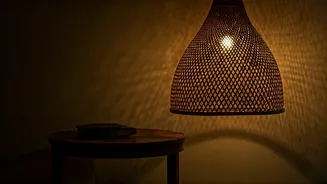
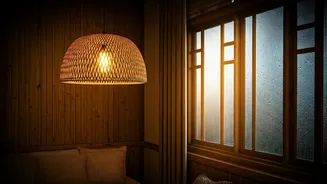
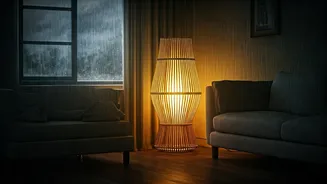
Beyond its material properties, the design of a typical bamboo lamp is its greatest asset in the fight against gloom. Most are constructed with woven, slatted, or latticed shades. This design does something magical with light. Instead of a single, harsh point of brightness from an exposed bulb, a woven shade diffuses the light, scattering it in countless directions. This creates a soft, warm, ambient glow that fills the room without creating sharp shadows. The effect is often described as “dappled” or “textured” light, mimicking the gentle light that filters through a forest canopy. This type of lighting is inherently easier on the eyes and psychologically comforting. It makes a space feel warmer and more intimate, directly countering the cold, flat light of an overcast day. By “painting” the room with soft light, a bamboo lamp doesn't just illuminate—it creates an atmosphere.
What to Look For When You're Shopping
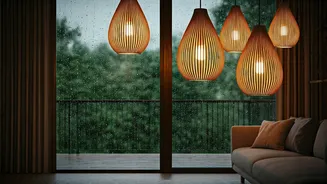
When choosing a moisture-resistant bamboo lamp, a few details matter. First, inspect the finish. It should feel smooth and sealed, without any rough, unfinished patches where moisture could get in. Check the product description for terms like “lacquered,” “sealed,” or “polyurethane finish.” Second, consider the weave. A tighter weave will diffuse more light and produce a softer glow, while a more open weave will create more distinct patterns of light and shadow on your walls. Both are beautiful, so it’s a matter of personal preference. Finally, think about the style. Bamboo lamps are staples of Japandi, Bohemian, and coastal design, but their natural, neutral look allows them to fit into almost any decor. Whether it's a large pendant over a dining table, a floor lamp in a reading nook, or a small table lamp adding warmth to a console, the key is to introduce that natural texture and warm light into the areas that feel the darkest.