






The Taste of the Mountains
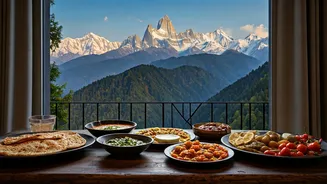
For years, travelers have flocked to Nainital, a charming hill station in Uttarakhand, India, for its shimmering emerald lake and panoramic Himalayan views. It’s a postcard-perfect escape. Yet, many visitors were only scratching the surface, experiencing
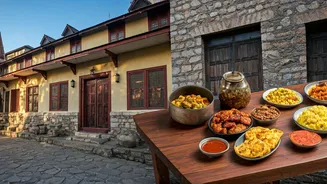
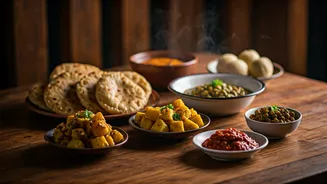
the place without truly tasting it. Now, that’s changing. A growing culinary curiosity is pulling food lovers off the main tourist drag and into eateries serving Kumaoni cuisine, the traditional food of the Kumaon region. This isn't just food; it's a story of the mountains on a plate—simple, nutritious, and deeply connected to the land.
A Pantry Sourced from the Hills
Kumaoni food is defined by its hyper-local ingredients, many of which are unknown outside of these high-altitude slopes. The cuisine is built on foraged greens, hardy lentils, and ancient grains that thrive in the rugged terrain. Key to its unique flavor profile are ingredients like *jakhiya*, a wild mustard seed that crackles and pops in hot oil, imparting a pungent, earthy aroma. Another star is *bhang*, or hemp seeds. Before you jump to conclusions, the seeds used in cooking are non-psychoactive, prized for their nutty flavor and nutritional density. They are roasted and ground into a paste to create rich, creamy sauces and chutneys that form the backbone of many dishes. Grains like *mandua* (finger millet) and lentils like *gahat* (horse gram) provide warmth and sustenance, essential for life in the mountains.
Hearty Dishes to Warm the Soul
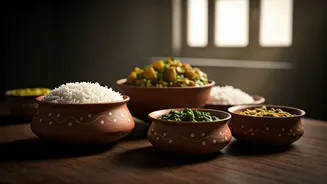
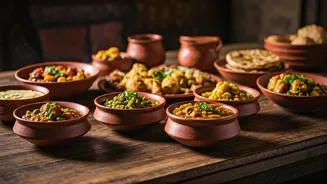
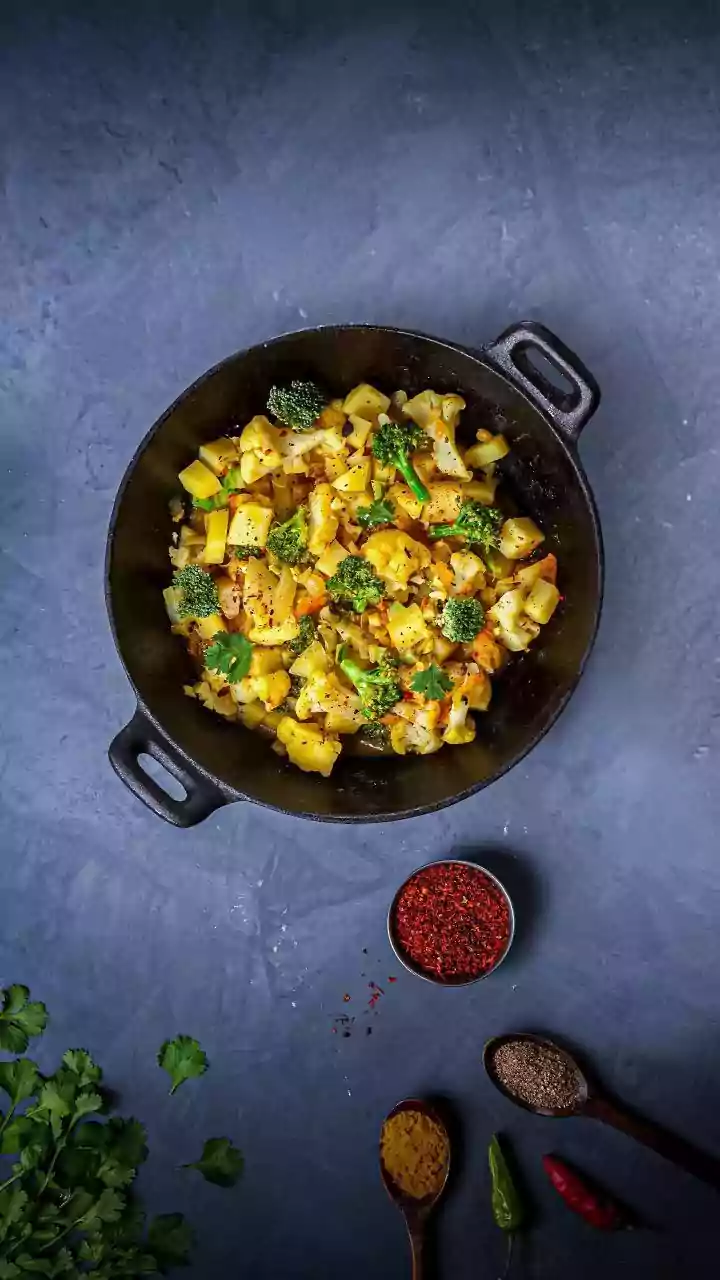
To understand Kumaoni food, you have to try *bhatt ki churkani*. It’s a soulful, slow-cooked dish made from black soybeans simmered in an iron pot, or *kadhai*, which gives it its characteristic dark color and depth of flavor. Served with steaming rice, it’s the ultimate mountain comfort food. Then there’s *aloo ke gutke*, a deceptively simple dish of boiled potatoes, cubed and stir-fried with *jakhiya*, chili flakes, and fresh coriander. It's a staple snack found everywhere from roadside stalls to family kitchens, delivering a perfect burst of flavor. Another local favorite is *kafuli*, a thick, green gravy made from spinach and fenugreek leaves, often thickened with rice flour. It’s a nutritional powerhouse that tastes both vibrant and earthy, a perfect representation of the green Kumaon hillsides.
The Sweet Conclusion
No Kumaoni meal is complete without a taste of the region's unique sweets. The most famous is *bal mithai*, a brown, fudge-like confection made from roasted *khoya* (milk solids) and coated in tiny white sugar balls. It’s a textural delight, with a rich, caramelized flavor that’s intensely satisfying. Its origins are tied to the region, and it remains the go-to gift and celebratory treat. Another delicacy is *singori*, a cone-shaped sweet made from sweetened *khoya* mixed with coconut and wrapped in a Maalu leaf. The leaf imparts a subtle, earthy fragrance to the sweet within, making the act of unwrapping it part of the experience. These aren't just desserts; they are edible pieces of Kumaoni heritage.