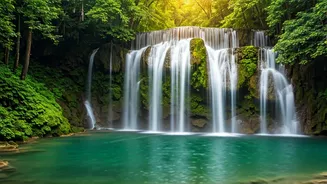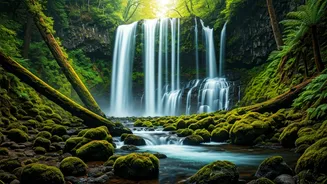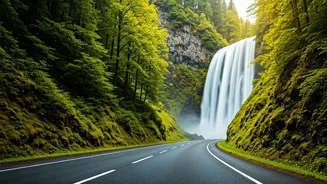





Yosemite Falls, California
No list of American waterfalls is complete without this undisputed icon. Dropping a breathtaking 2,425 feet in three distinct stages, Yosemite Falls is the tallest waterfall in North America. June is arguably the best month to witness its power. The massive
Sierra Nevada snowpack has been melting for weeks, feeding the falls with a thunderous volume of water that sends clouds of mist across the valley floor. By late summer, the falls can dwindle to a mere trickle, making early summer the essential viewing window. The adventure here can be as easy or as strenuous as you like. A short, paved, one-mile loop trail in Yosemite Valley offers spectacular views of the Lower Fall, accessible to everyone. For the more ambitious, the Yosemite Falls Trail is a grueling 7.2-mile round-trip climb that rewards hikers with sore legs and intimate, awe-inspiring views from the very top. Just be prepared for crowds and check the park’s new reservation system before you go.
Shoshone Falls, Idaho
Often called the “Niagara of the West,” Shoshone Falls on the Snake River is a geological marvel. At 212 feet tall and spanning a massive 900-foot-wide rim, its raw power is astonishing. The falls are at their most dramatic in the spring and early summer when water from upstream dams is released, coinciding with the last of the regional snowmelt. By visiting in June, you catch the tail end of this peak flow, when the river churns with awe-inspiring force before the drier months set in. Unlike many waterfalls that require a long hike, Shoshone Falls is incredibly accessible. Located within a city park in Twin Falls, Idaho, the main attraction is a series of well-maintained overlooks just a short walk from the parking lot. The adventure here is about absorbing the sheer scale and sound of the place. Pack a picnic, enjoy the expansive grassy areas, and watch as the Snake River plunges over the precipice. It’s a perfect family-friendly stop that delivers a massive scenic payoff with minimal effort.
Multnomah Falls, Oregon
Nestled in the lush, green embrace of the Columbia River Gorge, Multnomah Falls is the postcard picture of a Pacific Northwest waterfall. This elegant, two-tiered cascade drops a total of 620 feet, with the Benson Bridge crossing between the two tiers creating one of the most photographed scenes in the state. While it flows year-round, a June visit offers the best of both worlds: the water volume is still robust from spring rains, and the surrounding forests are a vibrant, almost electric green. Your adventure begins the moment you step out of your car. A short, paved walk leads to the primary viewing platform at the base. From there, it's a slightly steeper but still manageable walk up to the Benson Bridge for that iconic photo-op. For those wanting more, a series of switchbacks continues for a mile to the top of the falls. Pro tip: The timed-access permit system is often in effect during peak season, so check the recreation.gov website to book your slot before making the drive.
Cummins Falls, Tennessee
If your ideal waterfall adventure involves getting wet, look no further than Cummins Falls. This 75-foot stunner is less about towering height and more about its idyllic setting, cascading over a series of stone ledges into one of Tennessee’s most beloved swimming holes. In June, the water is still refreshingly cool, but the southern sun is warm enough to make a dip not just possible, but practically mandatory. It's the quintessential start-of-summer experience. The journey to the base of the falls is a key part of the adventure. It requires a Gorge Access Permit and a rugged, one-and-a-half-mile hike that involves wading through the Blackburn Fork River and scrambling over rocks. This isn't a simple stroll; it’s a physical commitment that weeds out casual onlookers and rewards those who make the trek with an unforgettable natural playground. Be sure to wear sturdy water shoes and check the park's website for water levels and weather conditions, as the gorge is prone to flash flooding.