

Why Your Home Needs to Multitask
Remember when the dining room was just for dining and the guest room sat empty 350 days a year? That model feels increasingly outdated. The shift toward remote and hybrid work turned millions of kitchens and bedrooms into makeshift offices overnight.
We discovered that our homes needed to work, relax, and entertain harder than ever before. This isn't just a fleeting post-pandemic trend; it's a fundamental re-evaluation of what a home should be. A flexible space demonstrates smart design. It says, ‘I don’t just have a nice home; I have a home that works for my life.’ That’s the practical flex—showcasing intelligence and adaptability over sheer square footage.
The Office That Disappears
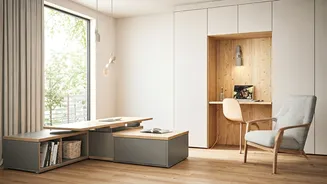
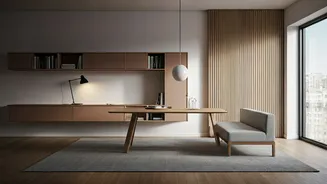
The biggest driver of the flex-room trend is the home office. But nobody wants to stare at their work computer during dinner. The solution is the disappearing office. The most popular iteration is the 'cloffice'—a closet converted into a compact, functional workspace. When the workday is done, you simply close the doors, and the visual clutter of your job vanishes. Don't have a spare closet? No problem. Look for armoires or secretary desks that can hide a monitor and laptop. Even a simple decorative screen can be used to partition off a work corner in a living room, creating a psychological boundary between 'on' and 'off' hours.
The Guest Room That Earns Its Keep
The dedicated guest room is a luxury many can no longer afford, both in terms of space and utility. The 2026 version is a room that serves you daily and your guests occasionally. The key is a high-quality sleeper sofa or a modern Murphy bed. Once considered clunky, today’s Murphy beds are sleek, stylish, and can even incorporate built-in shelving or a desk. This allows the room to function as a home gym, a yoga studio, a library, or a hobby space day-to-day. When guests arrive, the room transforms in minutes. You get a functional space for your passions, and your guests get a comfortable place to sleep. It’s a win-win.
Modular Furniture Is Your Secret Weapon
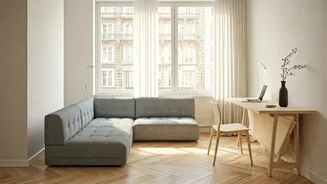
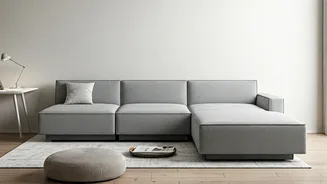
Static, heavy furniture is the enemy of the flexible room. The future is modular. Think sectional sofas that can be reconfigured from a movie-night pit to separate seating for a party. Consider nesting coffee tables that can be spread out for guests or tucked away to create floor space for a workout. Extendable dining tables are making a huge comeback, allowing a small table for daily family meals to expand for holiday gatherings. The goal is to invest in pieces that can change shape and function along with your needs. This approach is especially crucial for smaller apartments and open-concept living areas where one room has to wear many hats.
Zone Your Space with Light and Rugs
Creating a flexible room doesn't always require new furniture; sometimes it's about clever visual tricks. 'Zoning' is the practice of visually dividing a single room into multiple functional areas. The easiest way to do this is with area rugs. A rug can define a seating area in a large living room, separating it from a workspace or a play corner. Lighting is another powerful tool. Use a bright, focused task lamp for a desk area, a soft floor lamp for a reading nook, and dimmable overhead lighting for general ambiance. These subtle cues tell our brains which 'zone' we are in, helping a single room feel more organized and purposeful.