


The Allure of the Seamless Itinerary
The European fantasy is built on a foundation of elegant convenience. You imagine hopping on a high-speed train in Rome and disembarking a few hours later in Florence, ready for an Aperol spritz. The continent is designed for this kind of seamless travel.
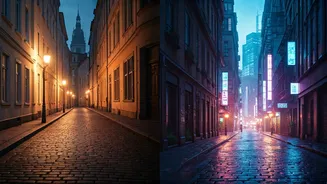
English is widely spoken in tourist hubs, credit cards are accepted almost everywhere, and the cultural signposts—from Renaissance art to café etiquette—feel like familiar cousins to our own. This predictability is a huge part of its appeal. It allows you to focus on history, beauty, and relaxation without the constant mental tax of navigating a truly foreign system. The trip feels curated, a highlight reel of Western civilization served up in manageable, picturesque portions.
The Beautiful Chaos of Getting Around
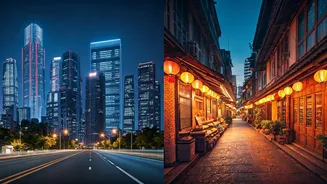
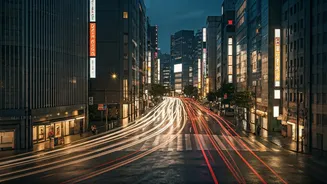
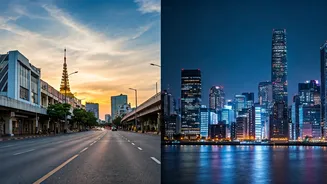
Enter Tokyo and Bangkok. This is your first reality check. In Tokyo, the transit system is a marvel of efficiency, but its sheer scale—a web of interlocking subway lines run by different companies—can feel like solving a Rubik's Cube just to get to lunch. It’s perfect, but it demands your full attention. Then there’s Bangkok, a city where the best route might involve a combination of the sleek BTS Skytrain, a sputtering tuk-tuk weaving through gridlocked traffic, and a long-tail boat zipping down the Chao Phraya River. There is no single, simple answer. You can’t just zone out and expect to arrive. The journey itself is an adventure, a puzzle that forces you to engage, observe, and sometimes, just laugh at the beautiful absurdity of it all. It’s less of a seamless itinerary and more of an improvisational dance.
History Lived, Not Just Displayed
In Europe, history often feels like it’s behind velvet ropes. You visit the Colosseum or the Louvre, admiring masterpieces from a respectful distance. It’s monumental, breathtaking, and neatly contained. In Tokyo and Bangkok, history is woven into the fabric of daily life. In Tokyo, you’ll find a serene, centuries-old shrine tucked between two glittering skyscrapers, with office workers stopping for a quick prayer on their way home. In Bangkok, the spirit houses outside every 7-Eleven are not relics; they are active sites of daily offerings. The past isn’t something you go to see in a museum. It’s alive in the street food recipes passed down through generations, the scent of incense wafting from a neighborhood temple, and the quiet bow of a shopkeeper.
Sensory Overload vs. Curated Charm
A European vacation often soothes the senses. The gentle clinking of cutlery in a bistro, the sight of rolling green hills, the taste of aged cheese. It’s a world of curated charm. A trip to Bangkok, by contrast, is a full-frontal assault on your senses—and that’s its magic. The air is thick with the competing aromas of lemongrass, chili, diesel fumes, and jasmine. The noise is a constant symphony of roaring traffic, chattering crowds, and the sizzle of woks. Tokyo offers a different kind of intensity: the visual cacophony of Shibuya Crossing, the sudden, pin-drop silence inside a temple, the delicate, almost overwhelming flavor of a perfect piece of sushi. This sensory overload is the reality check. It can be exhausting, but it’s also exhilarating. It reminds you, at every moment, that you are somewhere profoundly different.
The Ultimate Comfort Zone Test
Ultimately, this is the core of the Europe-Asia divide. A trip to London, Paris, or Madrid can feel like visiting a more refined, historical version of our own world. The fundamental rules of engagement are similar. The Tokyo-Bangkok axis is a test of your personal comfort zone. The language barrier is real. Social etiquette is different and deeply important. You will be confused. You will make mistakes. You might feel overwhelmed. But pushing through that discomfort is where the real growth happens. Successfully navigating a Tokyo train station or ordering a meal from a Bangkok street vendor using only gestures and a smile provides a jolt of confidence and competence that a predictable vacation rarely can. The European fantasy is a vacation; the Asian reality check is a transformation.